Your cart is currently empty!
You may check out all the available trips and book one that suits you.
Continue Browsing Trips
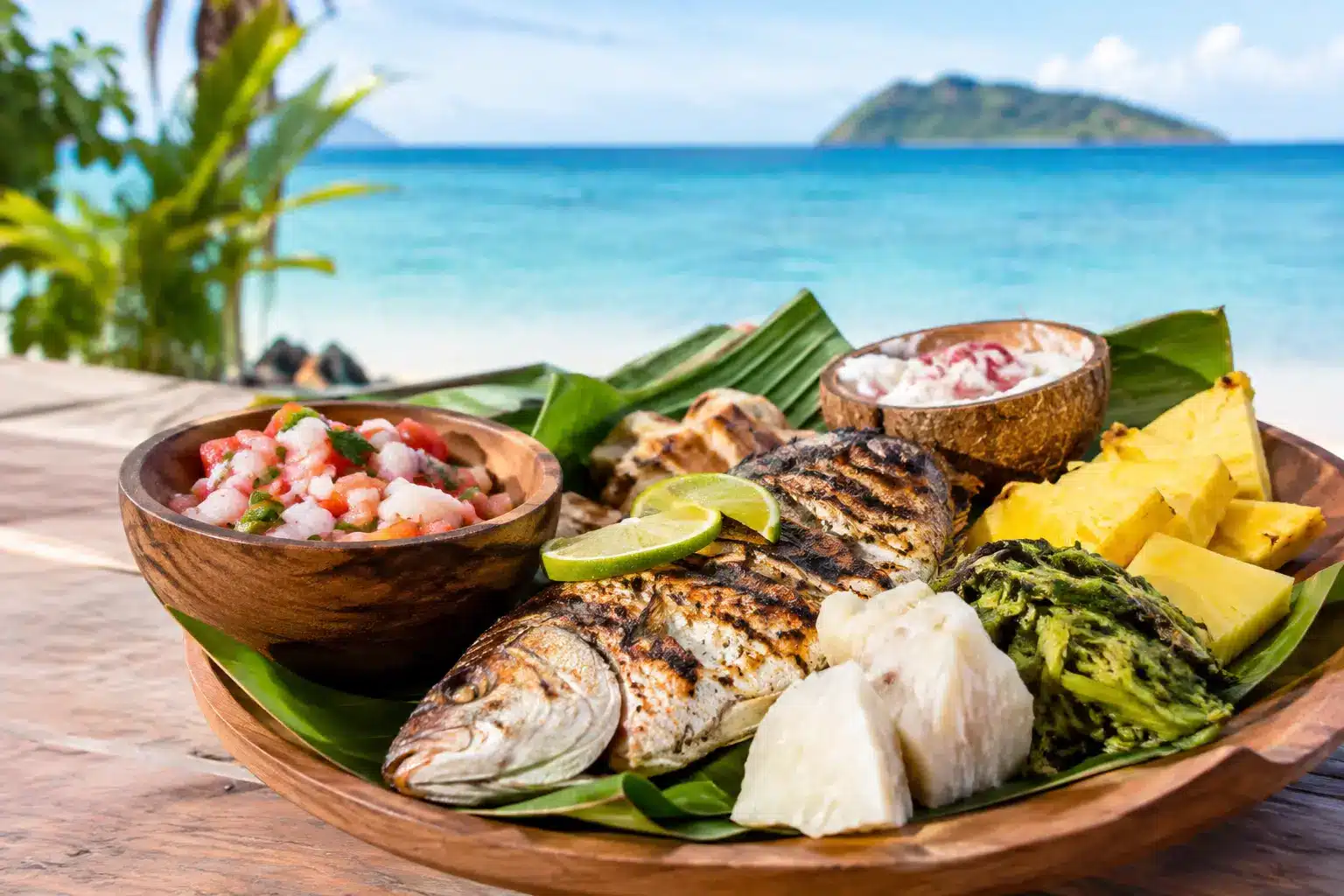
The first spoonful of chilled kokoda, bright with lime and coconut cream, tells you plenty about Fiji cuisine: it is fresh, generous and shaped by the ocean as much as the islands themselves. For travellers, food is one of the easiest ways to move beyond the resort buffet and experience the warmth of Fiji’s many cultures.
You will find beautifully prepared seafood on island day trips, fragrant curries in Nadi, roadside stalls selling cassava and tropical fruit, and traditional meals cooked slowly in an earth oven. The best part is that Fiji food is approachable. There is plenty for adventurous eaters, but also familiar flavours for families, couples and anyone easing into a new destination.
Fiji’s food reflects Indigenous iTaukei traditions, Indo-Fijian heritage and the ingredients that thrive in a tropical island climate. Coconut, lime, chilli, ginger, taro, cassava, breadfruit, leafy greens and reef fish appear again and again, though each region, village and cook brings their own approach.
It is not a single, fixed menu. A meal on a remote Yasawa island may centre on freshly caught fish, dalo and coconut, while a local restaurant in Nadi might serve an excellent chicken curry with roti, dhal and chutney. Resort dining can be polished and international, but local dishes are where the destination’s character really comes through.
Seasonality matters, too. Weather, fishing conditions and the location of your accommodation influence what is available. On smaller islands, menus are often simpler because supplies arrive by boat. That is not a compromise when the fish was caught that morning and the produce is grown nearby.
Kokoda is Fiji’s celebrated raw fish dish, commonly compared with ceviche but very much its own thing. Cubes of firm white fish are cured in citrus juice, then mixed with coconut cream, tomato, onion and chilli. It is usually served cold, sometimes in a coconut shell, and makes an ideal lunch in the tropical heat.
The flavour varies widely. Some versions are mild and creamy, while others have a proper chilli kick. Choose a reputable restaurant or resort, especially if you are cautious about raw seafood, and ask about the day’s preparation if you have allergies.
A lovo is both a traditional underground oven and the feast cooked inside it. Meat, fish, root vegetables and parcels of greens wrapped in leaves are placed over hot stones, covered, and cooked slowly for several hours. The result is smoky, tender food with a ceremonial, shared feel.
A lovo night is worth planning into your holiday, particularly if it includes a cultural performance or village-style dining experience. It is not usually a quick meal, so treat it as an evening activity rather than something to squeeze between a late-afternoon swim and dinner reservations.
These dishes showcase the island’s talent for turning leafy greens into comfort food. Palusami is typically taro leaves wrapped around a rich filling of coconut cream, onion and sometimes corned beef, fish or other protein. Rourou refers to cooked taro leaves, often prepared with coconut cream.
Both are silky, savoury and surprisingly filling. Taro leaves must be properly cooked, so they are best enjoyed from experienced cooks rather than attempted casually in self-catering accommodation.
Rice and chips are easy to find, but traditional Fiji meals are often built around root crops. Dalo, also known as taro, has a soft, nutty character when boiled or baked. Cassava is mild and starchy, while breadfruit can be roasted, fried or mashed and has a texture somewhere between potato and fresh bread.
These are not just side dishes. They are central to everyday eating and pair brilliantly with fish, curries and coconut-based sauces. If you are heading out on a full-day tour, they also explain why a simple local lunch can keep you going for hours.
Fiji’s large Indo-Fijian community has made curries, roti, samosas, bara and dhal essential holiday eating. Expect aromatic spice rather than automatic high heat, although chilli lovers will have plenty of options. Fish curry is especially rewarding in Fiji, where local seafood meets a deeply flavoured masala sauce.
A casual curry house around Nadi or Lautoka can be one of the best-value meals of your trip. Order a few dishes to share with roti, then adjust the spice level to suit your group. Vegetarian travellers are particularly well catered for here, with dhal, chickpea curries, vegetable dishes and potato-filled snacks widely available.
Nadi offers the broadest range of casual local food, from Indian restaurants and bakeries to produce markets and cafés. It is a smart place to seek out roti, curry, tropical fruit and takeaway snacks before or after a flight. Denarau is more resort-focused, with convenient international dining alongside Fijian-inspired dishes.
Along the Coral Coast and in Pacific Harbour, look for restaurants that feature seafood, lovo meals and locally grown produce. Many hotels can also arrange cultural evenings, though the quality and authenticity vary. Ask whether the meal is prepared on site, what is included and whether there is a cultural component beyond a standard buffet.
In the Mamanuca and Yasawa Islands, your accommodation often shapes your food experience. Smaller island resorts and village stays may offer set menus based on the catch and available produce. This can be a highlight, but travellers with strict dietary requirements should advise their host well before arrival. Fresh options are excellent, yet specialist substitutes can be limited once you are offshore.
Markets are another rewarding stop for fruit such as pineapple, papaya, mango, bananas and passionfruit, depending on the season. Go with an open mind and a few small notes, but leave plenty of room in your bag for the real prize: a freshly cut coconut to drink on a warm day.
Food is closely connected to hospitality in Fiji. If you are invited to share a meal in a village or family setting, accept with gratitude where possible and follow your hosts’ lead. Waiting to be shown where to sit, dressing modestly and using your right hand when eating from a shared dish are thoughtful basics.
Kava may be offered at a cultural gathering. It is a traditional drink made from the powdered root of the yaqona plant, mixed with water and served from a communal bowl. The taste is earthy and the sensation can be mildly numbing around the mouth. You can usually decline politely if it is not for you, but joining in respectfully is a memorable cultural experience.
Do not assume every village visit has the same protocols. Some communities have particular expectations around clothing, photography, alcohol or Sunday activities. A knowledgeable local guide will explain what is appropriate, making the experience more comfortable for both visitors and hosts.
The easiest way to enjoy Fiji food properly is to leave room for it in your itinerary. Do not fill every day with transfers and activities so tightly that every meal becomes an airport snack or a rushed resort lunch. Pair an island day trip with a seafood meal, make time for a Nadi curry dinner, and choose at least one lovo experience during a longer stay.
If you have coeliac disease, severe allergies, vegetarian requirements or travelling children with selective tastes, plan ahead rather than worry on arrival. Resorts and established restaurants can often cater well with notice, while remote islands may have fewer alternatives. When booking tours or transfers through Best Fiji Activities, sharing dietary needs early gives local teams the best chance to arrange suitable meal options where food is included.
Bring a reusable water bottle, but follow local advice on where tap water is suitable to drink. At quality hotels, resorts and reputable restaurants, food handling standards are generally reliable. As anywhere, choose busy eateries, eat seafood freshly prepared, and use common sense with buffet food that has been sitting in the heat.
A Fiji holiday tastes better when you try more than one version of the islands. Order the kokoda, say yes to the lovo, find a humble roti shop, and let a local recommendation guide one meal you had not planned at all.