Your cart is currently empty!
You may check out all the available trips and book one that suits you.
Continue Browsing Trips
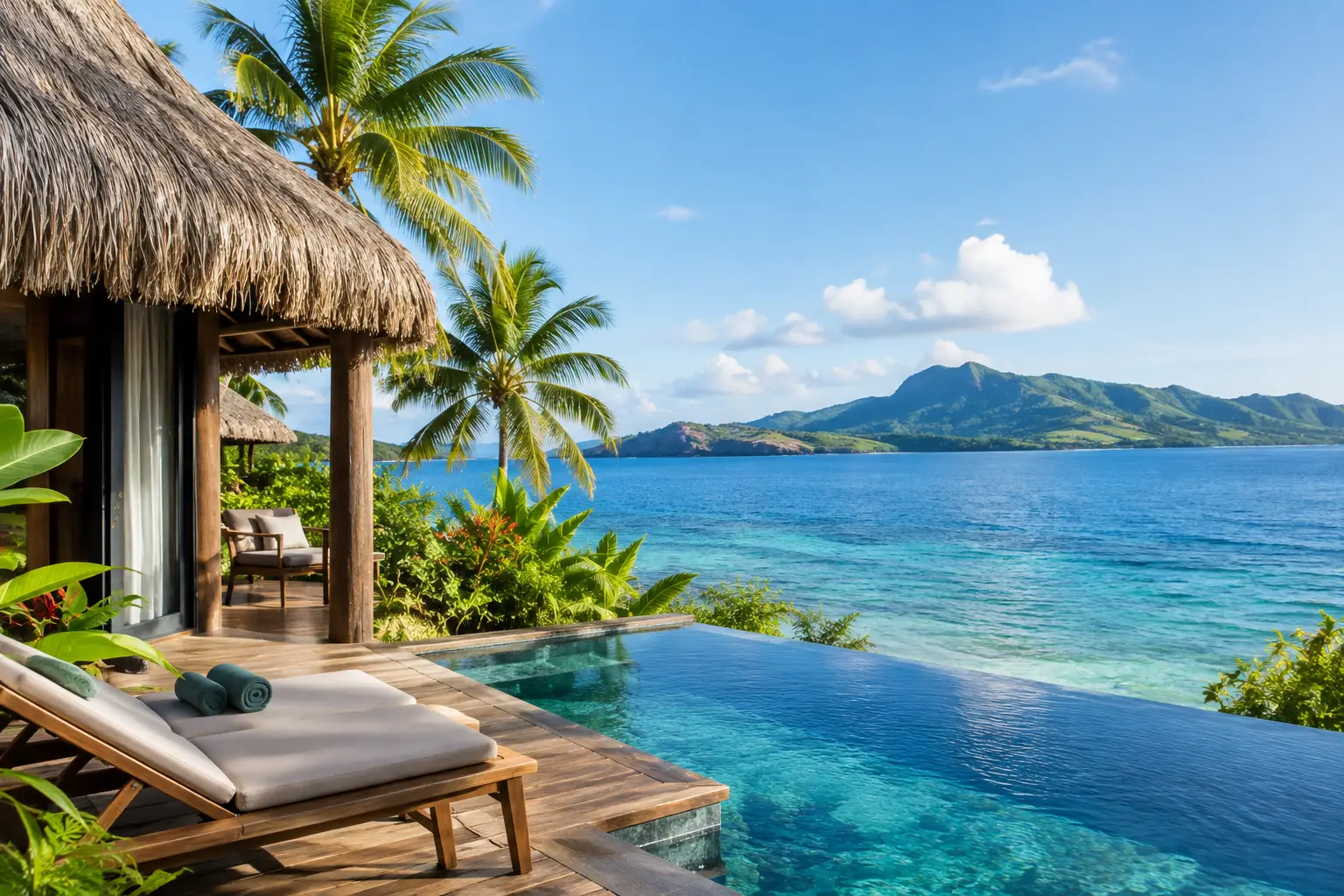
A Fijian holiday has always been about more than a beautiful bure, a clear lagoon and a sunset cocktail. The most meaningful Fiji eco resort trends are now asking a better question: how can a stay on the islands support the reefs, communities and landscapes that make the holiday special in the first place?
For travellers flying in from Australia, this shift matters. Fiji is wonderfully accessible for a tropical escape, but its islands are also home to delicate marine environments and close-knit villages. Choosing accommodation with genuine environmental and cultural care can add real depth to your trip – while still leaving plenty of room for comfort, great food and unforgettable adventures.
Reusable water bottles, bamboo amenities and paper straws are visible signs of progress, but they are only the starting point. The stronger resorts are looking at the less glamorous work behind the scenes: managing freshwater carefully, reducing diesel dependence, treating wastewater responsibly and making sure rubbish does not end up in the ocean.
On smaller islands, these decisions have an immediate impact. Fresh water can be limited, power supply is often challenging, and every item brought in must be handled thoughtfully after use. Solar power, rainwater collection, refill stations, composting and reduced single-use packaging are becoming more common across Fiji’s island accommodation scene.
That does not mean every resort is completely off-grid or waste-free. In fact, properties that are honest about where they are improving are often more credible than those making broad green claims without detail. A quality eco-minded stay should be able to explain what it does, why it does it and where guests can help.
Fiji’s reefs are a major reason travellers choose the Mamanuca Islands, Yasawa Islands and Coral Coast. It makes sense that reef protection is becoming a more visible part of resort life, rather than something happening quietly in the background.
Some properties support coral planting, reef monitoring or marine protected areas. Others run snorkelling briefings that teach guests how to avoid standing on coral, touching marine life or feeding fish. These briefings may sound simple, but they make a genuine difference when hundreds of holidaymakers visit a reef over a season.
The best experiences are educational without feeling like a lecture. A local marine guide can point out a giant clam, explain why certain fishing areas are closed, and show children how coral reefs support island communities. Suddenly, a morning snorkel becomes a connection to Fiji rather than just another photo stop.
There is a trade-off to keep in mind. Resorts in remote places may offer spectacular reefs but require boat transfers, supply runs and generators. Staying closer to the mainland can reduce transfer time and make it easier to combine your accommodation with day tours, cultural visits and airport transport. There is no one perfect choice, but knowing the practical realities helps you travel more thoughtfully.
One of the most positive Fiji eco resort trends is the growing focus on community benefit. Environmental care and cultural respect are closely connected in Fiji, where land and sea have deep traditional importance.
Look for resorts that employ and train local Fijians in meaningful roles across guiding, hospitality, marine conservation and management. Village visits, handicraft demonstrations and cultural evenings should be led with permission, fair payment and genuine community involvement – not staged as a quick add-on for visitors.
A respectful cultural experience can be one of the highlights of a Fiji holiday. It may be a meke performance, a kava ceremony, a guided visit to a village, or a meal prepared with local ingredients. The difference lies in how it is presented. Guests should arrive appropriately dressed, follow local guidance and understand that they are being welcomed into a living community, not an attraction.
Buying directly from village artisans, choosing locally caught seafood where suitable, and joining tours led by Fiji-based guides are practical ways to keep more holiday spending in the destination. Best Fiji Activities can also help travellers pair their resort stay with trusted local tours and transfers, so the logistics are simple and the experiences feel connected to the place.
Resort dining is another area where change is easy to see. More menus are celebrating what grows well in Fiji: tropical fruit, cassava, dalo, breadfruit, leafy greens, coconut and locally sourced fish. A meal built around seasonal produce often tastes better after a day on the water, and it may have travelled far fewer kilometres than imported alternatives.
Responsible seafood is especially worth asking about. Fiji’s waters are productive, but no destination has unlimited supply. Resorts that vary menus by season, work with local fishers and avoid serving vulnerable species are making a more considered choice. If you have dietary requirements, contact the property before booking. Remote island kitchens can be wonderfully creative, but advance notice makes a big difference.
Eco labels can be useful, but travellers do not need to be sustainability experts to ask smart questions. Look beyond beautiful marketing language and seek specific answers about daily operations, reef practices and community relationships.
Before choosing a resort, consider these practical points:
You do not need every answer to be perfect. A family-friendly mainland resort with a strong local employment programme may be a better fit than a remote eco lodge with limited facilities. Likewise, a honeymoon couple may happily choose an island retreat reached by boat, accepting the extra travel time for quieter beaches and exceptional snorkelling.
The right choice depends on your holiday style, budget and priorities. What matters is selecting a property whose approach matches what it promises.
Another clear trend is that travellers are spending less time chasing a packed itinerary and more time choosing meaningful experiences. Instead of moving accommodation every night, many visitors are settling into one or two regions and adding carefully chosen excursions.
This slower approach can reduce unnecessary transfers and give you more time to enjoy the destination properly. Stay on the Coral Coast and you can balance resort time with a cultural visit, river adventure or a day exploring inland scenery. Base yourself in Nadi or Denarau and combine easy airport access with a Mamanuca island day trip. In the Yasawas, longer stays make sense when you want to enjoy snorkelling, beaches and village connections at an unhurried pace.
Eco-conscious travel does not have to mean giving up the parts of a Fiji holiday you are looking forward to. It can mean choosing one exceptional snorkelling trip rather than several rushed outings, carrying a refillable bottle, respecting reef rules and allowing local guides to show you what makes their home special.
The future of Fiji accommodation is not about a single label or a one-size-fits-all definition of eco travel. It is about better decisions: resorts using resources more carefully, guests behaving respectfully, and tourism helping protect the islands that welcome us.
When you plan your stay, choose the experiences you will genuinely enjoy, ask a few thoughtful questions, and leave space in your itinerary for Fiji to surprise you. A holiday planned with care can still be easy, indulgent and full of brilliant island moments – with a little more value left behind than a footprint in the sand.