Your cart is currently empty!
You may check out all the available trips and book one that suits you.
Continue Browsing Trips
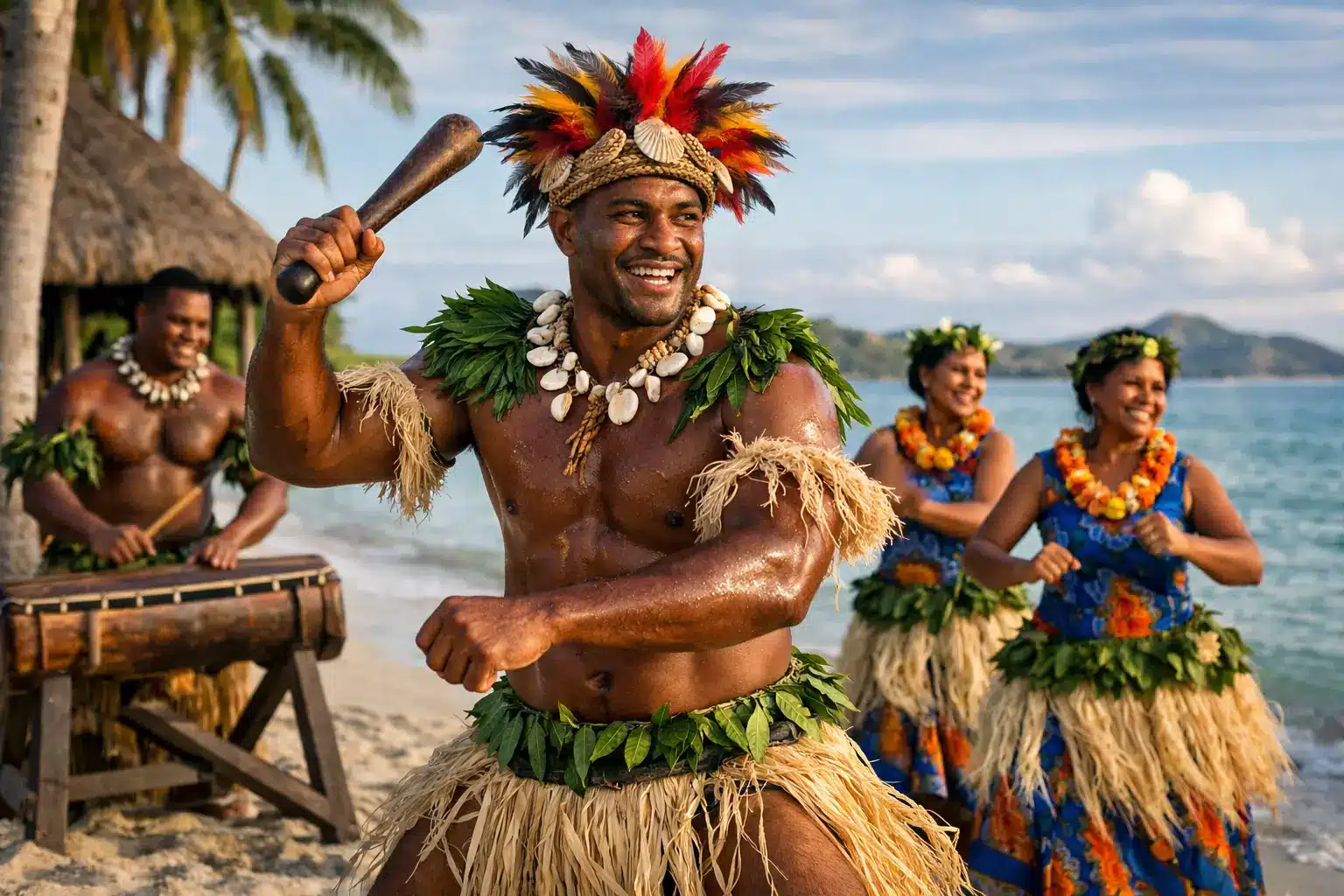
The top Fiji cultural performances are not simply colourful additions to a beach holiday. They are living expressions of vanua – the deep connection between people, land, ancestors and community. Whether you are based in Nadi, the Coral Coast, Pacific Harbour or heading to the islands, making time for a genuine cultural experience adds a far richer layer to your Fiji holiday.
The best occasions feel participatory rather than staged for a camera. You may be welcomed into a village, share kava with new friends, watch a meke performed with enormous pride, or see firewalkers cross hot stones using a tradition passed through generations. Here is what to look for, where these experiences shine, and how to choose one that feels respectful as well as unforgettable.
A meke is the cultural performance many visitors remember long after they have returned home. It combines chanting, singing, rhythmic movement and traditional dance to tell stories of ancestral journeys, historic events, love, warfare and everyday village life.
Rather than one single dance, a meke is a carefully arranged performance. Men may perform powerful standing dances with spears or clubs, while women dance with graceful hand movements and woven fans. The chorus and lali drums set the tempo, and the mood can shift from solemn and ceremonial to joyful and energetic within minutes.
You will find meke performances at selected resorts, cultural centres and village visits across Fiji. Resort evenings can be an easy option for families and travellers with limited time, particularly around Denarau and the Coral Coast. For a more intimate setting, a well-organised village experience offers the chance to understand the story behind the movements and meet the people preserving the tradition.
The trade-off is simple: a resort presentation is often polished, convenient and timed around dinner, while a village visit may involve a longer transfer, modest dress requirements and a less predictable schedule. Both can be worthwhile when they are presented with care and proper context.
A traditional kava ceremony is quieter than a dance performance, but it is one of the most meaningful cultural experiences in Fiji. Kava is made from the powdered root of the yaqona plant, mixed with water and served in a communal coconut shell called a bilo.
The ceremony follows an established etiquette. When your turn arrives, you clap once, accept the bilo, say Bula, drink the kava, then clap three times. Your hosts will guide you, so there is no need to worry about getting every detail perfect. The key is to arrive with an open mind, listen and take your time.
Kava can have an earthy taste and may leave your lips feeling lightly numb. It is not designed to be rushed like a holiday cocktail. For Fijians, it is a social ritual that creates conversation, welcome and connection, so the best ceremonies allow space for a yarn with your hosts after the formal welcome.
If you do not drink alcohol or prefer to limit what you consume, tell your guide or host beforehand. It is usually possible to participate respectfully without having a full serving. Those who are pregnant, taking medication or have health concerns should seek appropriate medical advice before drinking kava.
Firewalking is among the most dramatic Fiji cultural performances, and its roots lie with the Sawau people of Beqa Island. In this ceremony, trained firewalkers walk barefoot across heated stones in a powerful display of inherited knowledge, discipline and belief.
Visitors often see firewalking demonstrations in the Coral Coast and Pacific Harbour regions, where Beqa traditions are widely shared with guests. A genuine presentation should explain the origin of the practice and treat it as more than a thrill-seeking spectacle. The firewalkers prepare the stone pit well in advance, and the ritual carries cultural significance that deserves attention.
For travellers short on time, a performance at a reputable resort or cultural venue can be practical. If your itinerary allows, visiting communities connected to the tradition provides greater context. Ask whether the experience includes interpretation from a local guide, as that turns an impressive photo opportunity into a story you can properly appreciate.
The sound of the lali, Fiji’s traditional wooden drum, has a way of stopping a room. Historically used to communicate across villages, it remains central to ceremonies, welcomes and festive performances. You may hear it at the start of a village visit, during a meke or at a resort cultural night.
Fijian singing is equally special. Choir-style harmonies often fill churches on Sundays and feature in village gatherings, while performers may blend traditional songs with contemporary island favourites. If you have an interest in music, do not overlook a Sunday church service where visitors are welcome. Dress modestly, arrive on time and follow the guidance of your hosts.
These performances can seem less formal than a scheduled show, but that is their appeal. They offer a glimpse of the warmth, humour and collective spirit that make Fiji feel so welcoming.
A lovo is an underground oven, not a performance in itself, but it is often the centrepiece of Fiji cultural evenings. Meat, fish and vegetables are wrapped, placed over heated stones and covered to cook slowly in the earth. Watching the lovo uncovered, with steam rising from the leaves, is a memorable prelude to a feast and meke.
A good cultural evening brings together the food, music, dance and stories without treating any one element as a novelty. Expect dishes such as fish, chicken, cassava, dalo and tropical vegetables. Dietary needs can often be accommodated, although it is best to advise your operator in advance, especially for vegetarian, vegan or allergy-sensitive meals.
Not every experience suits every traveller. Families may prefer a shorter cultural night with dinner included, while couples and small groups often enjoy a village visit that allows more time for conversation. If you are arriving by cruise ship or have only one free evening near Nadi, a reliable resort-based event can be the most sensible choice.
When comparing options, look beyond the word cultural in the tour name. A quality experience should clearly state where it takes place, what is included, how long transfers take and whether guests are visiting a real village. Transparent pricing matters too, particularly when transport, meals and village contributions may be part of the day.
Local guides make a major difference. They can explain why visitors are asked to dress modestly, remove hats in certain settings, or avoid entering particular areas. In a village, shoulders and knees should generally be covered, and a sulu is an easy, practical option. Always ask before photographing people, homes or ceremonies.
It is also worth checking the schedule. Fiji operates on island time in many settings, and cultural gatherings may start later than a tightly run city event in Australia. That is not poor organisation. It can reflect community commitments, weather or the natural rhythm of village life. Build some flexibility into your day and you will enjoy the experience far more.
Around Nadi and Denarau, cultural dinners and evening performances are the easiest fit around airport arrivals, island cruises and day tours. On the Coral Coast, village visits, lovo feasts and firewalking displays can pair well with scenic drives, waterfalls and family-friendly resort stays.
Pacific Harbour is a strong choice for travellers combining culture with adventure, including river activities and off-road excursions. The Mamanuca and Yasawa Islands offer a more relaxed pace, where village visits, kava welcomes and local music can become a highlight between snorkelling and beach time. Availability differs by island and day of the week, so it pays to organise key experiences before you arrive.
Best Fiji Activities can help match cultural tours, transfers and day trips to the region where you are staying, making it easier to enjoy the right experience without spending your holiday coordinating transport.
The most rewarding performance is rarely the loudest or most elaborate. Choose one that gives local people space to share their stories in their own way, put your mobile down for a few minutes, and let Fiji’s welcome do the rest.