Your cart is currently empty!
You may check out all the available trips and book one that suits you.
Continue Browsing Trips
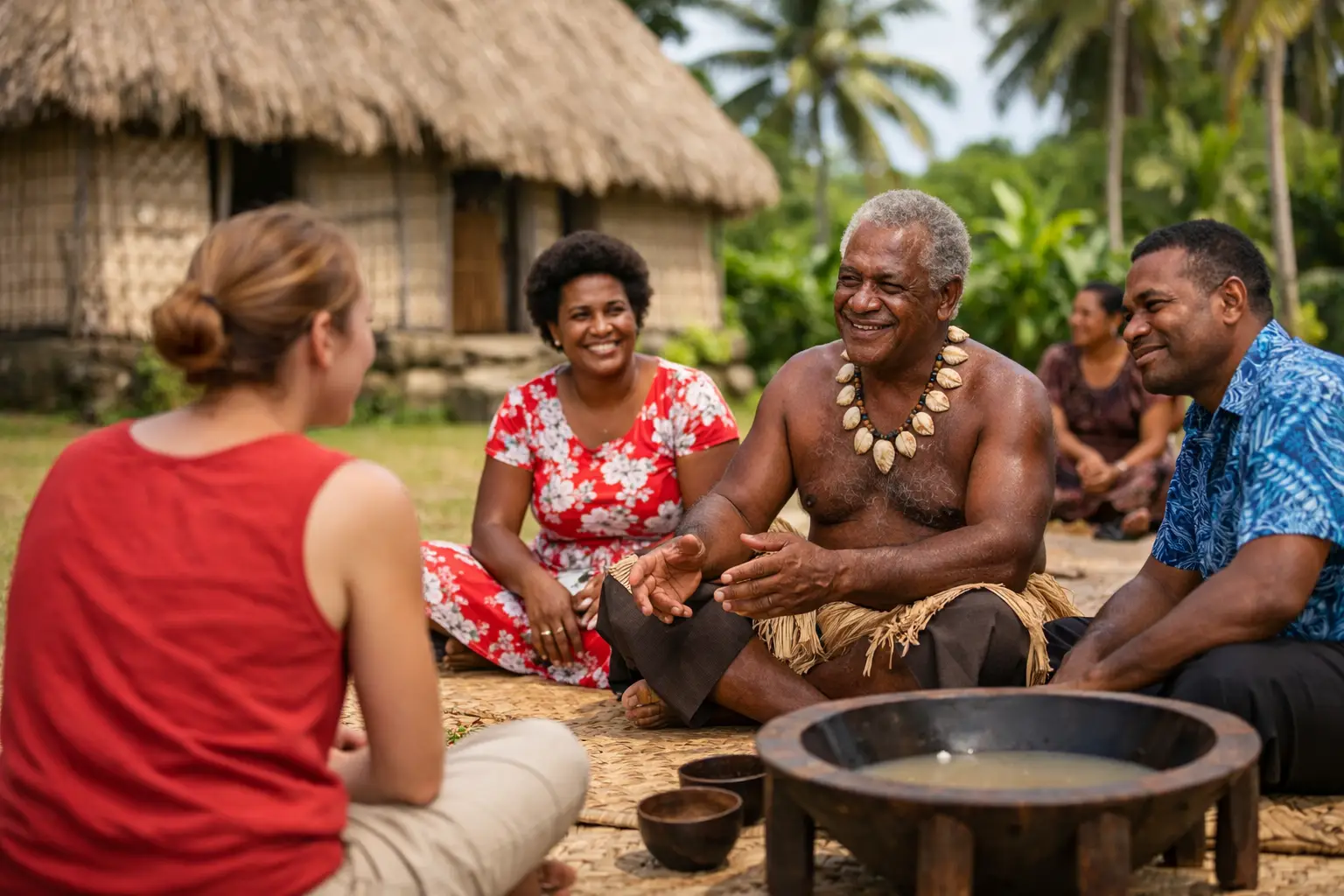
A Fiji village visit can be one of the most meaningful moments of your holiday: a warm bula welcome, the sound of singing, shared kava and a chance to meet the people behind Fiji’s famous hospitality. Good Fiji village visit etiquette helps make that welcome feel mutual. You are not visiting a tourist attraction alone, but entering a living community with its own leaders, family homes, faith and traditions.
The good news is that visitors are not expected to know every custom before they arrive. A quality cultural tour and local guide will explain the protocol, arrange the formal welcome and let you know what is appropriate in that particular village. Arrive open-minded, follow their lead and show simple consideration, and you will be a very welcome guest.
Village visits are often a highlight for travellers staying in Nadi, the Coral Coast, Pacific Harbour or the outer islands, especially when they want an experience beyond the resort. They can include a sevusevu welcome ceremony, a church visit, local crafts, dancing, a school or a shared meal. Each village decides what it wishes to share, so the experience may be more formal in one place and relaxed in another.
Treat the visit as an invitation rather than a performance. Listen when your host or guide speaks, avoid wandering off on your own and allow the day to run on Fiji time. A ceremony may begin later than the schedule suggests because community life comes first. That is part of the experience, not a problem to solve.
Respectful clothing is one of the easiest ways to make a good first impression. Swimwear, singlets, very short shorts and revealing clothing are not suitable inside a village, even if you have come directly from the beach or pool.
Choose light, comfortable clothing that covers your shoulders and knees. A long skirt, loose trousers, modest dress or longer shorts are practical options in Fiji’s warm weather. Carrying a sulu is especially useful. This versatile wrap can be worn over shorts or swimwear before you enter a village, and it is a considerate choice for women and men alike.
Some villages ask visitors to remove hats and sunglasses when meeting elders or entering ceremonial spaces. Shoes may also come off before entering a home, church or community hall. Wait for guidance rather than assuming. If you are unsure, a quick question to your guide is always appreciated.
Fijian hospitality is generous and relaxed, but certain gestures can be considered rude. Avoid touching anyone on the head, including children, and do not point the soles of your feet towards people, food or a ceremonial area when sitting on the floor.
If you are asked to sit for a kava ceremony, follow the position shown by your hosts. Men may be asked to sit cross-legged, while women may sit with legs folded to one side in some settings. Comfort matters, especially on a longer visit, but the respectful choice is to follow local direction as closely as you can.
The traditional presentation of yaqona, commonly called kava, is known as sevusevu. It is a sign that guests come in peace and seek permission to enter the village. On organised visits, the tour operator generally provides the kava root and presents it to the village chief or representative on behalf of the group.
This is why booking with local experts makes a real difference. You do not need to source kava or worry about getting the formalities wrong. Your guide will explain when to stand, where to sit and when to remain quiet, allowing you to be present for the occasion rather than anxious about protocol.
During a kava ceremony, you may be offered a coconut shell cup. The usual response when receiving it is to say bula, drink when invited, then clap as instructed. The number and style of claps can vary between communities, as can whether visitors are expected to finish the cup in one go. Kava has an earthy taste and a mild numbing effect on the lips. If you cannot drink alcohol, are pregnant, take medication or simply prefer not to drink kava, let your guide know discreetly before the ceremony. They can advise on the most respectful option.
Do not make jokes about the drink, rush the ceremony or treat it like a party challenge. In a village setting, kava is about connection, respect and conversation.
Fiji is wonderfully photogenic, but photography should never come before people’s privacy. Always ask before photographing villagers, children, homes, church interiors, ceremonial spaces or a kava presentation. A guide may ask the group to put cameras away during part of the welcome, and that request should be followed without exception.
Even when photography is permitted, be thoughtful. Avoid moving in front of elders, interrupting a performance for a better angle or asking children to pose repeatedly. If you take a portrait, showing the person the photo on your mobile is a friendly gesture. It can turn a quick transaction into a genuine exchange.
Drone use requires particular care. Do not fly a drone over a village, shoreline or gathering without clear prior approval. It can feel intrusive and may disturb community activities, wildlife or a nearby church service.
A gift can be kind, but it needs to be handled well. Randomly handing out lollies, cash or small toys to children can create awkward expectations and bypass parents, teachers and village leaders. It may also encourage children to approach visitors for treats rather than simply enjoying the visit.
If you would like to contribute, ask your guide before the tour what the community welcomes. Useful school supplies, sporting equipment or a contribution arranged through the village can be better choices, but only where they have been requested. In many cases, the organised tour fee already includes the appropriate village contribution, so an additional gift is not necessary.
The same principle applies to shopping. If local women’s groups or craftspeople offer handmade items, buying directly and respectfully is a lovely way to support the community. Do not bargain aggressively. These pieces often represent hours of skilled work and provide meaningful income for local families.
If food is offered, accept with gratitude where you can. A shared meal might feature root crops, fresh fish, curries, tropical fruit or food cooked in a lovo earth oven. Try a little of an unfamiliar dish if you are comfortable, and let your host know about allergies or dietary needs before the visit, not once the food is on the table.
Church remains central to life in many Fijian villages. If your itinerary includes a service, wear your most modest clothing, arrive quietly and follow the congregation’s lead for standing, sitting and singing. Sunday can be especially significant. Some villages have restrictions on trading, swimming, loud music or certain activities on this day, so plan with respect for local observance.
Alcohol should not be brought into a village unless your host or guide has specifically confirmed it is appropriate. Smoking and vaping should likewise be avoided unless you are directed to a suitable area. Put rubbish in a bin or take it with you, particularly on smaller islands where waste management is limited.
A village visit is not the time to test assumptions about Fiji. Customs can differ by island, province, religion and family, and a rule that applies in one community may not apply in the next. Your local guide is there to bridge that gap with practical advice and genuine relationships.
Before booking, check what is included, whether a sulu is required, how long the visit lasts and whether it suits young children or guests with limited mobility. The best Fiji cultural tours make these details clear, arrange transport and village permissions in advance, and give you space to enjoy the welcome without logistical stress.
Best Fiji Activities can help travellers choose well-run cultural experiences that fit naturally around island trips, sightseeing and transfers. With the right preparation, a village visit becomes more than a holiday photo. It is a chance to listen, share a little time and leave Fiji having received its warmth with the respect it deserves.



One Comment