Your cart is currently empty!
You may check out all the available trips and book one that suits you.
Continue Browsing Trips
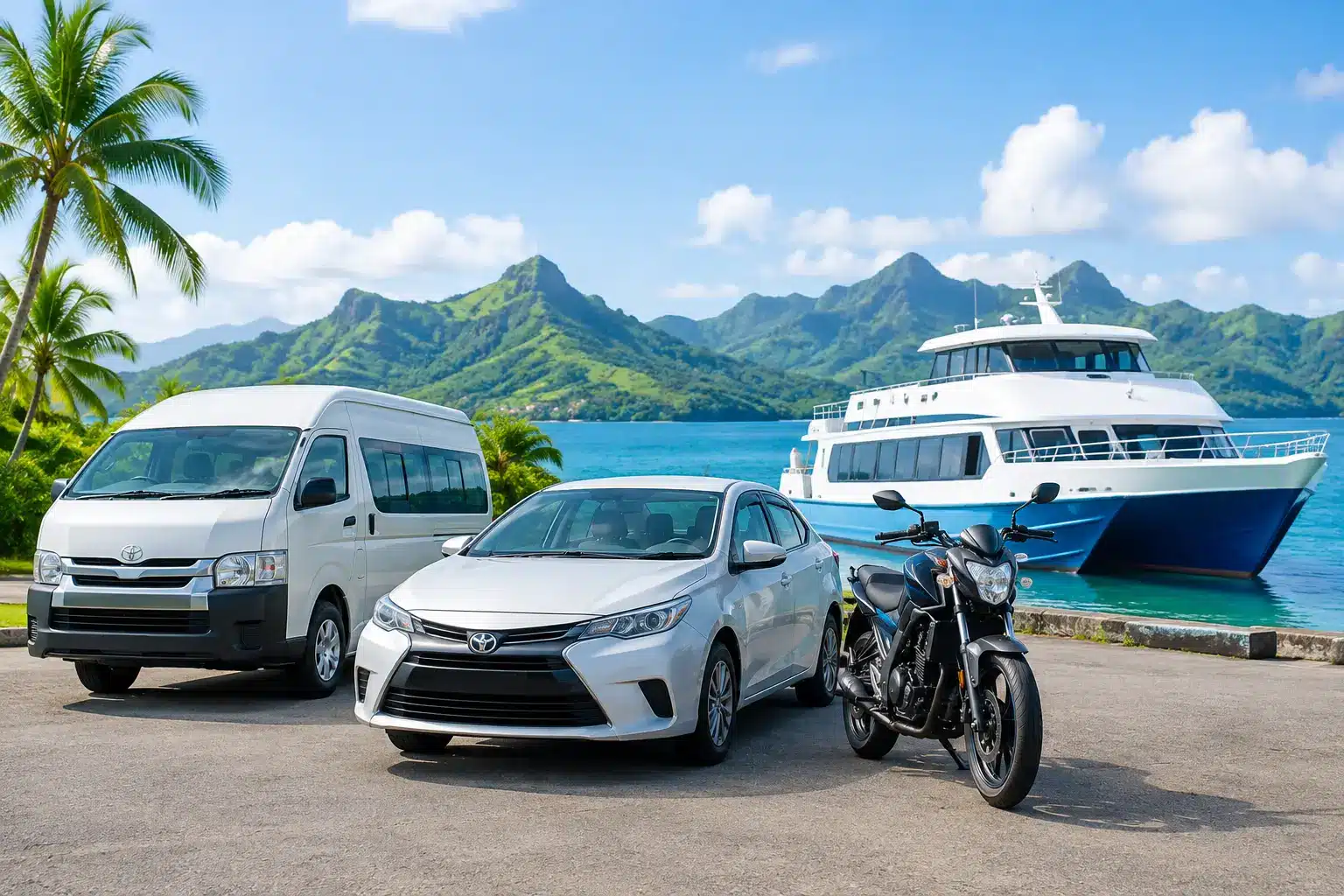
Landing at Nadi International Airport is the easy part. The real holiday planning question is how you will get from the airport to your resort, across the islands, and out to those unforgettable beaches, villages and snorkelling spots. This Fiji transport comparison makes the choices clearer, whether you are travelling as a couple, bringing the family, or fitting several regions into one well-earned escape.
Fiji is not a destination where one transport option suits every day. A private transfer can make arrival effortless, a rental car gives you freedom on Viti Levu, and a ferry or small aircraft opens up the Mamanuca and Yasawa Islands. Choosing the right combination means less time watching the clock and more time enjoying the view.
The best option depends on where you are staying, how many people are travelling, how much luggage you have, and whether the journey itself is part of the experience. Most visitors arrive in Nadi, then travel by road to Denarau, the Coral Coast or Pacific Harbour, or connect to an outer-island resort by boat, seaplane or domestic flight.
For short, pre-booked journeys, arranged transfers are usually the most comfortable choice. For independent exploring on the main island, hiring a car can be excellent value. For island stays, scheduled ferries are a practical favourite, while aircraft transfers are ideal when holiday time is limited.
Pre-arranged airport transfers are the simplest way to begin a Fiji holiday, especially after a long international flight. Your driver meets you at the airport and takes you directly to your hotel, resort or marina without the uncertainty of negotiating fares or finding the correct pick-up area.
This is particularly worthwhile for families with young children, travellers carrying dive gear or golf bags, seniors, and groups arriving late in the day. Private transfers also work well when several people are travelling together, as the total cost can compare favourably with separate taxis.
Shared shuttles can be a lower-cost alternative, but they may make several resort stops. That is perfectly fine if you are not in a rush, although a direct private transfer is often the better choice after a flight. For popular routes such as Nadi Airport to Denarau or the Coral Coast, booking ahead gives you a confirmed price and removes a common first-day stress.
Taxis are widely available around Nadi, Denarau, Suva and many established resort areas. They are useful for a quick dinner outing, a supermarket run, or a short trip when you do not want to drive. Ask the driver to use the meter where one is fitted, or confirm the fare before leaving for longer trips.
The trade-off is that taxis become expensive for full-day sightseeing, remote attractions and long-distance travel. A return journey can also be harder to organise if you are visiting somewhere outside a busy tourist area. If you want to stop at markets, waterfalls, lookouts and local villages throughout the day, a private driver or rental car generally offers better value and far more flexibility.
A rental car is one of the best ways to see beyond the resort on Viti Levu, Fiji’s largest island. It suits confident drivers who want the freedom to explore the Coral Coast, visit Sigatoka Sand Dunes, stop at roadside fruit stalls, or build a relaxed day around beaches and local eateries.
Driving is on the left, and main roads around Nadi, Denarau, Lautoka, Sigatoka and Suva are generally straightforward. However, road conditions can change quickly outside major areas. Some inland roads are rough, poorly lit or unsuitable for standard vehicles, particularly after heavy rain. Avoid assuming a map app’s fastest route will be the most comfortable one.
Car hire makes particular sense for couples, families and small groups staying several nights on the Coral Coast or splitting time between Nadi and Pacific Harbour. Factor in fuel, parking, insurance excess, child seats if required, and the fact that you will need to stay completely sober if you are driving. Fiji’s warm welcome is best enjoyed responsibly.
If your holiday is centred on a beachfront resort and organised day tours, a car may spend more time parked than moving. In that case, transfers and tours are the smarter spend.
Private transport with a local driver sits neatly between a taxi and self-drive hire. You have the convenience of door-to-door travel, but you can also ask for scenic stops, allow extra time at an attraction, and benefit from local insight along the way.
This option is especially valuable for travellers who want to experience Fiji beyond the pool but prefer not to navigate unfamiliar roads. It is also ideal for one-way journeys, such as travelling from Nadi to the Coral Coast with a stop in Sigatoka, or moving between hotels without losing a full day to logistics.
A quality local operator will be clear about inclusions, pick-up time, vehicle type and any waiting-time arrangements. Transparent pricing matters. The cheapest quote is not always the best value if it leaves you with an unsuitable vehicle, unclear timing or unexpected additions on the day.
Local buses are an authentic, low-cost way to travel around Viti Levu. They are useful on well-travelled routes, particularly between Nadi, Lautoka, Sigatoka and Suva, and can be a memorable glimpse of everyday Fiji. You may find open-window buses on some routes, with sea views and plenty of character.
The compromise is time and predictability. Services can be slower than expected, luggage space may be limited, and timetables are not designed around resort check-in times or flight connections. Buses are best for relaxed travellers with light luggage, flexible plans and a genuine interest in travelling as locals do.
They are less suitable for a tight airport connection, a wedding schedule, a family managing prams and bags, or anyone heading to a boat departure where missing the service could affect the whole itinerary.
For the Mamanuca and Yasawa Islands, scheduled ferries and fast catamarans are often the most practical transport choice. Departures commonly operate from Port Denarau, making it easy to pair an airport or hotel transfer with your island connection.
A ferry journey is more than transport. It is your first proper look at Fiji’s brilliant blue water, volcanic island silhouettes and palm-lined shores. For many visitors, it becomes a holiday highlight in its own right.
The key consideration is travel time. Resorts in the closer Mamanucas can be reached relatively quickly, while Yasawa resorts may require several hours on the water. Morning departures, sea conditions and resort transfer arrangements all matter. If you are prone to motion sickness, sit where the ride feels most stable, carry suitable medication, and avoid planning an activity immediately after a long crossing.
Ferries are generally better value than flying, particularly for families and travellers with standard luggage. They are also a strong choice if you enjoy the journey and are not trying to maximise every hour of a short stay.
Flying is the premium option for reaching remote islands and distant resorts. Seaplanes and helicopters offer spectacular aerial views of reefs and lagoons, while domestic flights can connect selected islands and regional destinations efficiently.
For a honeymoon, milestone holiday or a short Fiji itinerary, the time saved can be worth it. A transfer that takes several hours by ferry may become a brief scenic flight, leaving you more daylight for swimming, lunch by the water or settling into your bure.
There are trade-offs. Flights cost more, baggage allowances can be tighter, and weather can occasionally affect schedules. Travellers with bulky sporting equipment or substantial luggage should check restrictions before committing. Even so, for some island resorts, flying is not merely luxurious – it is the most sensible way to make limited holiday days count.
Start with your arrival and departure times, then work backwards from every fixed booking: island boat departures, resort check-in, day tours and domestic flights. Avoid planning a long road transfer and an outer-island connection with only a narrow buffer between them. Fiji runs on island time in spirit, but your holiday logistics still benefit from sensible breathing room.
It also pays to group your accommodation by region. Staying in Nadi or Denarau is convenient for airport access and Mamanuca day trips. The Coral Coast suits a slower beach holiday with easy road-based sightseeing, while Pacific Harbour works well for adventure activities and travellers continuing towards Suva. Moving hotels every night can turn a beautiful holiday into a packing exercise.
Best Fiji Activities can help bring transfers, island excursions and day tours into one practical plan, so your travel days support the holiday rather than interrupt it. The right advice is often not about choosing the fastest or cheapest option in isolation. It is about choosing transport that fits the pace you want from Fiji.
Before you book, think about the moments you do not want to rush: your first sunset, a snorkelling trip, a family breakfast, or that final swim before heading home. Leave room for those, choose dependable transport for the journeys that matter, and Fiji will feel wonderfully easy from the moment you arrive.