Your cart is currently empty!
You may check out all the available trips and book one that suits you.
Continue Browsing Trips
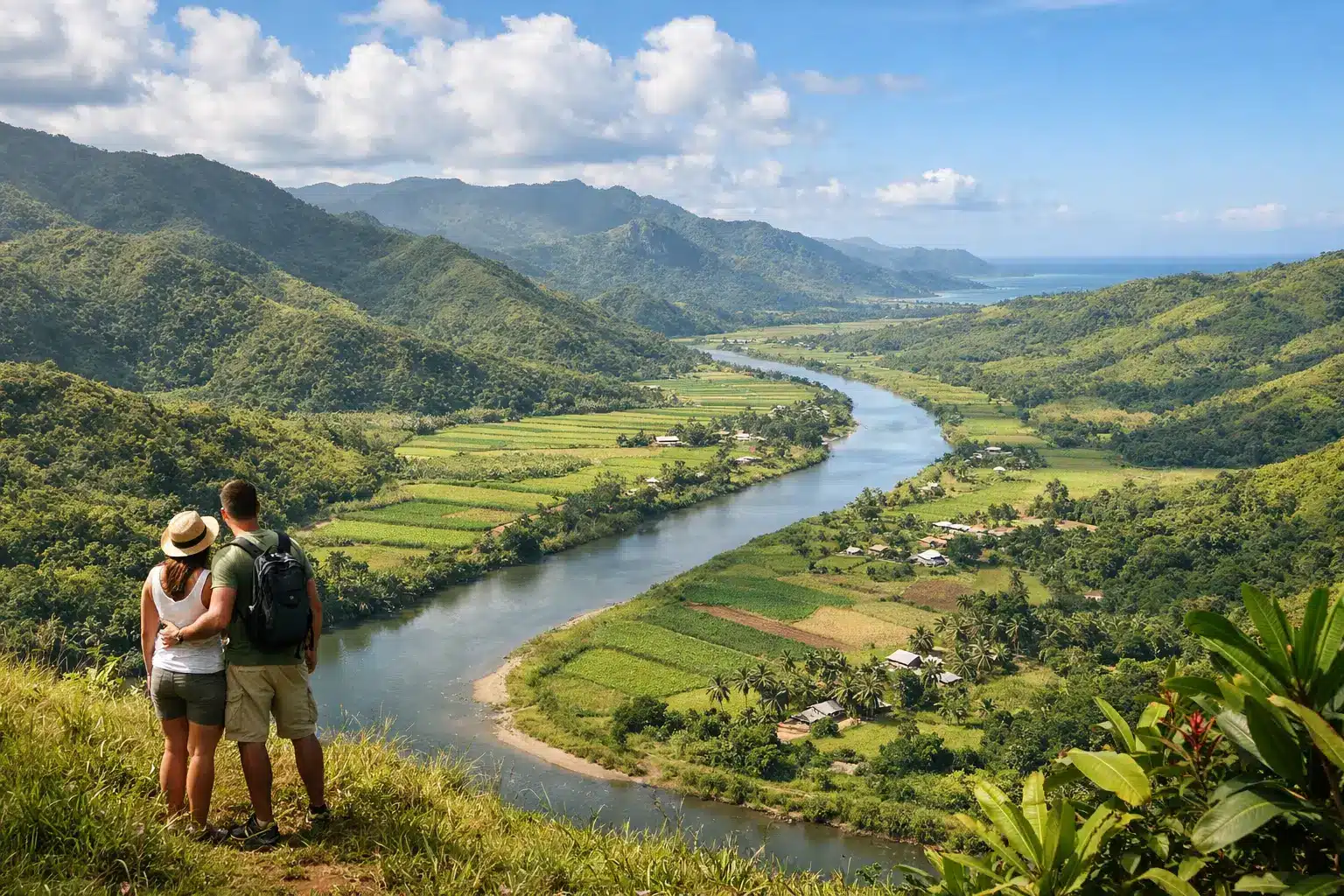
The road into Sigatoka Valley leaves Fiji’s resort coastline behind and opens into a striking patchwork of sugar cane, vegetable farms, forested hills and small villages. A Sigatoka Valley day experience is one of the best ways to see the country beyond the beach, meet local people respectfully and understand why this fertile region is known as Fiji’s Salad Bowl.
For travellers staying in Nadi, Denarau, the Coral Coast or nearby resorts, it is a rewarding full-day outing that combines scenery with genuine cultural insight. Rather than rushing from one photo stop to the next, the best tours give you time to listen to your local guide, share food and see everyday life in a rural part of Fiji.
Sigatoka Valley is not a staged attraction. It is a working agricultural region where families grow produce for markets and resorts, children head to school, and village life follows customs that have been passed through generations. The experience is memorable because it feels personal, particularly when led by a guide who knows the area and can explain the stories behind the landscapes.
The valley’s rich volcanic soil supports crops including cassava, taro, pineapples, bananas, papaya, tomatoes and leafy greens. Depending on the route and season, you may pass roadside stalls piled with fresh produce, sugar cane fields and grazing cattle before climbing into greener, quieter country.
There is also a wonderful contrast to a Fiji island day trip. Instead of white sand and open ocean, expect winding inland roads, mountain views and the warm welcome of communities who are proud to share their culture. It is an ideal choice for visitors who want their holiday to include more than pool time and postcard beaches.
Most Sigatoka Valley tours begin with hotel pick-up, then travel inland from the Coral Coast or Sigatoka area. Pick-up from Nadi and Denarau can make for a longer day, so it is worth checking the departure time and transfer duration before booking. A comfortable, air-conditioned vehicle is particularly valuable on a full itinerary, especially for families, seniors and anyone travelling during Fiji’s warmer months.
The drive is part of the experience. Your guide may point out the crops in season, explain the significance of the Sigatoka River and share local knowledge that is easy to miss when travelling independently. You are likely to stop at scenic lookouts and roadside locations where the wide green valley comes into view.
A village visit is often the heart of the day. It may include a formal welcome, a sevusevu ceremony involving kava, time with local hosts and an introduction to village customs. Every village and itinerary is different, so inclusions should be confirmed at the time of booking.
Visitors are expected to dress modestly. Women should have shoulders and knees covered, while men should avoid very short shorts or sleeveless tops. A sulu is a practical and respectful option, and your guide can advise you if one is needed. Always ask before taking photos of people, homes, church buildings or ceremonies. This small courtesy makes a real difference.
Kava is commonly served in a shared bowl during traditional welcomes. You do not need to be an expert on protocol. Listen to your hosts and guide, follow their lead, and feel free to ask questions. The ceremony is about connection and respect, not putting on a performance for visitors.
Many full-day experiences include lunch, often with Fijian dishes prepared using fresh local ingredients. You may taste cassava, dalo, tropical fruit, curries, grilled fish or vegetables straight from the valley. Dietary requirements can usually be catered for with advance notice, but do not leave this until the morning of your tour.
Some itineraries include a farm visit, market stop or a closer look at local produce. These moments reveal just how much the valley contributes to Fiji’s kitchens. It is a simple but powerful connection: the meal on your plate may have been grown only a few kilometres away.
Sigatoka Valley can be visited year-round, although the experience changes with the weather. Fiji’s drier period, generally from May to October, often brings cooler temperatures and clearer conditions for valley views. It is a popular time for touring, so booking ahead is wise if your dates are fixed.
The wetter season, usually from November to April, gives the countryside its most vivid green colour. Afternoon showers are possible, roads can be muddier, and plans may need a little flexibility. On the upside, the landscape is exceptionally lush and there are often fewer visitors.
For either season, a morning departure is usually best. You will avoid some of the strongest midday heat and have more time to enjoy the stops without feeling rushed.
This is a relaxed rural tour, not a strenuous hike, but comfortable preparation will make the day far more enjoyable. Choose breathable clothing that is appropriate for village visits, and wear enclosed shoes or supportive sandals that can handle uneven ground. Thongs are fine around a resort, but they are not always the best choice for a farm path or a wet roadside lookout.
Pack the following essentials:
Bring your camera, but do not experience the valley through a screen all day. The conversations, the smell of earth after rain and the sound of the river are as much a part of the visit as the views.
A Sigatoka Valley day experience suits couples wanting a more meaningful Fiji day tour, families keen to introduce children to local culture, and small groups looking for something different from a resort activity. It can also be a very good fit for cruise visitors with enough time ashore, provided pick-up timing and return arrangements are carefully confirmed.
It does depend on your interests. If your priority is snorkelling, sailing or a lazy day on an island, choose a Mamanuca or Yasawa day trip instead. If you want cultural connection, rural scenery and a better understanding of Fiji’s everyday life, the valley is hard to beat.
Travellers with limited mobility should ask about walking distances, vehicle access and toilet facilities before committing. Rural roads and village settings can involve steps, uneven surfaces and less formal infrastructure than a resort. A trusted local operator will be upfront about what the day involves and help you choose an option that suits your comfort level.
You can drive through parts of the valley independently, but a guided tour brings context, access and confidence. Village visits are not simply places to turn up unannounced, and customs matter. A local guide helps ensure your visit is welcome, respectful and rewarding for both guests and hosts.
They also make the practical side easy. Transport, timing, lunch arrangements and local etiquette are organised for you, leaving you free to enjoy the day. Best Fiji Activities can help travellers compare suitable valley tours, arrange reliable transfers and build the experience into a wider Fiji holiday itinerary without hidden booking charges.
Leave room in your Fiji plans for a day that is slower, greener and more personal. The coast may be where you first fall in love with Fiji, but Sigatoka Valley is where many visitors begin to understand it.