Your cart is currently empty!
You may check out all the available trips and book one that suits you.
Continue Browsing Trips
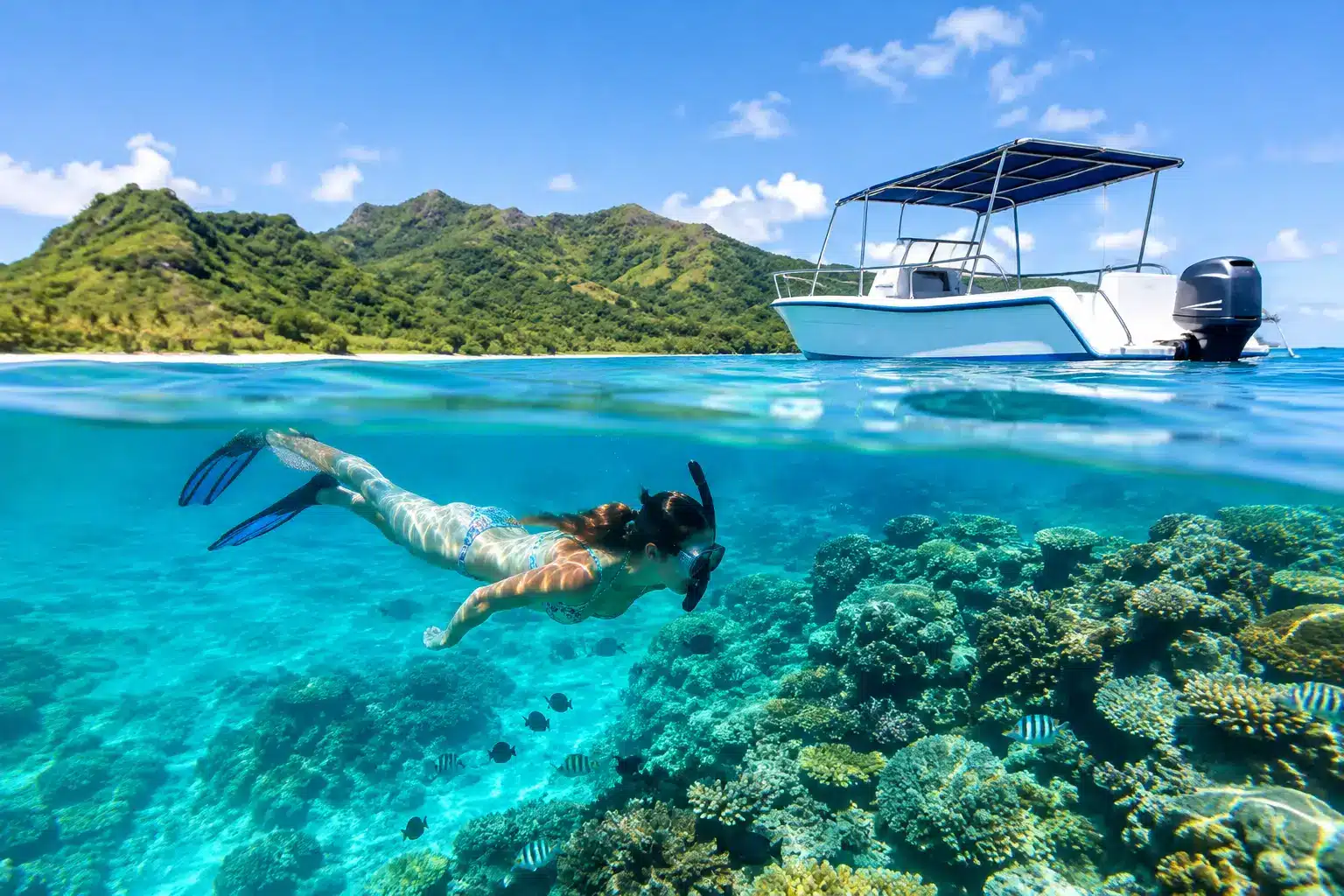
The moment you slip into Fiji’s warm, clear water, the holiday changes pace. A few metres from the beach or a short boat ride offshore, you can be floating above coral gardens alive with blue damselfish, parrotfish, giant clams and, on the right day, a curious turtle. The best Fiji snorkelling spots are spread across several island groups and coastal regions, so choosing the right one comes down to where you are staying, your confidence in the water and how much of the day you want to spend travelling.
For most visitors arriving through Nadi, an organised island day trip is the simplest way to reach healthy outer reefs without worrying about boats, equipment or conditions. Fiji’s reefs deserve time, care and local knowledge, and a good skipper knows when a lagoon will be glassy, when a channel may be too lively, and where visibility is looking its best.
The Mamanuca Islands are the easy choice for travellers based in Nadi, Denarau or the Coral Coast who want a brilliant reef day without an overnight island stay. These islands sit west of Viti Levu, with shallow lagoons, sandy beaches and plenty of sheltered water that suits first-time snorkellers, families and couples.
Reef quality varies between islands, as it does anywhere close to a busy visitor region, but the best day tours use sites selected for conditions rather than simply stopping at the nearest beach. Look for trips that include a guided snorkel, quality masks and fins, and enough time in the water to settle in. A guide can point out camouflage-coloured reef fish, sea cucumbers and small coral formations that are easy to miss when you are concentrating on your mask.
The Mamanucas are also a smart option if someone in your group would rather relax on the sand than snorkel for hours. You can combine the reef with lunch, swimming and a relaxed island afternoon.
If your idea of Fiji involves dramatic green islands rising from impossibly blue water, head north to the Yasawas. The chain has some of Fiji’s most memorable lagoon snorkelling, particularly around smaller resort islands and protected bays. Visibility can be exceptional during settled weather, while the variety of coral and fish makes even a gentle shore snorkel feel special.
The trade-off is travel time. A Yasawa day trip can mean an early start and a longer boat journey from Denarau, so it is best for travellers happy to make a full day of it. Staying one or more nights in the Yasawas gives you far more flexibility, especially for early-morning snorkelling when the water is calm and the reef is quiet.
Some areas offer deeper drop-offs and stronger currents beyond the lagoon edge. Confident swimmers may enjoy these more exposed sites with a guide, but families and less experienced snorkellers should stay in sheltered water and follow local advice.
Malolo Island and nearby outer Mamanuca reefs offer a lovely middle ground: close enough for accessible boat trips, yet often feeling more remote than the inner islands. The reefs here can feature colourful hard coral gardens, schools of reef fish and clear sandy channels that make orientation easy.
This is a great region for travellers who want more than a quick splash in the sea. Many day tours pair snorkelling with a scenic cruise through the islands, so the journey itself becomes part of the experience. Bring a rash shirt or light cover-up, as the tropical sun is strong even on overcast days and a red back is a poor holiday souvenir.
South Sea Island is small, lively and convenient, making it particularly popular with families, cruise visitors and travellers short on time. Its surrounding waters are generally easy to access, with snorkelling available close to shore and plenty of support nearby.
It is not the place to seek untouched wilderness, but it delivers a fun, well-organised Fiji reef experience with minimal fuss. For nervous snorkellers, having clear entry points, gear assistance and other people around can be reassuring. For stronger swimmers, it works well as part of a wider Mamanuca island-hopping day.
The Coral Coast stretches along southern Viti Levu between Nadi and Suva and is a handy choice if you are staying at a beachfront resort or villa. In the right location, you may be able to walk straight from the beach to a fringing reef at high tide. That convenience is hard to beat, particularly for families wanting shorter sessions around the day’s other plans.
Conditions are very tide-dependent. At low tide, parts of the reef flat can be too shallow to snorkel comfortably and walking across coral can cause real damage. Ask your accommodation or local guide about the best access point and timing. A guided outing is worthwhile if you want to reach healthier sections of reef beyond the immediate shoreline.
Pacific Harbour is known as Fiji’s adventure capital, but its coastal waters also offer rewarding reef experiences. Beqa Lagoon, reached by boat from the region, is better known among divers for its deeper sites, yet selected sheltered areas can suit confident snorkellers looking for clear water and a more adventurous day on the sea.
This option is best for travellers who are comfortable in open water and prepared for a boat-based excursion. Sea conditions can change quickly, and the most suitable snorkelling site will depend on wind, tide and swell. The upside is a more remote feel, with fewer boats and a genuine sense of being out on Fiji’s vast blue lagoon.
For serious reef lovers, Kadavu is one of Fiji’s standout snorkelling destinations. The island lies south of Viti Levu and is home to the Great Astrolabe Reef, one of the world’s largest barrier reef systems. Expect immense coral structures, rich fish life and a wilder setting than the easy-to-reach islands near Nadi.
Kadavu is not usually a casual day trip. It needs more planning, often including a domestic flight and island accommodation, but the reward is a slower, more remote Fiji experience. This is where travellers who value nature over nightlife tend to find their favourite memories. Choose an operator or resort with experienced local guides, especially if you are snorkelling outside sheltered bays.
Taveuni is another destination for travellers willing to go further for extraordinary marine life. The Rainbow Reef, between Taveuni and Vanua Levu, is famous for its soft corals and vibrant underwater colour. Many sites are best suited to scuba divers because of depth and current, but guided snorkelling excursions can still reveal excellent shallow reef sections when conditions allow.
It is a destination to choose for the reef itself, rather than for a quick add-on to a Nadi holiday. Allow several nights, remain flexible around weather, and listen carefully to your guide’s briefing. Fiji’s most beautiful water is not always its calmest water.
Fiji offers snorkelling year-round, but May to October is often the most comfortable period for visitors who prefer lower humidity, cooler evenings and generally stable conditions. Water temperatures remain inviting, usually around the mid-20s Celsius or warmer, and visibility can be excellent.
November to April brings warmer water, lush green scenery and fewer visitors in some periods, but also greater humidity and a higher chance of rain, wind and tropical weather disruptions. That does not mean every day is poor for snorkelling. It simply means conditions can be more variable. Local skippers adjust routes and sites accordingly, which is one reason a guided tour is often better value than trying to plan offshore snorkelling independently.
The daily tide matters as much as the season for shore reefs. High or mid-tide often gives you more water above the coral, safer access and a more enjoyable float. Your guide or accommodation team can advise on the day’s best window.
A well-fitting mask is more valuable than expensive gear. Test the seal before boarding, keep hair away from the mask skirt and use a little anti-fog solution if available. Fins help you move efficiently, but never use them to stand on coral or kick up sand near delicate formations.
Wear a long-sleeve rash shirt where possible and choose reef-conscious sunscreen. Fiji’s sun reflects strongly from the water, and covering up also saves you from repeatedly applying sunscreen between swims. Drink water throughout the day, particularly on boat trips where the breeze can hide how hot you are becoming.
Most importantly, admire the reef without touching it. Coral is a living animal, and even a light hand, a foot placed for balance or a careless fin kick can harm it. Keep a little distance from turtles and reef fish, never feed marine life, and take only photographs. The best snorkelling memories come from seeing a reef behaving naturally.
The right trip is not always the one with the longest itinerary. Families may get more from a sheltered island lagoon with easy access, while keen swimmers may prefer a smaller-group reef excursion with several snorkel stops. If you are staying in Nadi or Denarau, the Mamanucas provide the strongest mix of convenience and scenery. If you have extra time, an overnight stay in the Yasawas, Kadavu or Taveuni can transform snorkelling from one holiday activity into the highlight of the trip.
Best Fiji Activities can help match an island day trip, private excursion or transfer plan to the way you want to travel, with practical local advice before you set off. Leave room in your itinerary for the water: Fiji’s finest reef moments rarely happen on a schedule, and that is exactly why they stay with you.