Your cart is currently empty!
You may check out all the available trips and book one that suits you.
Continue Browsing Trips
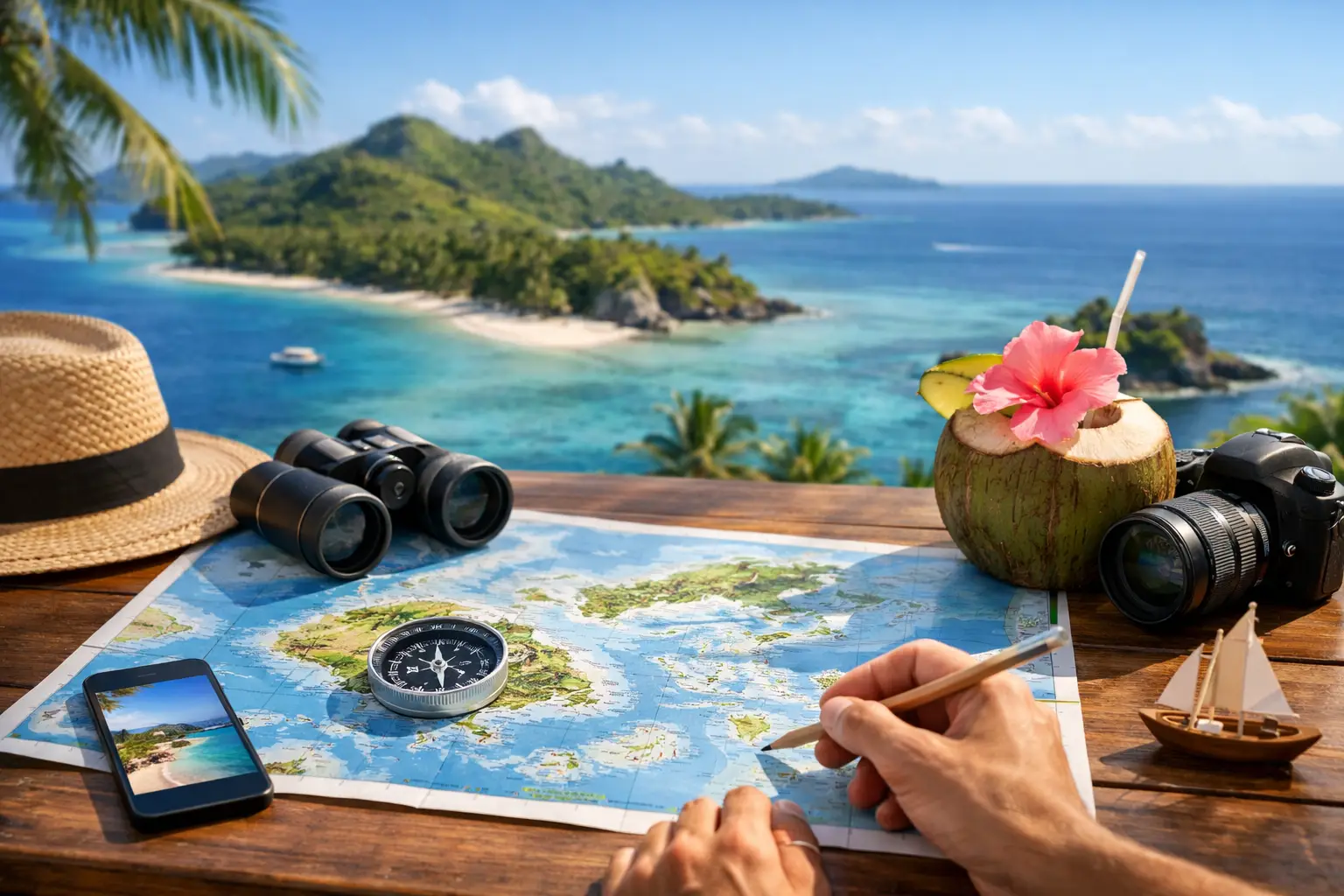
Your Fiji holiday can look brilliantly simple on a map: a few islands, clear blue water and a resort waiting by the beach. In reality, choosing the right route is what separates a relaxed escape from a holiday spent watching ferry times. This Fiji island navigation guide helps you understand where to base yourself, how island transfers work and how to plan a trip that feels effortless from your arrival in Nadi.
Fiji is made up of more than 300 islands, but most first-time visitors only need to focus on a handful of well-connected regions. Start with the experience you want – easy island day trips, a remote multi-night stay, cultural encounters, family-friendly beaches or high-energy adventure – then let the transport options shape the itinerary.
Most international visitors arrive at Nadi International Airport on Viti Levu, Fiji’s largest island. Nadi is the practical starting point for the Mamanuca Islands, the Yasawa Islands, the Coral Coast and many mainland resorts. It is also a strong choice for a first or final night, particularly after a late flight or before an early departure.
Denarau Island, around 20 to 30 minutes from the airport depending on traffic, is the main departure point for many island vessels. It is home to Port Denarau Marina, where scheduled ferries, day-cruise vessels and resort transfer boats depart. If your holiday includes the Mamanucas or Yasawas, staying near Nadi or Denarau before your boat transfer can remove a great deal of pressure from arrival day.
Suva, on Viti Levu’s south-east coast, is Fiji’s capital and a useful hub for travellers heading to places such as Ovalau, Kadavu or the eastern islands. It is not the most direct gateway for a classic beach-and-resort holiday from Australia, but it suits visitors who want city culture, history and a less resort-focused side of Fiji.
Viti Levu is where you will find Nadi, Denarau, Lautoka, Pacific Harbour, Suva and the Coral Coast. It is the best choice if you want the greatest flexibility for road transfers, sightseeing tours, waterfalls, markets and cultural experiences.
The outer islands are where Fiji becomes more secluded. The Mamanucas are close to Nadi and ideal for short stays, island day trips and snorkelling. The Yasawas extend north-west in a long island chain and reward travellers who can stay longer. Taveuni, Vanua Levu, Kadavu and the Lau Group offer spectacular scenery and a quieter pace, but reaching them usually involves domestic flights or less frequent boat connections.
The best route depends on how much holiday time you have. Trying to cover several far-flung islands in one week can create more transfer time than beach time. For most visitors, one mainland region plus one island group is an excellent balance.
The Mamanucas sit west of Nadi and are the most convenient islands for many travellers. Boat journeys can be as short as 20 minutes, although the exact time depends on your resort and vessel. This makes the group perfect for couples wanting a romantic few nights, families who prefer simple logistics, and visitors adding an island stay around a mainland itinerary.
These islands are known for clear water, white sand, coral reefs and a wide range of accommodation styles. Some resorts are lively and social, while others are private and peaceful. If you are travelling for just three or four nights, the Mamanucas generally give you more holiday time and less moving around.
The Yasawas stretch much farther north than the Mamanucas. Daily ferry services travel along the chain, dropping guests at different resorts, but travel times increase significantly the farther north you go. A resort near the southern Yasawas may be straightforward from Denarau, while the northern end can take most of a day by ferry.
The reward is a more remote Fiji experience: dramatic volcanic landscapes, quieter bays, village visits and memorable snorkelling. The Yasawas suit travellers with at least five to seven nights, especially those comfortable with a slower, more unplugged holiday rhythm. If your time is short, choose one Yasawa resort rather than attempting several island changes.
For visitors who enjoy variety, the Coral Coast is an excellent mainland alternative to an island-only holiday. It runs along the southern coast of Viti Levu between Nadi and Suva, with beaches, reefs, local villages and popular family resorts. Travel is by road, so it is easier to add day tours without packing and unpacking between boats.
Pacific Harbour, farther east, is Fiji’s adventure capital. It is a strong fit for white-water rafting, ziplining, shark diving and river experiences. It takes longer to reach from Nadi than the Coral Coast, so it works best as a purposeful part of your route rather than a quick overnight stop.
Fiji transport is reliable when planned properly, but it is not always fast. Weather, sea conditions and operational schedules can affect boat departures, while domestic aircraft have stricter luggage limits than international flights. Leave breathing room between major transfers, especially when connecting to or from an international flight.
Scheduled ferries are often the best-value way to reach Mamanuca and Yasawa resorts. They are sociable, scenic and practical, though they may make several stops. Private boat transfers can be quicker and more flexible, particularly for families, small groups or guests arriving outside standard ferry times. The trade-off is cost.
Seaplanes and helicopters provide remarkable aerial views and dramatically cut travel time to selected islands. They are especially appealing for special occasions or remote resorts, but baggage allowances are often limited and flights can be weather dependent. For many travellers, a ferry on the way out and a scenic air transfer back is a memorable compromise.
Domestic flights are generally the most practical option for Vanua Levu, Taveuni and Kadavu. Check your resort’s transfer instructions carefully, as a flight may connect to a road transfer, a short boat trip or both. Booking the complete transport chain together is far easier than arriving at a small airport and hoping the final connection is available.
A well-paced Fiji holiday usually starts with an arrival night near Nadi or Denarau, followed by a multi-night island or coastal stay. From there, add only one further change if you have enough time. This gives you a mix of experiences without turning the holiday into a transport schedule.
For a seven-night trip, consider one night near Nadi, four nights in the Mamanucas and two nights on the Coral Coast, or spend the full six nights after arrival at one excellent island resort. Both work. The better option depends on whether you value seeing more of Fiji or settling into one beautiful place.
With 10 to 14 nights, you can combine the Mamanucas and Yasawas, or add a domestic-flight destination such as Taveuni. Keep in mind that changing islands involves checkout times, transfers and waiting periods. A resort may be only 50 kilometres away, yet require much of a day to reach by sea.
Fiji’s dry season, generally May to October, brings cooler evenings and popular travel dates. Book sought-after island accommodation and transfers early during school holiday periods. The warmer, wetter months from November to April can offer great value and lush landscapes, though tropical rain and rougher seas are more likely.
Pack a small day bag with swimmers, medication, sun protection, a light cover-up and valuables for ferry transfers. Larger bags are often handled separately and may not be immediately accessible. Soft luggage can be easier than hard cases on smaller aircraft and boats.
Always confirm the latest transfer time directly before travel, particularly if your arrival flight changes. Build in a buffer rather than relying on a tight connection. Local experts at Best Fiji Activities can help coordinate tours, transfers and island plans so the practical details support the holiday, rather than interrupt it.
The smartest place to begin is not with a long list of islands. Choose the feeling you want from your first morning in Fiji – quiet and remote, active and adventurous, or easy and resort-ready – then select the route that gives you more time there.