Your cart is currently empty!
You may check out all the available trips and book one that suits you.
Continue Browsing Trips
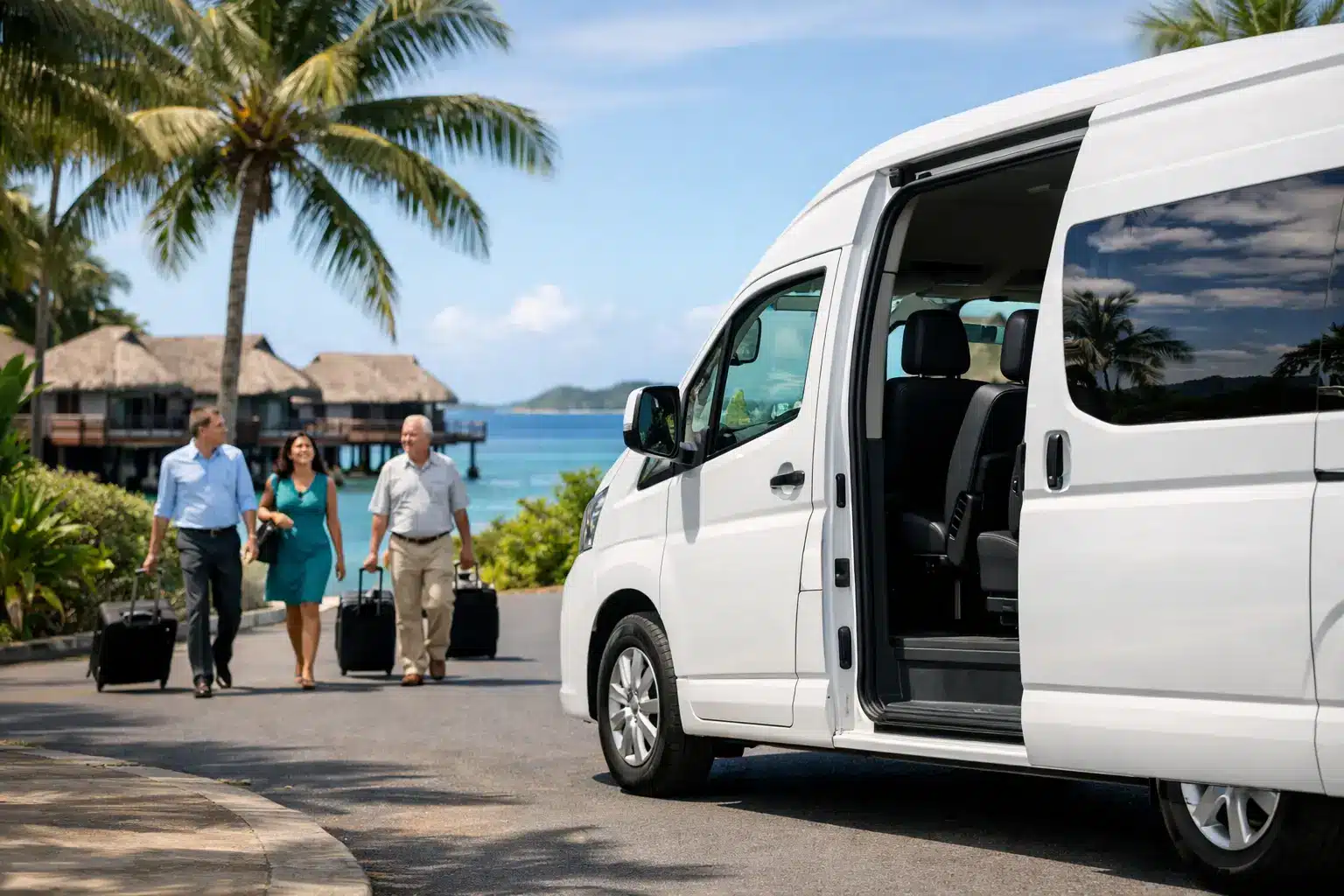
A conference itinerary can look perfect on paper, then come unstuck at the arrivals gate. Delegates land on different flights, luggage takes time, resort check-in has a queue, and the opening dinner starts before everyone has found their own way there. Fiji conference transport is what turns that moving puzzle into a well-run event, giving guests a warm welcome and organisers one less thing to chase.
For Australian businesses bringing teams, clients or incentive groups to Fiji, transport is not simply about getting from A to B. It shapes first impressions, protects the event schedule and gives guests confidence from the moment they arrive in Nadi. With local planning behind each transfer, delegates can spend less time checking maps and more time enjoying the conference, the resort and the remarkable island setting around them.
Most Fiji conferences are based around Nadi, Denarau Island, the Coral Coast or Pacific Harbour. These areas are well connected, but travel times are affected by the location of the venue, flight arrival patterns, road conditions and the size of your group. A 30-minute airport run for a small party may need a very different plan when 80 delegates arrive across three international flights.
The right approach starts with the actual event timetable, not just a list of pick-up points. Airport arrivals, resort transfers, conference sessions, off-site dinners, team activities and departures all need to work together. A local transport partner can advise on realistic travel windows, meeting points and vehicle allocations before guests arrive.
This matters particularly for group events where one delayed coach can affect a whole programme. Building a little flexibility into the schedule is smart. Allow time for flight delays, resort check-in, guests who need assistance with luggage, and the natural slower pace that makes Fiji such a rewarding destination.
Nadi International Airport is the usual gateway for international conference groups. A clear arrival plan should identify each flight, expected landing time, delegate numbers, luggage requirements and the lead contact for every group. If arrivals are spread across the day, a series of coordinated transfers may be more practical than holding early guests at the airport for a single large departure.
Meet-and-greet arrangements are especially useful for first-time Fiji visitors. Delegates should know who is meeting them, where to go after customs and how to identify their vehicle. For executive guests or speakers, private airport transfers can provide a more direct and comfortable arrival experience. For larger teams, a dedicated coach or minibus keeps colleagues together and avoids a long line of separate taxis.
It also pays to confirm where the vehicle can access each resort. Some properties have specific coach bays or designated collection points, while dinner venues and activity providers may require guests to meet at a nearby entrance. Details like these are small until they cause 50 people to wait in the wrong place.
The best vehicle mix depends on the group, the venue and the purpose of each journey. Airport transfers call for luggage capacity and reliable flight monitoring. Daily conference shuttles need punctuality and straightforward schedules. An evening celebration may benefit from dedicated return transfers, so guests can relax without worrying about finding their way back after dark.
For smaller leadership groups, private cars or premium vans offer privacy and flexibility. Minibuses suit teams travelling between nearby hotels and meeting venues. Full-size coaches are ideal for larger groups, particularly when everyone is attending the same gala dinner, cultural evening or island excursion. Rather than choosing one vehicle type for the entire event, it is often better to match each service to the occasion.
Accessibility should be discussed early. If guests have limited mobility, travelling with young children, or carrying equipment for presentations and displays, the transport plan needs to account for it. The same goes for oversized sporting gear if your group is extending the trip with golf, diving or fishing.
Fiji’s main roads offer beautiful coastal views, villages and cane fields, but they are not built around a corporate city timetable. Travel from Nadi or Denarau to the Coral Coast can take several hours depending on the exact resort and conditions. Pacific Harbour is farther again. A well-planned departure time protects your programme without rushing delegates through the experience.
If your conference is based on Denarau Island, keeping key events nearby can simplify logistics. If the event includes a Coral Coast venue, it may be worth arranging a scenic group transfer and treating the journey as part of the delegate experience. A local guide, refreshment stop or carefully timed lunch can make the road trip feel considered rather than inconvenient.
Island events need another level of coordination. Boat transfers operate to set timetables and are weather dependent, so they require sensible buffers. For a conference function on an island, confirm passenger numbers, boarding location, luggage needs and return times well in advance. Guests should receive clear guidance on suitable footwear, sun protection and what to bring.
The strongest conference programmes leave room for Fiji beyond the meeting room. A well-timed group transfer can carry delegates to a sunset cruise, village visit, river safari, island day trip or a relaxed cultural dinner. These shared experiences are often where teams connect most naturally.
Transport for activities should be booked as part of the broader conference schedule, rather than as an afterthought. Consider the energy of your group. A full-day island trip after a late awards evening may not suit everyone, while a shorter afternoon experience could be the better fit. Some groups will value adventure, others will prefer sightseeing, local culture or time by the pool.
For spouses, partners or delegates with free time, optional tours and private excursions give the programme more flexibility. They can enjoy Fiji’s best experiences without needing to hire a car or negotiate unfamiliar local transport. This is particularly valuable for incentive groups where guests may have different interests but still need reliable pick-ups and return arrangements.
Best Fiji Activities can help organisers coordinate transport alongside memorable day tours, cultural experiences, island trips and tailored group activities. Working with local experts means the practical details are considered alongside the fun parts of the itinerary.
Even an excellent transfer plan only works if delegates understand it. Provide transport information before departure, then repeat the essentials in a simple event itinerary or on a mobile-friendly schedule. Include pick-up times, locations, journey expectations, dress requirements and a local contact number for urgent changes.
For larger groups, nominate one transport coordinator from the event team and one from the local operator. These contacts can manage real-time questions, late arrivals and changes to guest numbers without asking every delegate to make separate calls. A group messaging channel can also help, especially for evening functions or activity days.
Avoid vague instructions such as ‘meet in the lobby’. Resorts can have multiple lobbies, restaurants and entrances. Instead, name the exact meeting point and ask guests to be ready five to ten minutes before departure. Coaches cannot always wait for latecomers, particularly when they are operating around airport or boat schedules.
Conference transport costs vary according to vehicle size, service hours, distance, waiting time, after-hours requirements and whether the vehicle is dedicated to your group. The lowest quote is not always the best value if it excludes luggage handling, return transfers, airport waiting time or schedule changes.
Ask for clear inclusions from the beginning. Your quote should make it easy to see what is covered, where any extra charges could arise and who to contact if the event schedule changes. Transparent pricing helps finance teams plan accurately and prevents unwelcome surprises once the conference is underway.
There is also a balance between efficiency and comfort. Packing every delegate into the fewest possible vehicles might save money, but it can create delays at loading points and leave little room for luggage. On the other hand, oversized vehicles for a small group can be unnecessary. Local advice is useful here because it reflects the actual roads, resorts and operating conditions in Fiji.
When airport welcomes, conference shuttles and special-event transfers are planned as one connected service, your delegates feel looked after at every stage. That leaves your event team free to focus on speakers, guests and the moments that matter.
Give your transport plan the same attention as the conference venue. In Fiji, a reliable ride can be the difference between a schedule that merely works and an event where every guest arrives ready to enjoy what comes next.