Your cart is currently empty!
You may check out all the available trips and book one that suits you.
Continue Browsing Trips
A Fiji culture village visit is one of the few holiday experiences where the highlight is not just what you see, but how you are welcomed. After a day of reef swimming, island cruising or poolside relaxing, stepping into a village setting offers a warmer, more personal view of Fiji: shared food, music, storytelling, traditional skills and the gracious spirit known as bula.
For many visitors, a cultural evening becomes the memory they talk about long after the tan fades. The best experiences are entertaining, certainly, but they also give context to the customs, family connections and community values that continue to shape life across Fiji’s islands.
Every experience has its own programme, location and level of formality. Some are purpose-built cultural venues created to welcome visitors, while others take place in or near living communities. That distinction matters. A well-run cultural village tour should be clear about where you are going, what is included and how the visit supports local hosts.
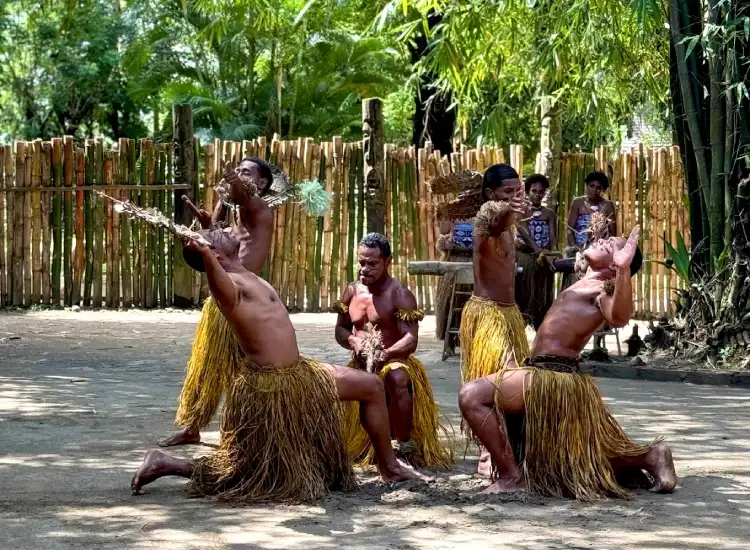
Most tours begin with a traditional welcome. You may be greeted by hosts in ceremonial dress, hear the sound of the lali drum, and be invited into a communal space. This is not simply a photo opportunity. Welcoming guests is central to Fijian hospitality, and your guide will usually explain the meaning behind the ceremony as you go.
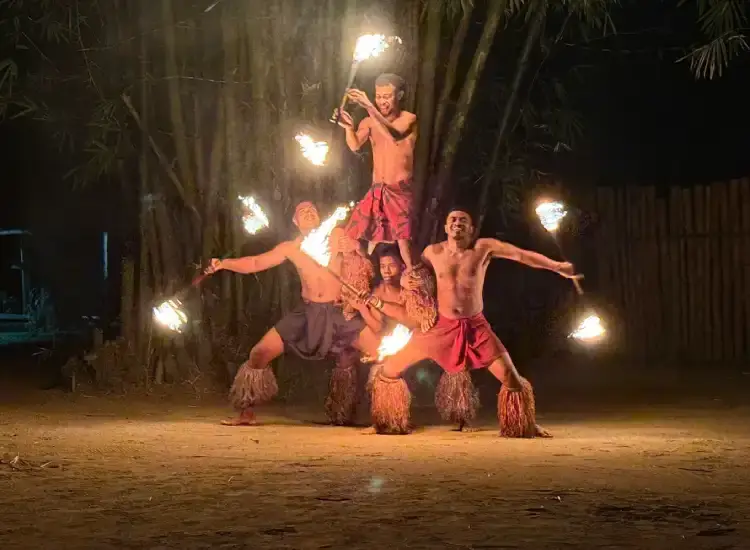
A typical visit may include a kava ceremony, demonstrations of weaving, carving or cooking, cultural performances and a Fijian buffet. Evening programmes often build towards a meke, a powerful combination of song, dance, costume and storytelling. The dances can portray historic events, daily life, celebration, challenge and connection to land and sea.
The exact order varies, which is part of the appeal. Rather than rushing from one activity to another, allow the experience to unfold. A knowledgeable local guide can turn a beautiful performance into something much richer by explaining what you are watching and why it matters.
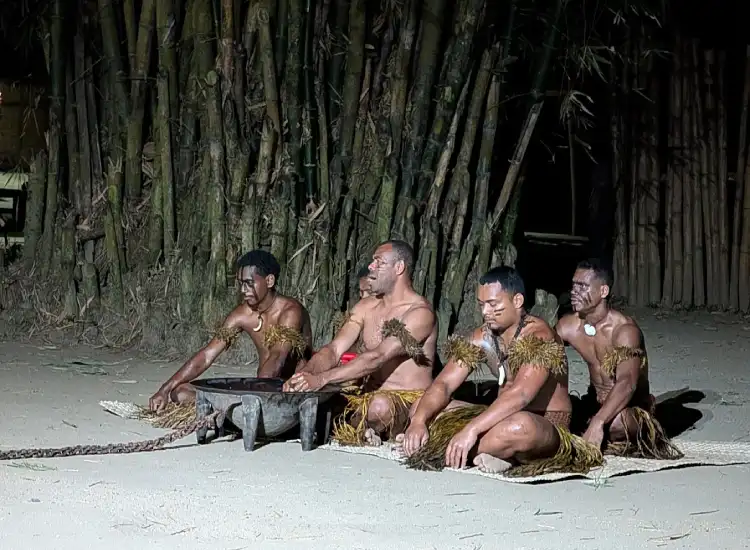
Kava is a traditional drink made from the root of the yaqona plant. It is served from a large wooden bowl called a tanoa, usually in a coconut-shell cup. The drink has an earthy flavour and may create a mild tingling sensation on the lips. It is not an alcoholic drink, though it is culturally significant and should be treated with respect.
Your host or guide will demonstrate the expected etiquette. In many ceremonies, guests clap once before receiving the cup, drink it in one go, then clap three times afterwards. Customs can vary between groups, so follow the lead of your hosts rather than worrying about getting every detail perfect. A sincere attempt and a friendly “vinaka”, meaning thank you, go a long way.
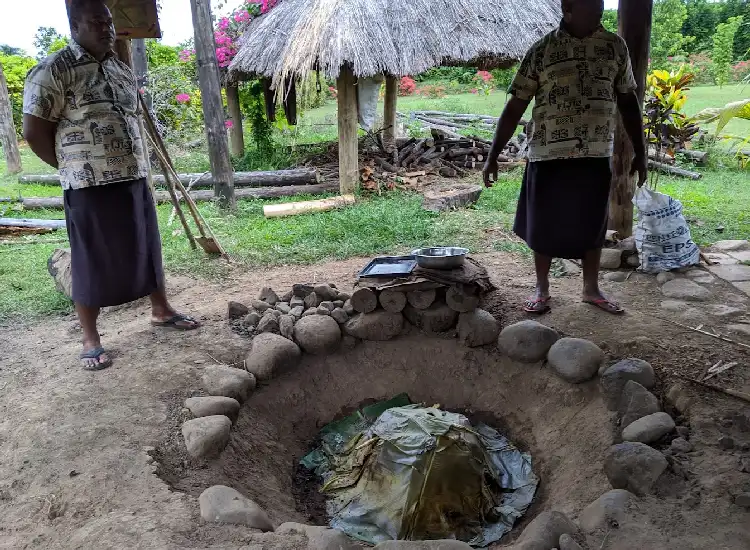
A cultural village dinner is often a great introduction to the generous, flavourful food found around Fiji. You may see an earth oven, known as a lovo, being uncovered. Meat, fish, root vegetables and dishes wrapped in coconut cream are traditionally cooked slowly over heated stones underground.
Expect ingredients such as cassava, dalo, coconut, local fish and tropical fruit. Menus differ by venue, and most established tours can cater for dietary requirements when advised in advance. If you are vegetarian, vegan, coeliac or travelling with children who are selective eaters, check the meal arrangements before booking rather than assuming every dish will suit.
Fiji’s beaches deserve their reputation, but culture gives the holiday greater depth. A village experience makes it easier to understand why greeting people with “bula” feels so natural, why communal meals are so important and why music is woven into so many celebrations.
It is also an excellent option for travellers who want an organised evening without needing to navigate unfamiliar roads or arrange dinner separately. Couples often enjoy the atmosphere and performances, while families appreciate that children can see, hear and taste something beyond a resort programme. For seniors and first-time Fiji visitors, a guided experience provides reassurance, transport and useful explanation throughout the night.
That said, not every cultural offering is the same. Some travellers want a polished dinner-and-show format close to Nadi or the Coral Coast. Others prefer a smaller encounter with more time for conversation and fewer staged elements. Neither is automatically better. The right choice depends on your location, available time, comfort level and what you hope to take away from the experience.
Start with the practical details. Transfers can make a major difference, especially after dark. If you are staying in Denarau, Nadi, Wailoaloa, the Coral Coast or Pacific Harbour, confirm whether hotel pick-up is included and how long you will spend in the vehicle. A convenient tour is often better value than a cheaper option requiring complicated transport.
Look closely at inclusions as well. An advertised cultural experience may include the show but not dinner, or dinner but not return transfers. Transparent pricing matters, particularly for families and groups. Ask whether there are extra charges for infants, special seating, drinks or photos, and confirm the cancellation terms before paying.
The quality of interpretation is another useful measure. The best Fiji tours do not treat culture as a backdrop. They employ guides and hosts who can explain customs with confidence, invite respectful questions and help guests understand the difference between a performance for visitors and a private village occasion.
When reading reviews, look beyond comments such as “great show” or “nice food”. The most useful feedback mentions host warmth, transport reliability, how clearly the evening was organised, dietary support and whether people felt welcomed rather than processed through a tourist attraction.
Best Fiji Activities can help visitors match a cultural evening with dependable transfers and other experiences in the same region, making it easier to plan a holiday that feels full without becoming over-scheduled.
Fijians are famously welcoming, and no reasonable host expects overseas visitors to know every custom. Still, a little awareness shows appreciation and helps create a more meaningful exchange.
Dress neatly and modestly for the setting. Resort wear is fine for many organised cultural venues, but bring a light layer for the evening and avoid arriving in swimwear. If your visit includes a traditional village or sacred space, your guide may ask you to cover your shoulders or knees. A sulu, Fiji’s versatile wrap skirt, is a practical and comfortable option.
Always ask before photographing people, particularly children, elders or ceremonial moments. Your guide will advise when photos are welcome and when it is better to simply be present. Avoid climbing on structures, touching cultural objects unless invited, or wandering away from the group in a community setting.
Listen during the welcome and kava ceremony, even if you do not choose to drink much. You can usually let your host know if you prefer a small serving or cannot participate for health, pregnancy or personal reasons. Courtesy is more important than performing the ritual perfectly.
Cultural village experiences operate year-round, making them a strong choice on a wet-weather afternoon or an evening when you want a break from water-based activities. Fiji’s warmer, drier months generally run from May to October, but evenings can still feel breezy after a shower. During the wetter months from November to April, pack a compact rain jacket and allow extra time for transfers.
Bring insect repellent, a reusable water bottle and a mobile with enough battery for photos. Wear comfortable footwear suitable for walking on uneven ground, particularly if the programme includes an outdoor lovo demonstration. Leave valuables at your accommodation where possible, and carry cash only if you would like to purchase a souvenir or tip where appropriate.
If you are travelling with young children, choose an experience with a clear finish time. Some evening shows run late for little ones, while early cultural tours may be a better fit. Guests with limited mobility should ask about paths, steps, seating and vehicle access in advance. Fiji is welcoming, but terrain and facilities differ significantly between venues.
The memorable part of a Fiji cultural evening may be the drumbeat, the lovo feast or the final meke. It may also be the quieter moment: learning a Fijian word from a host, sharing a laugh over kava, or hearing why a song has been passed through generations. Arrive with curiosity, follow local guidance and choose a tour that respects both its guests and its hosts. That is how a Fiji culture village becomes more than a night out – it becomes part of the story of your holiday.