Your cart is currently empty!
You may check out all the available trips and book one that suits you.
Continue Browsing Trips
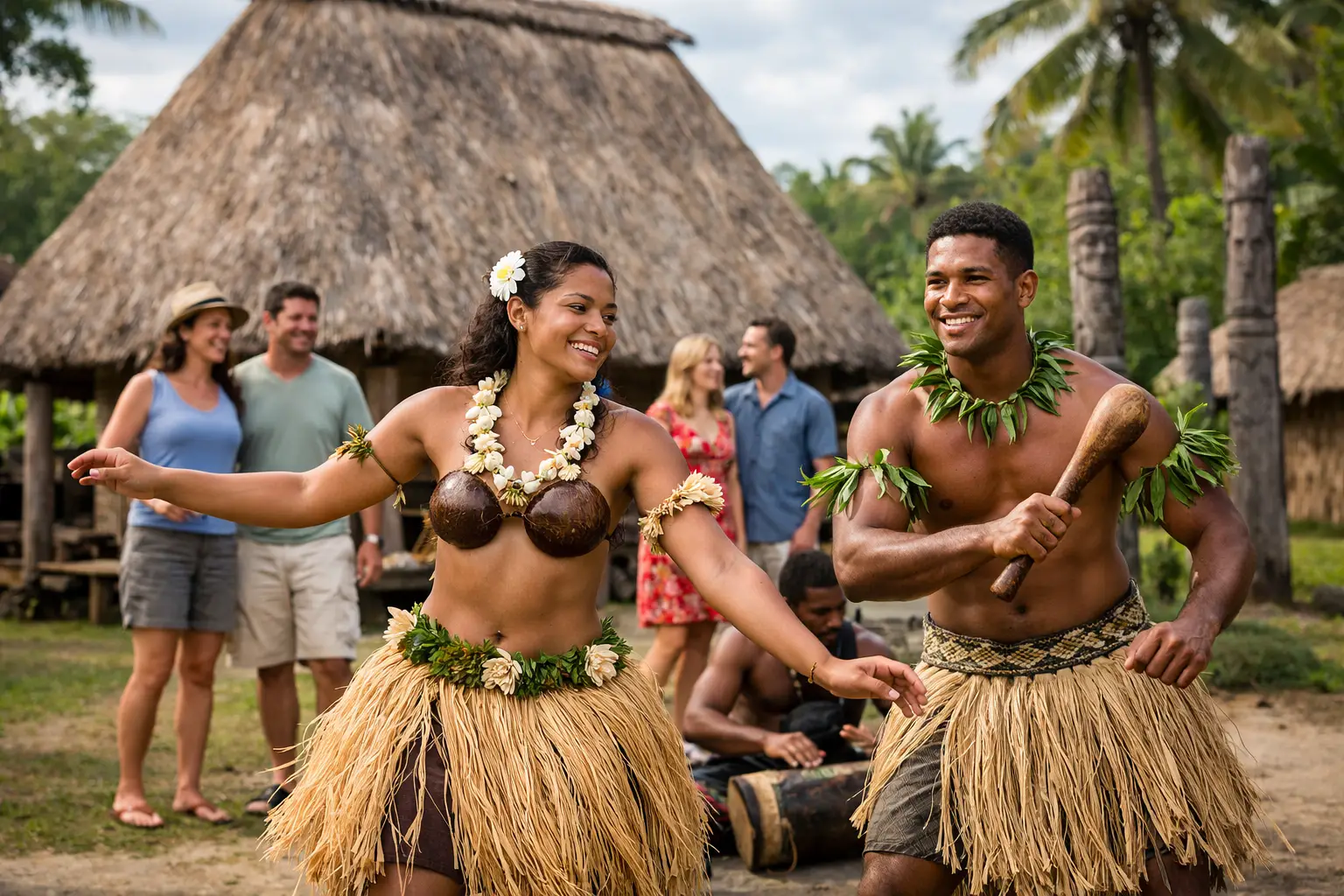
A Fijian warrior’s welcome, the beat of the lali drum and a lovo feast cooked beneath the earth make for a very different night out from dinner at your resort. This Fiji cultural village review looks at what you can genuinely expect from a village-style cultural evening, who will enjoy it most, and how to choose an experience that feels worthwhile rather than rushed.
For many visitors staying around Nadi, Denarau, the Coral Coast or Pacific Harbour, a cultural village visit is one of the easiest ways to see traditions that do not fit into a poolside holiday. It is also a hosted tourism experience, not a casual drop-in to someone’s home. Knowing that distinction helps set the right expectations.
Most cultural village evenings follow a similar rhythm, although the setting and level of detail vary between operators. You are usually welcomed with a traditional warrior ceremony, often featuring chanting, drums and performers in ceremonial dress. It is designed to create an immediate sense of occasion, and families generally find it a highlight.
From there, guides introduce aspects of Fijian daily life and heritage. Depending on the venue, this may include demonstrations of weaving, pottery, coconut husking, fire making, traditional medicine, tattooing stories or the preparation of a lovo. Good guides do more than explain what is happening. They connect customs to the values behind them, including respect for elders, communal life and the importance of the vanua – the land, people and shared identity of a place.
The evening normally builds towards a kava ceremony. Kava is a mildly relaxing drink made from the root of the yaqona plant. Guests may be invited to clap, say “Bula” and drink from the communal bowl. There is no pressure to have more than a small taste, and it is perfectly fine to decline politely if you prefer.
Dinner is commonly a buffet featuring lovo-cooked meats, fish, root crops, salads and desserts. Entertainment follows, with meke dancing, singing and, at some venues, an impressive fire-dancing performance. The final show can be polished and theatrical, but that does not make it meaningless. Meke is a living art form that carries stories through movement, music and chant.
The strongest cultural village experiences are welcoming without making guests feel like spectators behind a rope. You can ask questions, try kava if you choose, see how food is prepared and hear local guides speak about their culture in their own words. That personal interpretation is often what stays with travellers long after the holiday.
It is also a practical option for people who want an evening activity without a long travel day. Most experiences include hotel transfers from key tourist areas, which removes the need to navigate unfamiliar roads after dark. For couples, it can be a fun alternative to another resort dinner. For families, the action, music and fire show keep younger travellers engaged far better than a museum-style visit might.
The food is another pleasant surprise when expectations are realistic. A lovo is about slow cooking and smoky flavour rather than fine dining presentation. You may see cassava, dalo, chicken, pork, fish and seasonal vegetables alongside familiar buffet options. Guests with dietary requirements should confirm their needs before booking, especially for vegan, gluten-free or severe allergy requests.
Perhaps the biggest value is context. Fiji’s beauty is obvious from the beach, but culture helps explain why warm welcomes, sharing food and village connections matter so much here. If your Fiji itinerary is mostly island cruises, snorkelling and resort time, one cultural night adds welcome balance.
A fair review needs to acknowledge the trade-offs. These evenings are carefully organised for visitors and often run to a fixed schedule. You will be part of a group, there may be a souvenir area, and the presentation can feel more produced than an unplanned visit to a remote village. That is normal for a commercial cultural attraction that needs to operate safely and reliably for international guests.
The key question is whether the experience is respectful, well interpreted and locally led. Look for a tour that clearly explains inclusions, transport arrangements, duration and meal details. Transparent pricing matters, particularly when a tour is marketed as an all-inclusive evening. Check whether drinks, photos or optional extras cost more.
Location also affects the feel of the night. A purpose-built cultural venue near Nadi is convenient and often highly polished, making it ideal for short stays and first-time visitors. A smaller community-based visit may feel more intimate but can involve longer transfers, simpler facilities and fewer nightly departures. Neither is automatically better. It depends on whether convenience, comfort or a quieter local setting is your priority.
If you have already attended a similar South Pacific cultural show, you may find some elements familiar. However, Fijian meke, lovo cooking and kava etiquette are distinct, and a quality guide will help you understand those differences.
This is one of the best Fiji tours for first-time visitors who want a relaxed introduction to local traditions. It suits families with school-aged children, couples looking for a memorable dinner experience, solo travellers who enjoy social group activities, and seniors who prefer an accessible evening with organised transfers.
It may be less suitable for travellers seeking a completely unscripted, off-grid cultural immersion. In that case, consider building more time into your holiday and choosing a smaller, community-focused excursion with a guide who can explain the setting. It is also worth skipping if your itinerary is packed and you would rather save your evenings for rest after full-day island trips.
For cruise passengers, timing is crucial. Only book a cultural evening if your ship’s departure time leaves a comfortable buffer for transfers and the full programme. Rushing away before dinner or the performance defeats the purpose.
Wear light, comfortable clothing and shoes that are easy to walk in. Evenings can stay warm and humid, though an occasional light shower is possible in the wet season. A small umbrella or rain jacket is sensible between November and April, while insect repellent can be useful in outdoor areas.
Arrive with curiosity rather than a checklist. Listen during the welcome and kava ceremony, and ask respectful questions when there is an opportunity. If visiting a traditional village or entering a sacred space as part of your tour, follow your guide’s advice on dress, photography and behaviour. In Fiji, courtesy goes a long way.
Do not assume every part of the programme is available every night. Fire dancing, workshops, menus and transfer zones can change with weather, group size and local events. Confirm the current itinerary when booking, particularly if one feature is the main reason you want to go.
Booking ahead is wise during school holidays, peak dry-season travel from June to September, and the Christmas-New Year period. An established local operator such as Best Fiji Activities can help match the right cultural evening to your hotel location and organise dependable transport as part of a wider holiday plan.
For most first-time visitors, yes. A Fiji cultural village evening is worth booking when you want more than another meal and a show: it gives you an accessible, entertaining introduction to the people and traditions behind the famous Fijian welcome. Go with realistic expectations, choose a locally informed operator and leave room in your schedule to enjoy the evening at its unhurried pace.
The lovo may be smoky, the kava may be an acquired taste, and the dancing may leave your children wide-eyed. That is exactly the point. Make space for one evening where Fiji is not viewed from a sun lounger, but shared through story, song and hospitality.