Your cart is currently empty!
You may check out all the available trips and book one that suits you.
Continue Browsing Trips
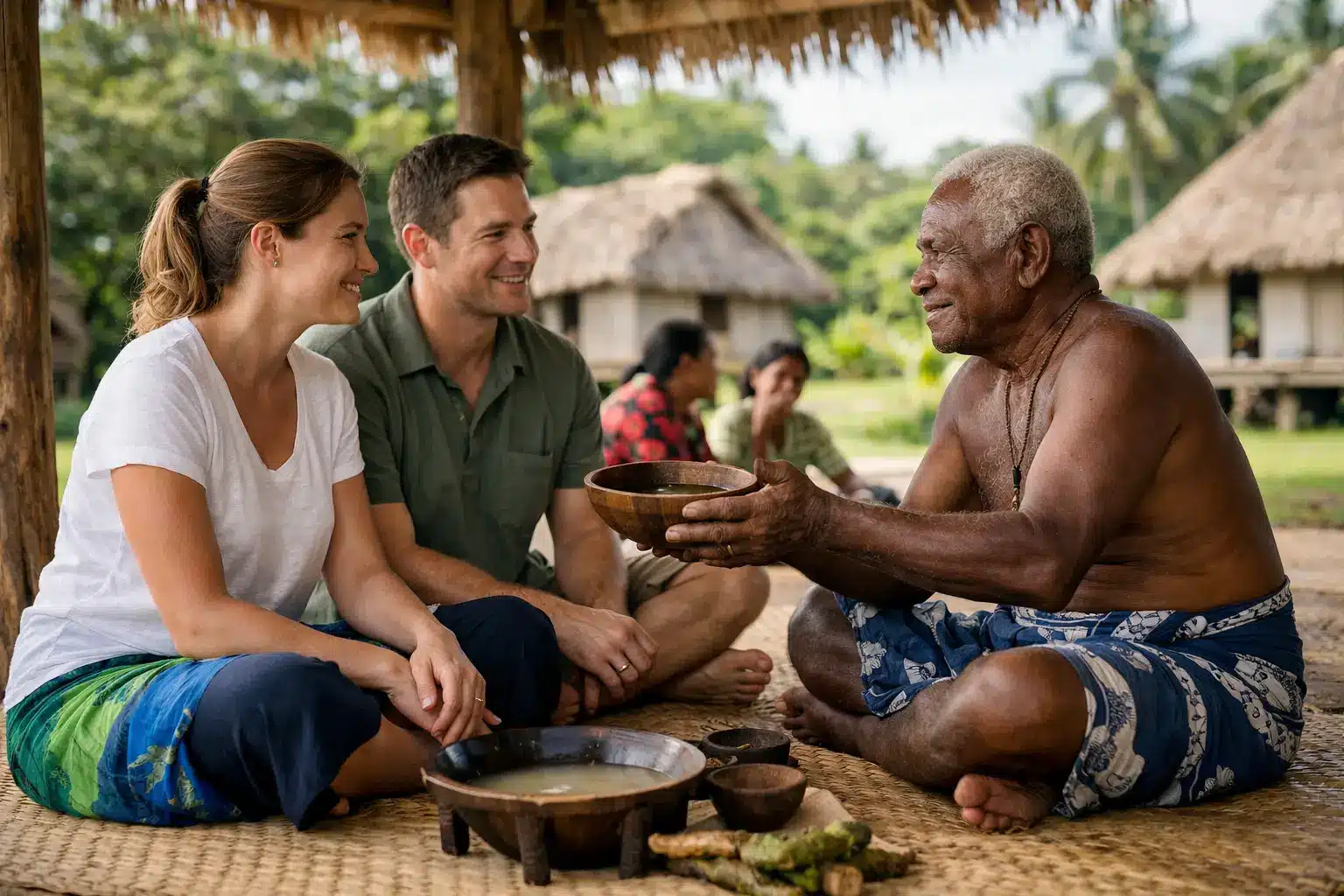
A Fiji village visit can become one of the most meaningful moments of your holiday: children calling out a cheerful bula, the sound of laughter around a kava bowl, and a welcome that feels personal rather than staged. To prepare for Fiji village visits well, think beyond what to pack. You are entering a living community and a guest in someone’s home, so a little cultural awareness goes a long way.
The good news is that you do not need to memorise a long list of rules or worry about getting every detail perfect. A reputable local guide will explain the customs of the particular village you are visiting and lead the formal welcome. Arrive with an open mind, dress respectfully, listen closely and follow their lead. That is the foundation for a warm, genuine exchange.
Fijian villages are close-knit communities with their own leadership, church, family networks and traditions. While tourism brings welcome income and creates opportunities for visitors and locals to meet, a village is not simply an attraction. Respectful behaviour shows that you value the people hosting you, not just the photo opportunity.
Protocols can differ between islands, provinces and individual villages. A formal welcome may be part of one visit, while another may focus on meeting local artisans, sharing a meal or learning about daily life. Your guide’s instructions always take priority over general travel advice. When in doubt, pause and ask politely rather than making assumptions.
Choosing an organised cultural experience is often the easiest option for first-time visitors. Transport, introductions and any required ceremonial arrangements are handled properly, leaving you free to relax and enjoy the occasion. It also helps ensure your visit supports the host community in an agreed and respectful way.
Holiday beachwear is perfect for a resort pool or island cruise, but it is not suitable for a village visit. Choose clean, modest clothing that covers your shoulders and knees. A light cotton shirt with longer shorts, a skirt below the knee, loose trousers or a dress with sleeves are comfortable choices in Fiji’s warm climate.
Many visitors wear a sulu, the versatile Fijian wrap worn around the waist. It is practical, respectful and easy to add over shorts or swimwear if your day includes a beach stop before the village. If you are visiting a church, women should generally cover their shoulders and knees, while men should wear a shirt and long trousers or a sulu.
Take off hats before entering the village unless your host or guide advises otherwise. Sunglasses can also feel impersonal during a greeting or formal ceremony, so it is considerate to remove them when speaking with elders. Wear footwear that is easy to slip off, as you may be asked to remove your shoes before entering a home, community hall or church.
A small day bag with water, sunscreen, insect repellent and a light rain jacket is useful, especially for visits combined with a waterfall, highland drive or island day tour. Keep valuables to a minimum. Fiji is friendly and welcoming, but travelling light makes it easier to move comfortably and keeps your attention on the people around you.
On some village visits, guests take part in sevusevu, a traditional presentation of yaqona, commonly called kava. The ceremony is a sign of respect and a way of asking permission to enter a village or acknowledge its leaders. Your tour operator may arrange the yaqona in advance, or your guide may tell you exactly what is needed.
Do not arrive with a ceremonial gift of your own unless you have been specifically advised to do so. The correct type, amount and presentation can vary, and your local guide is best placed to organise this respectfully. Avoid handing out sweets, cash or random gifts directly to children. Well-intended gestures can create uncomfortable expectations, and community-approved contributions are usually the better option.
If kava is served, your guide will explain when to sit, how to accept the cup and what to say. You may hear people clap once before receiving the bilo, or coconut-shell cup, then clap several times afterwards. Drink when invited, take the moment in good humour and follow the group. Kava has a mild, earthy flavour and can leave your lips feeling slightly tingly. You can usually accept a small serving if you prefer not to drink much, but tell your guide quietly beforehand if you cannot participate for health, pregnancy, medication or personal reasons.
Remember that kava is not a party drink in this setting. It is part of a welcoming tradition. Treating the ceremony with patience and attention is more important than knowing every word.
Fiji is incredibly photogenic, but permission matters. Always ask before photographing people, especially elders, children, homes, religious spaces or ceremonial moments. A simple smile and gesture towards your camera usually works, though your guide can translate if needed. If someone says no, accept it graciously and put the camera away.
When talking with villagers, start simply. A cheerful “bula” is always appreciated. Ask about crafts, farming, fishing, school, rugby or the area’s natural surroundings. Most hosts are proud to share their community, and respectful curiosity often leads to the best conversations. At the same time, avoid intrusive questions about money, family circumstances or private religious beliefs.
Be mindful of where you walk and sit. Do not step over people’s legs or belongings, and avoid pointing your feet directly towards someone during a seated gathering if you can help it. Lower your voice near homes, churches and community spaces. These small gestures are not about feeling overly formal; they show awareness of the shared environment around you.
Families are warmly welcomed in Fiji, and children often enjoy village experiences more than adults expect. They may join games, watch a craft demonstration or make new friends within minutes. Preparing them beforehand helps everyone feel comfortable.
Explain that they should stay with the group, ask before taking photos and wait for an adult’s cue before entering a house or accepting food. Pack water, a hat for travel between stops and modest clothes for the village itself. If your child is shy, there is no need to force interaction. A smile, a wave and a polite bula are plenty.
Parents should also avoid encouraging children to hand out lollies or toys. If you would like to contribute, ask your operator about practical, community-led options before your trip. Donations are most helpful when they meet an identified local need rather than adding pressure on hosts during a visit.
Village visits are often combined with river safaris, Sigatoka Valley experiences, highland excursions or island cultural tours. Check the itinerary before setting off so you know whether lunch, swimming, walking or boat transfers are included. This helps you dress for the cultural component without missing out on the adventure around it.
Allow plenty of time. Fiji runs at a more relaxed pace than a tightly scheduled city tour, and that is part of its charm. A ceremony, conversation or shared meal should not feel rushed because you are watching the clock. Book with an operator that clearly explains inclusions, transport and expectations, then let your day unfold naturally.
Best Fiji Activities can help visitors choose trusted cultural tours and practical transfers that fit neatly around a Nadi, Coral Coast or island holiday. Local guidance is especially valuable when you want an authentic experience without uncertainty around protocol or logistics.
The best village visit is not measured by how many photos you take or how many customs you can recite afterwards. It is the feeling of being welcomed into a community with care, then responding with the same care in return. Dress modestly, listen to your hosts, follow your guide and be fully present. Those simple choices can turn a brilliant Fiji tour into a holiday memory you will carry long after the flight home.