Your cart is currently empty!
You may check out all the available trips and book one that suits you.
Continue Browsing Trips
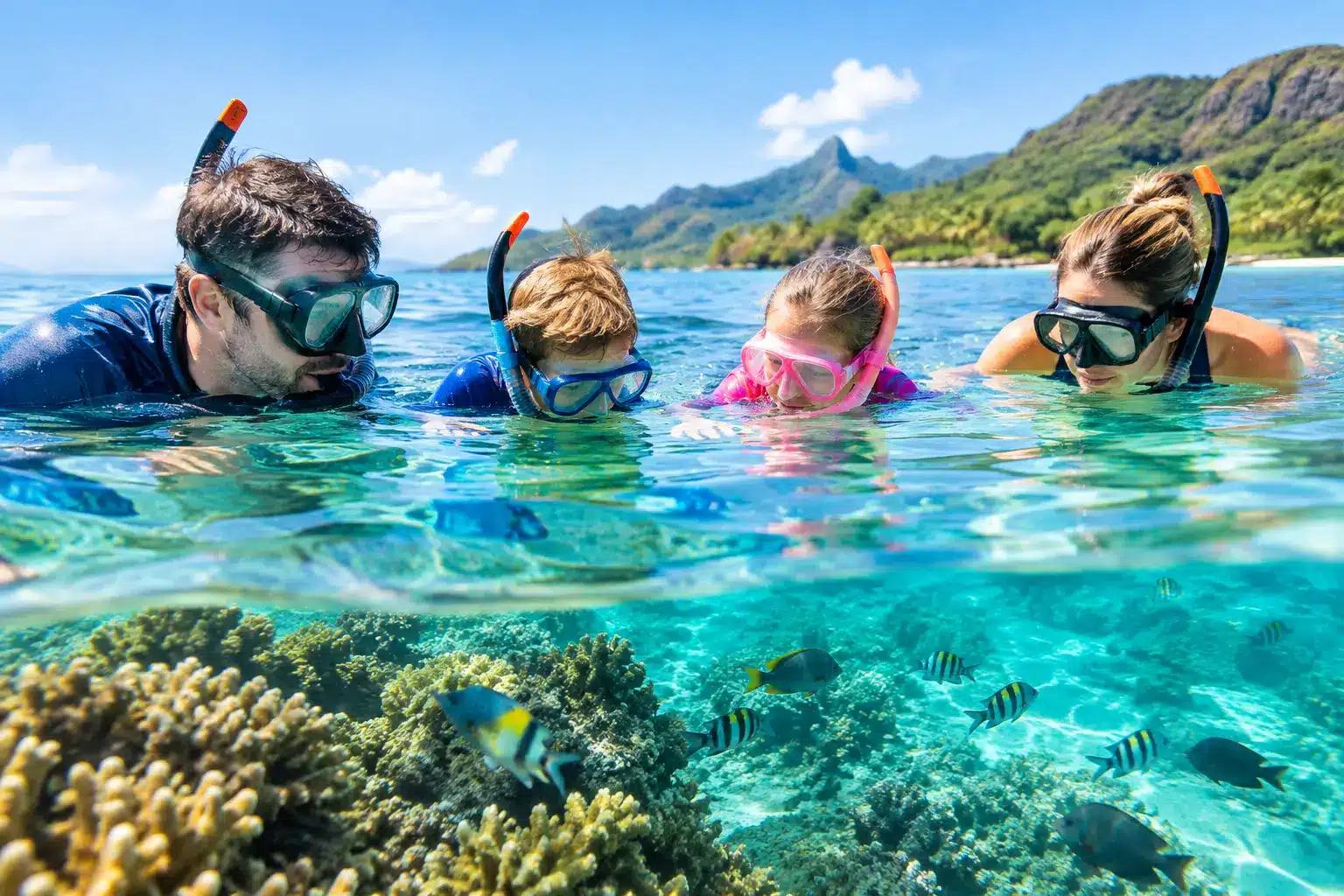
The moment your child spots a striped fish gliding over a coral bommie, Fiji stops being a postcard and becomes the family story everyone retells. If you are asking, “where can families snorkel Fiji?”, the best answer is usually not the furthest reef or the most adventurous boat ride. It is a sheltered lagoon with clear water, gentle entry, attentive crew and enough colour close to the surface to keep every age group fascinated.
Fiji has superb snorkelling across many islands and coastal regions, but conditions vary with wind, tides and season. Choosing the right location makes the difference between a brilliant first snorkel and a long day spent managing masks, waves and tired little swimmers.
For many families staying in Nadi or Denarau, the Mamanuca Islands are the easiest and most rewarding choice. These beautiful islands sit west of Viti Levu, generally reached by a scenic day cruise or resort transfer, and many offer protected reef areas where fish can be seen in shallow water.
A Mamanuca island day trip suits families who want a complete Fiji experience without committing to a lengthy transfer. The journey itself is part of the fun: children can watch islands appear across the water, then spend the day swimming, snorkelling, relaxing on white sand and enjoying a tropical lunch. Look for trips that provide snorkelling equipment, have crew available to help with fitting masks and fins, and offer a clear briefing before guests enter the water.
The trade-off is that popular islands can be busy, especially during Australian school holidays. A well-organised tour with a sensible schedule, shaded seating and a relaxed pace matters more than trying to squeeze in multiple islands. For younger children, one excellent reef is plenty.
The Mamanucas are particularly good for confident swimmers, first-time snorkellers with adult support and mixed-age groups. Water clarity can be outstanding on calm days, and the reefs often reveal parrotfish, butterflyfish, reef fish and small coral gardens without the need to swim far from shore.
Conditions are never guaranteed. Wind can make one side of an island choppy while another remains pleasantly sheltered, which is why local crew knowledge is so valuable. Experienced guides can direct families to the safest available snorkelling area rather than sending everyone into the same patch of water.
Families with more time should consider the Yasawa Islands. This spectacular chain stretches north-west from the Mamanucas and is known for dramatic volcanic scenery, bright lagoons and a wonderfully remote feel. Several Yasawa resorts are positioned beside shallow reefs, making it possible to snorkel straight from the beach when conditions allow.
The Yasawas are a stronger fit for families staying overnight rather than attempting a rushed day visit. Transfer times are longer, and young children may find a full-day boat journey tiring. In return, an island stay gives your family time to settle in, enjoy the reef at a quieter hour and take a break whenever someone needs a snack, shade or an afternoon nap.
For older children and teens, the Yasawas can be the highlight of a Fiji holiday. Snorkelling can be paired with village visits, easy walks, beach time and cultural experiences, so there is always something to do when fingers start to wrinkle. Ask about the local reef conditions at your chosen island, as some beaches have easier entries than others and tidal changes can affect depth.
The Coral Coast is an excellent option for families who prefer to stay on Fiji’s main island and avoid frequent boat transfers. Running along the southern side of Viti Levu, it is home to family resorts, beaches and access to lagoon snorkelling in selected areas.
Some Coral Coast properties have reefs offshore, while others can arrange boat trips to better snorkelling sites. This distinction is worth checking before booking accommodation. A beach may look inviting but have shallow water, coral rubble or a reef that is difficult for small children to reach. A short guided boat outing can provide a much better experience, particularly when the guide knows the day’s protected spots.
The Coral Coast also works well for families who want to balance water activities with land-based days. You can combine snorkelling with a waterfall visit, a cultural tour, a river experience or a relaxed resort day. It is less about chasing a different reef every morning and more about having a flexible holiday base with plenty of options.
Pacific Harbour, on the south-east of Viti Levu, is often called Fiji’s adventure capital. It offers access to Beqa Lagoon, an impressive marine area known for coral reefs and abundant sea life. Families with older children who are comfortable in the water may enjoy a snorkelling excursion here, especially if they are looking for something beyond a resort lagoon.
This is not always the first choice for toddlers or hesitant swimmers. Boat rides may be longer, and conditions can be more exposed depending on the location and weather. However, with the right operator and a suitable site, Beqa Lagoon can be a memorable family reef experience. Be upfront about your children’s ages and swimming ability so the day can be matched to your group rather than sold as a one-size-fits-all adventure.
The best family snorkelling tours do more than hand out masks. They build confidence before anyone gets wet. A quality crew will explain how to clear a mask, point out boundaries, advise where the current may run and keep watch while guests are in the water.
For children who have never snorkelled, practise in the resort pool first. Let them float face-down with the mask on, breathe slowly through the snorkel and get used to seeing underwater. A flotation vest or noodle can make a huge difference, even for children who are good swimmers. It conserves energy and lets them focus on the fish rather than staying afloat.
When comparing experiences, ask about the boat journey, shade, toilets, lunch, life jackets and whether there is an easy place for non-snorkellers to relax. Grandparents, babies and nervous swimmers can still enjoy a reef day if the island or vessel is comfortable. Best Fiji Activities can help families narrow down the right island trip, transfer or private outing based on where they are staying and what their group will genuinely enjoy.
Fiji can be snorkelled year-round, though calm, sunny conditions make it easier to see reef detail and feel comfortable in the water. The dry season from around May to October often brings pleasant weather, but trade winds can affect exposed beaches. The warmer months can bring excellent water temperatures and tropical showers, with visibility changing from day to day.
Morning snorkels are often a smart choice for families. Children have more energy, the sun is less intense and the water can be calmer before afternoon breezes arrive. Even then, follow the guide’s advice rather than relying on a timetable. Safety comes first if wind, swell or current changes.
Fiji’s reefs are precious living environments, not playground equipment. Wear a rash shirt for sun protection, avoid standing on coral, keep fins clear of the reef and never chase or touch marine life. If your child sees a turtle, the best lesson is to float quietly and give it space. Those respectful encounters are usually the ones families remember most.
A reef-safe sunscreen, rash shirts, hats, dry clothes, towels and a reusable water bottle will make the day easier. Bring snacks if you are travelling with small children or anyone with dietary needs, even when lunch is included. If your child has their own well-fitting snorkel mask, pack it – familiar gear can remove a surprising amount of anxiety.
Do not push a reluctant child to snorkel. Sitting on the boat, paddling in the shallows or watching fish from a jetty can be a successful first step. Fiji rewards a slower pace, and the most enjoyable family days leave room for everyone to experience the reef in their own way.
Choose the island or coastline that matches your family’s confidence, then let Fiji’s warm water do the rest. A calm float above a bright reef may only last twenty minutes, but it can become the moment that turns a good holiday into an unforgettable one.