Your cart is currently empty!
You may check out all the available trips and book one that suits you.
Continue Browsing Trips
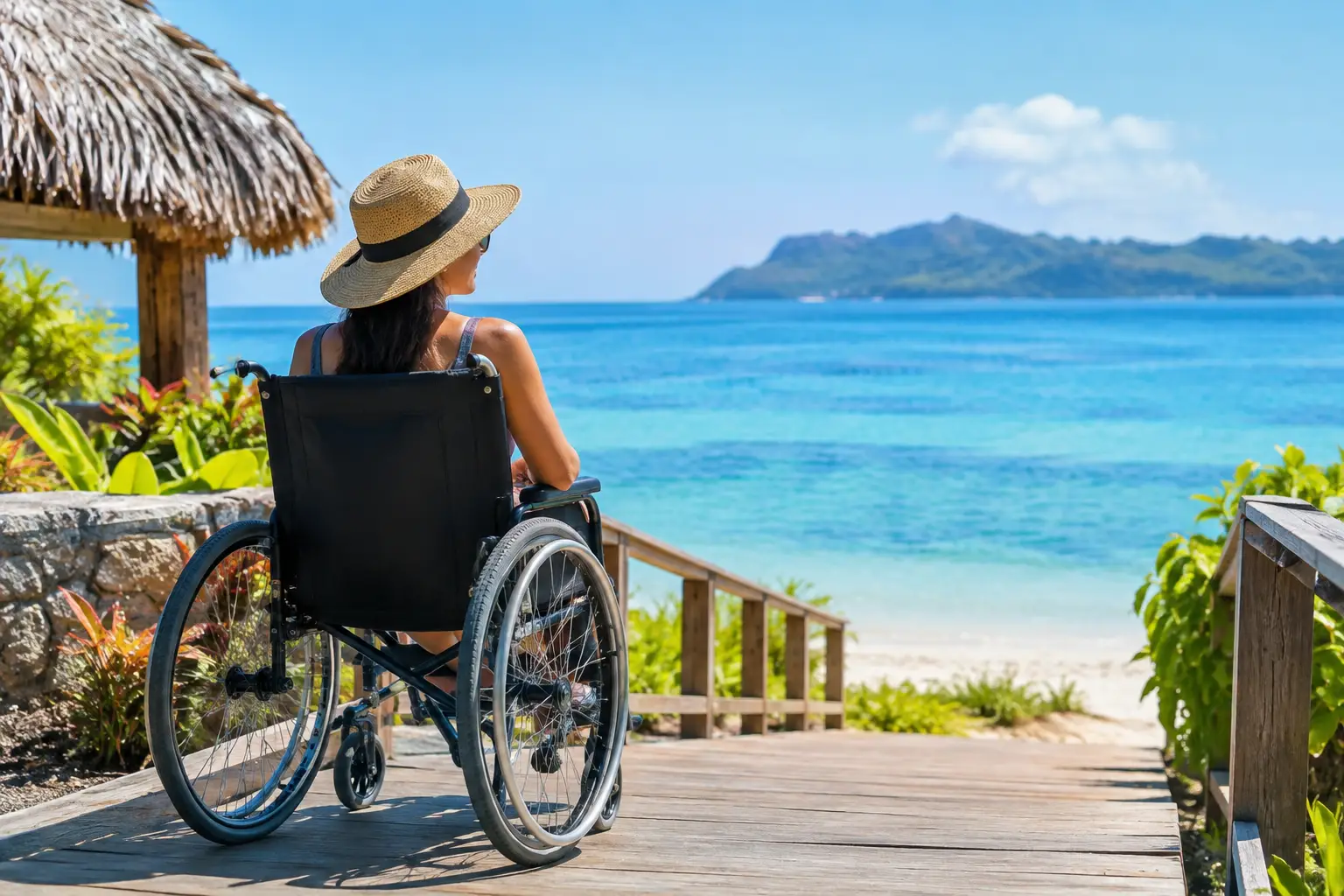
Fiji’s warm welcome is real, but an accessible holiday here needs more than choosing a beautiful resort photo. This Fiji accessible travel guide helps travellers with mobility needs, limited stamina, sensory sensitivities, vision or hearing needs, and travelling companions plan with confidence. The key is matching the right islands, accommodation, transport and activities to your personal requirements before you arrive.
Fiji is not a destination with one standard level of accessibility. A modern beachfront resort near Nadi may have paved paths, ramps and adapted rooms, while a remote island property can involve soft sand, stairs, boat transfers and uneven tracks. That does not make one experience better than another – it simply means the details matter.
For the most straightforward accessible holiday, base yourself on Viti Levu, Fiji’s main island. Nadi, Denarau Island and the Coral Coast generally offer the widest choice of larger resorts, road transfers, restaurants and day tours. Denarau is particularly convenient for travellers who prefer flatter resort grounds and short airport transfers, while the Coral Coast can suit guests looking for a slower beachfront stay with cultural and nature experiences nearby.
Pacific Harbour is a strong option for travellers who want adventure, but it requires a closer look at each activity. River excursions, forest walks and water-based tours may involve steps, boarding pontoons or uneven surfaces. If your priority is relaxed sightseeing rather than high-energy adventure, Nadi and the Coral Coast are usually easier bases.
The Mamanuca and Yasawa Islands deliver the postcard-perfect Fiji many visitors imagine, but island access is often the main consideration. Transfers may use a large catamaran, a smaller tender boat or a speedboat. Even where staff provide excellent assistance, boarding conditions can change with tides, wind and sea conditions. Ask what type of vessel is used, whether a ramp is available, how luggage is handled and how guests board at the resort beach or jetty.
Do not rely on the phrase “accessible room” alone. Ask the resort to confirm the actual room layout and the route from reception, restaurants and pool areas. A room may have a wider doorway but still be far from key facilities or positioned at the top of a slope.
The most useful questions are practical ones. Confirm whether there is step-free entry, roll-in shower access, grab rails, shower seating, sufficient turning space beside the bed, a reachable bathroom basin and an accessible toilet. If you use a wheelchair or mobility scooter, provide its measurements and weight. Resorts also need to know whether it is manual, folding or battery-powered, particularly if an island flight or boat journey is involved.
Location within the resort can matter as much as the room itself. Request a room close to dining, reception and the beach access point, preferably on level ground. Fiji’s tropical gardens are spectacular, though they can include gravel, timber boardwalks, roots and slopes. Staff may be able to arrange buggy transport at larger properties, but availability should be confirmed rather than assumed.
For sensory comfort, ask for a quieter room away from entertainment areas, kitchens or busy pool zones. Travellers with hearing needs may also wish to request visual emergency alerts where available, while guests with low vision can ask staff to explain pathways, lighting levels and any changes in surface underfoot.
Nadi International Airport is the arrival point for most Australian visitors, and pre-booking airport transport removes a major uncertainty after a long flight. Tell your transfer provider about mobility equipment, folding wheelchairs, service requirements and the number of travelling companions. A standard vehicle may have room for suitcases but not enough boot space for a large wheelchair.
Accessible vehicles are more limited than ordinary private cars and minibuses in Fiji, so early planning gives you better options. Confirm whether the driver can assist with luggage, whether there are steps into the vehicle, and whether the destination has a level drop-off point. If you need a hoist-equipped vehicle or specialist support, treat this as an essential booking requirement, not a last-minute request.
For multi-stop holidays, consider the effort involved in moving between resorts. Two exceptional properties can look close on a map yet require a road journey, marina check-in, boat transfer and beach landing. Staying longer in one well-suited resort is often more relaxing than packing every few days.
Fiji has outstanding experiences for all kinds of travellers, from village visits and garden tours to lagoon cruises, island lunches and private sightseeing. Accessibility depends on the specific operator, vessel, tide and venue, not just the name of the tour.
Private tours are often the most flexible choice for travellers with particular access needs. They can allow a later start, more frequent comfort stops, a tailored pace and time to choose attractions with suitable paths. A private Nadi and surrounding-area itinerary, for example, may be adjusted around markets, temples, scenic lookouts, a garden visit and lunch at a venue with convenient access.
Cruises and island day trips deserve extra planning. Ask whether boarding is from a marina jetty or a beach, whether there are stairs to upper decks, if toilets are accessible, and whether the island itself has firm paths or mostly sand. Snorkelling trips can still be possible for some guests with limited mobility, but access to the water, flotation equipment and crew support should be discussed honestly in advance.
Be clear about what you can manage and what help you would like. Local crews are famously welcoming and willing to assist, but a good operator should never promise conditions they cannot reliably provide. Weather and tides can change the practical access at short notice, especially in outer-island locations.
Fiji’s heat and humidity can affect energy levels, medication, hydration and mobility. Schedule outdoor sightseeing early in the morning, build in shaded breaks and carry water whenever you are away from your accommodation. The wet season, generally from November to April, brings more humidity and occasional heavy rain, which can make paths slippery and beach landings more difficult.
Dry-season travel from May to October often brings cooler, more comfortable daytime conditions, although this is also a popular period. If reduced crowds are important, shoulder periods may offer a good balance, provided you are comfortable with more variable weather.
Footpaths, kerbs and public facilities outside major resorts may be inconsistent. Bring supportive footwear with good grip, even if you mainly expect to be on resort grounds. A lightweight rain cover, sun protection, a refillable water bottle and a small torch can make a genuine difference during tropical evenings or sudden showers.
Pack enough medication for your full holiday, plus extra in case of delays. Keep prescriptions, medical information and vital supplies in your carry-on luggage, not checked baggage. Bring a copy of your prescription using generic medicine names where possible, as brand names can differ between countries.
If you use powered equipment, confirm charging requirements and carry the correct adaptor. Fiji uses Type I power points, the same plug style used in Australia, but it is still worth checking voltage requirements for specialised devices. Medical travel insurance should cover pre-existing conditions where relevant, emergency evacuation and replacement or repair of mobility equipment.
Before booking, share these details with your accommodation and tour provider:
This is not about limiting your holiday. It gives local teams the information needed to recommend experiences that are genuinely enjoyable rather than merely possible.
A well-planned Fiji holiday should leave room for long lunches, ocean views and spontaneous moments, not constant concern about the next step, boat or transfer. At Best Fiji Activities, local planning support can help you compare practical tour and transport options around your accommodation, travel pace and access requirements before you commit.
Fiji rewards travellers who plan the logistics carefully, then let the islands do the rest. Choose comfort over a rushed itinerary, ask direct questions early, and you can spend more of your holiday enjoying the Bula spirit with the people you travelled with.