Your cart is currently empty!
You may check out all the available trips and book one that suits you.
Continue Browsing Trips
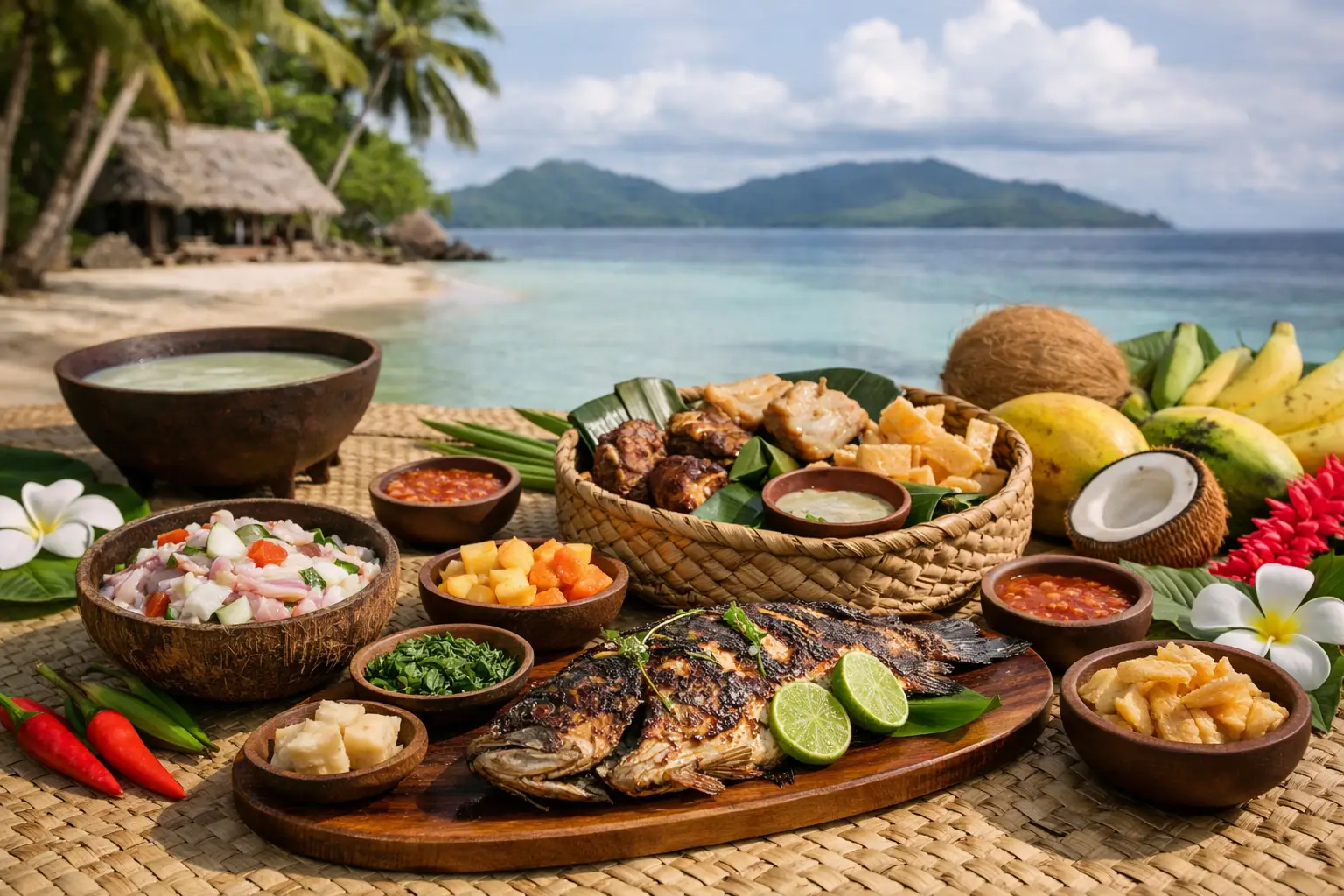
The scent of smoky lovo-cooked meat, warm cassava and coconut cream tells a very different story to a resort buffet. Authentic Fiji food experiences are found in the small details: a shared plate after a village welcome, a market stall piled with tropical produce, or a roadside stop where a local cook knows exactly how much chilli belongs in the chutney.
For travellers, Fiji’s food is one of the easiest and most enjoyable ways to understand the islands. It reflects Indigenous Fijian traditions, the lasting influence of Indo-Fijian communities, and the ingredients supplied by fertile farms and surrounding seas. The best meals are not always the fanciest. Often, they are the ones served generously, explained proudly and enjoyed at an unhurried island pace.
Authentic does not have to mean eating in a remote village or avoiding hotels altogether. It means choosing food with a genuine connection to Fiji’s people, ingredients and traditions. A well-run resort may prepare an excellent lovo night with local cooks and traditional methods, while a busy market lunch can introduce you to flavours that never appear on a standard tourist menu.
It also depends on what you enjoy and how much time you have. Families may prefer a cultural dinner with transport arranged and dietary needs handled in advance. Confident food lovers might want to browse a municipal market, order from local cafés and seek out neighbourhood favourites. Both can be meaningful experiences when they are respectful and locally grounded.
Fiji’s cuisine is not one single thing. Indigenous Fijian cooking celebrates root crops, seafood, coconut and earth-oven techniques. Indo-Fijian cooking brings fragrant curries, roti, dhal, pickles and spice blends that have become part of everyday Fiji life. You will also find Chinese, European and Pacific influences, especially around larger towns.
A lovo is among the most memorable meals visitors can try. Meat, fish and vegetables are wrapped, often in banana leaves, then cooked slowly over heated stones in an earth oven. The process creates a distinct smoky flavour and turns simple ingredients into a proper celebration meal.
Typical lovo dishes include chicken, pork or fish, alongside dalo, cassava, sweet potato and seasonal greens. If you are invited to a village lovo or book a cultural experience that includes one, arrive hungry and allow time. The cooking is only part of the occasion – sharing the meal is where the warmth of Fijian hospitality really comes through.
Kokoda is Fiji’s much-loved take on cured fish. Fresh fish is marinated in citrus juice, then mixed with coconut cream, chilli, onion and tomato. It is cool, bright and ideal after a morning on the water, particularly in the Mamanuca or Yasawa Islands where seafood is central to daily life.
The quality of kokoda comes down to freshness and balance. Some versions are mild and creamy, while others have a sharper citrus kick or more chilli. If you do not eat raw or cured seafood, ask whether a cooked fish option is available rather than missing out on the broader meal experience.
Dalo, cassava and breadfruit are staples, not side dishes added for visitors. Dalo has a firm, slightly nutty character, while cassava is softer and comforting. Both are often served boiled, roasted, fried or cooked in coconut milk.
Look out for rourou, made from taro leaves and commonly prepared with coconut cream. It is rich, savoury and a perfect companion to grilled fish or a lovo meal. These dishes may appear simple, but they are deeply tied to Fiji’s land, family kitchens and communal dining traditions.
A Fiji holiday is incomplete without trying Indo-Fijian food. You may find fish curry enriched with coconut, chicken curry, goat curry, dhal, roti, samosas and crunchy bhajia at cafés, markets and casual eateries around Nadi, Lautoka and Suva.
Flavour levels vary considerably. A curry can be fragrant and gentle or seriously hot, so ask before ordering if you prefer mild food. Many eateries can adjust spice, but it is better to check than assume. Pairing a curry with fresh roti is one of the most satisfying, good-value lunches you can have between tours.
A market visit is one of the strongest ways to connect food with place. In and around Nadi, Lautoka and Suva, stalls display dalo, cassava, green coconuts, tropical fruit, herbs, chillies and freshly caught seafood. The colours are brilliant, but the real value is seeing what local households buy and cook.
Go earlier in the day when the produce is at its best and the atmosphere is lively. Ask before taking close-up photos of people or stalls, and buy something small if you have enjoyed a conversation. Fresh fruit, locally made chutney or a snack from a trusted vendor can be an easy entry point.
Markets suit travellers with spare time and confidence navigating a busier local setting. If your day is tightly planned around island transfers or a departure flight, a guided cultural tour with lunch can be the more practical option.
A meal in a village can be a highlight of a Fiji holiday, but it should never be treated as a staged photo stop. Choose experiences where the village is a willing host, local people lead the welcome, and visitors are given clear guidance on customs. A good operator will explain what to wear, when to remove footwear, and how to behave during a ceremony or shared meal.
Dress modestly, follow your hosts’ lead and accept food graciously where possible. If you have allergies, are vegetarian, or have other dietary requirements, advise your tour provider well before the day. Fiji hosts are famously accommodating, but advance notice helps ensure everyone can relax and enjoy the occasion.
On day trips through the Mamanuca Islands or further north towards the Yasawas, lunch is often part of the experience. It may be grilled fish, salad, root vegetables and fruit served by the beach, or a more substantial buffet at an island venue. Ask what is included before booking, especially if food is a priority for your group.
The trade-off is that island lunches are designed around logistics as well as local flavour. They may not feel as intimate as a village meal, but eating freshly prepared seafood with the lagoon in view is still unmistakably Fiji. The best tours make space for the meal rather than rushing guests back onto the boat.
Kava is a traditional drink made from the powdered root of the yaqona plant, mixed with water and shared from a communal bowl. Its earthy taste is an acquired one, and its gentle mouth-numbing effect can surprise first-time visitors. The ceremony matters more than the flavour alone: it is about welcome, conversation and connection.
If you join a kava ceremony, listen to the host’s instructions. You may be invited to clap before receiving your cup, drink it in one go, then clap again. Customs can vary by setting, so there is no need to memorise every step. Be present, participate politely and avoid treating it as a drinking challenge.
Kava can make some people feel relaxed or drowsy. Take it easy, particularly before swimming, travelling long distances or consuming alcohol. Pregnant travellers and anyone with health concerns should seek appropriate medical advice before participating.
The smartest approach is to build one or two dedicated food moments into your itinerary, then leave room for spontaneous stops. Book a cultural dinner or village experience for a meaningful evening, visit a market on a free morning, and choose local dishes whenever you have lunch near Nadi or on the Coral Coast.
Reliable transport makes this easier. A private transfer can include time for a market or local lunch when arranged in advance, while an organised day tour removes the uncertainty around getting to an island, returning on time and finding a trusted venue. Best Fiji Activities can help travellers match food-focused experiences with the right tours and transfers, particularly when fitting them around flights, family plans or resort check-in times.
For Australian travellers, Fiji’s relaxed pace can make it tempting to leave every decision until later. A little planning goes a long way during peak holiday periods, when popular cultural evenings and smaller group tours can fill quickly. Confirm what is included, flag dietary needs early, and keep some Fiji dollars handy for market purchases or small local treats.
The meal you remember most may be a polished lovo feast, a paper-wrapped roti eaten after the market, or kokoda shared beside the sea. Leave room in your itinerary for that surprise – Fiji has a wonderful way of serving its best flavours when you slow down long enough to notice them.