Your cart is currently empty!
You may check out all the available trips and book one that suits you.
Continue Browsing Trips
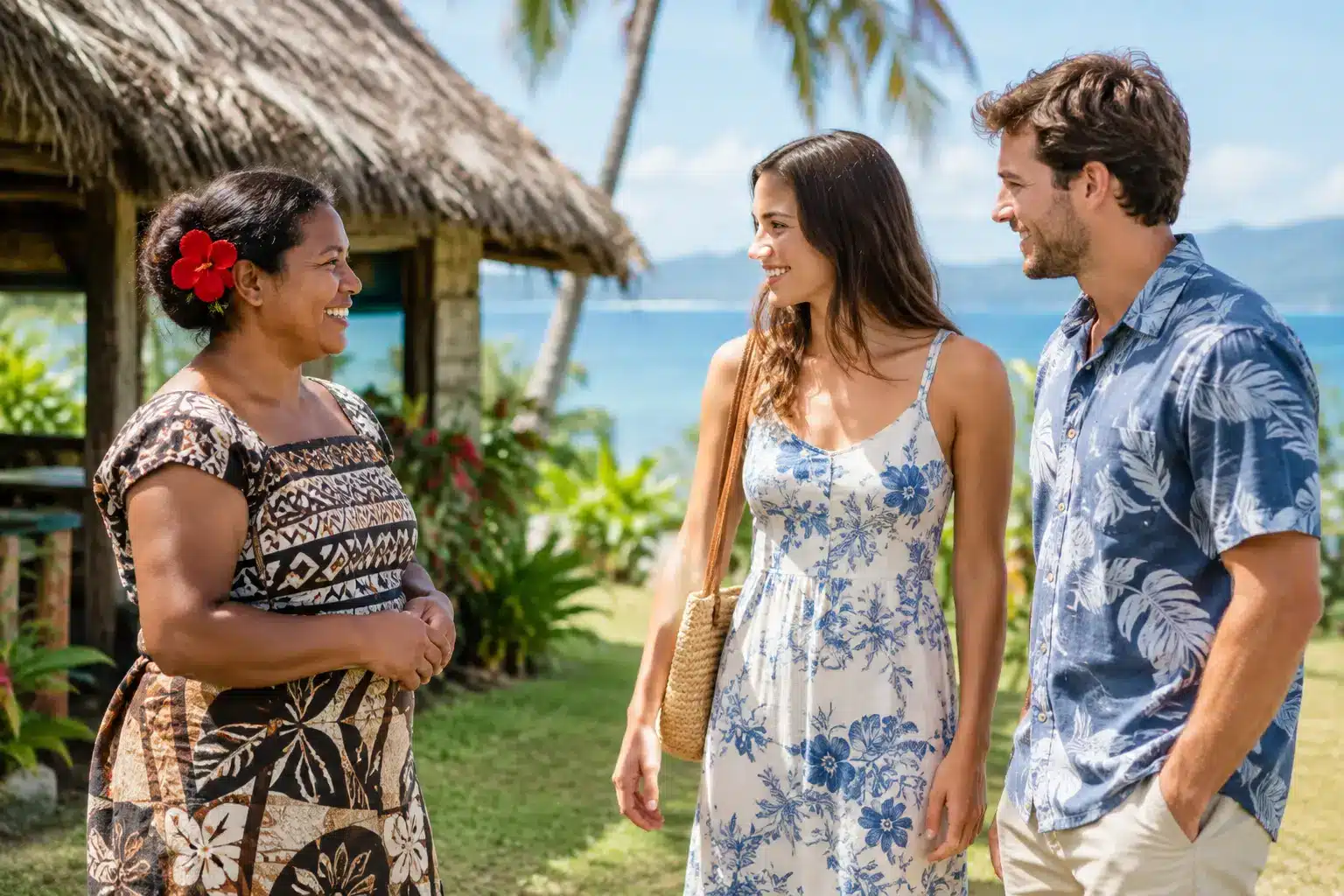
A village visit can be one of the most memorable parts of a Fiji holiday: children waving from the roadside, a warm bula from your hosts, and the chance to share in traditions that have shaped island life for generations. Knowing what to wear in villages helps you arrive comfortable, confident and respectful – and lets the focus stay where it belongs, on genuine connection.
Fiji is relaxed, sunny and wonderfully welcoming, but resort clothing does not always suit a village setting. A little thoughtful planning goes a long way. Choose clean, modest layers that cover your shoulders and knees, keep a sulu handy, and save swimwear and very short outfits for the beach or pool.
The simplest rule is to dress conservatively, particularly when visiting a traditional village, attending a church service, joining a kava ceremony or meeting local elders. Lightweight clothing is ideal in Fiji’s tropical warmth, but it should provide more coverage than you might wear at your resort.
For women, a loose dress or skirt below the knee, or lightweight trousers with a T-shirt or blouse that covers the shoulders, is an excellent choice. A sulu – Fiji’s versatile wraparound cloth – is especially useful over shorts or a swimsuit when travelling between a boat, beach and village. It is easy to pack, cool to wear and immediately makes your outfit more appropriate.
For men, a collared shirt or tidy T-shirt with long shorts below the knee, lightweight trousers, or a sulu works well. Singlets, very short boardshorts and bare chests are best kept for the beach. If your visit includes a formal welcome, long trousers or a sulu paired with a neat shirt will feel particularly suitable.
Children can dress simply too. A T-shirt with shorts close to knee length, a dress with shoulder coverage, or lightweight leggings is practical for warm days and helps them take part comfortably.
Village etiquette in Fiji is about showing respect for the people welcoming you into their home community. While every village and family has its own preferences, modest dress is widely appreciated and is particularly meaningful in more traditional areas.
It is not about buying a special holiday wardrobe or getting every detail perfect. Your hosts understand that visitors come from different cultures. What matters is making a sincere effort: covering up before you arrive, listening to your guide, and following any instructions given on the day.
A well-run cultural visit should make this easy. Local guides often explain expectations before arrival, and many tours can provide or help arrange a sulu if needed. If you are unsure, ask ahead rather than guessing. That small question shows care and can prevent an awkward moment.
Bikinis, one-piece swimmers, rash vests, sheer cover-ups and shirtless outfits are perfect for a resort pool, snorkelling trip or island beach. They are not appropriate for walking through a village, visiting a school or sitting in a community hall.
If your day combines a lagoon cruise with a village stop, pack dry clothing in a small day bag. Change before arrival, or pull a sulu over your swimwear and add a loose shirt. This is one of the easiest ways to move comfortably between Fiji’s spectacular beach experiences and its living culture.
Fiji’s humidity can make heavy fabrics uncomfortable, especially from November to April. Breathable cotton, linen blends and quick-drying fabrics are sensible choices. Avoid anything overly tight, transparent or difficult to sit in, as you may be invited to sit on a mat during a welcome or kava ceremony.
Clean clothes also matter. You do not need formal attire, but a tidy appearance honours the occasion. Think holiday-smart rather than resort-pool casual.
Slip-on sandals or flat shoes are ideal for most village visits. You may be asked to remove footwear before entering a home, hall or church, so choose something easy to take off and put back on. Walking shoes can be useful if your visit includes a nature trail or waterfall, but make sure they are clean before entering indoor spaces.
Hats are excellent for the boat ride or walk to the village, yet you should remove them when greeting elders, entering a home or taking part in a formal ceremony unless your guide says otherwise. Sunglasses should come off during introductions as well. These small gestures make you appear open, attentive and appreciative.
Keep jewellery and valuables understated. Fiji’s villages are welcoming places, but flashy accessories can feel out of place and may be impractical during activities. A crossbody bag or small backpack is usually enough for your water bottle, sunscreen, insect repellent, camera and a spare layer.
Some village visits include Sunday church, a meke performance, a sevusevu welcome or a kava session. These experiences are unforgettable, and they call for a slightly more considered outfit.
For church, wear clothing that covers the shoulders and knees. Women may prefer a longer dress or skirt with a light cardigan or scarf. Men should wear a neat shirt and long trousers or a sulu. Avoid beach thongs if you have a more suitable sandal or closed shoe available.
For a sevusevu ceremony, visitors may be welcomed with yaqona, the kava root traditionally presented to a village chief or representative. Your guide will explain how to behave and where to sit. Dress modestly, remove hats and sunglasses, and follow the lead of your hosts. The same applies during a kava ceremony: accept guidance on clapping, drinking and speaking rather than worrying about memorising rules in advance.
A respectful outfit supports respectful behaviour, but clothing is only one part of the experience. Listen closely, ask permission before taking photos, and avoid stepping over people or objects when seated on mats. Your local guide is the best person to explain customs that are specific to the community you are visiting.
For most travellers, one small set of village-ready clothes is all that is needed. Pack a breathable T-shirt or blouse, knee-length skirt, dress or trousers, a sulu, easy-to-remove sandals and a light layer for sun protection. Add a reusable water bottle and insect repellent if your itinerary includes walking or time outdoors.
A sulu deserves a permanent place in your Fiji day bag. It can cover your legs in a village, protect your shoulders from the sun, serve as a beach wrap, or offer a little warmth on an air-conditioned transfer. You can buy one locally as a useful and meaningful holiday keepsake, but any clean wrap skirt or sarong that offers good coverage can work.
If you are travelling on a multi-day itinerary through the Yasawa Islands, Coral Coast or Pacific Harbour, keep this outfit accessible rather than packed at the bottom of your suitcase. Plans can change with weather, boat schedules and local opportunities, and being prepared means you can say yes when a genuine cultural experience comes along.
Fiji is diverse, and dress expectations can vary by island, village, event and host. A casual community visit arranged through your resort may have different expectations from a traditional ceremony in a more remote area. Some communities may be more relaxed, while others will ask visitors to wear a sulu or cover their shoulders before entering.
Do not assume that a previous visit sets the rule everywhere. Your guide’s briefing takes priority, and it is always fine to ask, “Would this be suitable for the village?” Most guides will be delighted to help. If you are visiting independently, check with your accommodation or local contact before you go.
Travellers often worry about making a mistake, but Fiji’s famous warmth is real. Arrive modestly dressed, be willing to adapt, and meet the welcome with good manners and genuine curiosity. With local experts such as Best Fiji Activities helping shape your day, the practical details are easy – leaving you free to enjoy the stories, songs and connections that make a village visit so special.
Pack your sulu, choose clothing that feels cool and respectful, and let Fiji’s village hospitality be one of the bright highlights of your holiday.