Your cart is currently empty!
You may check out all the available trips and book one that suits you.
Continue Browsing Trips
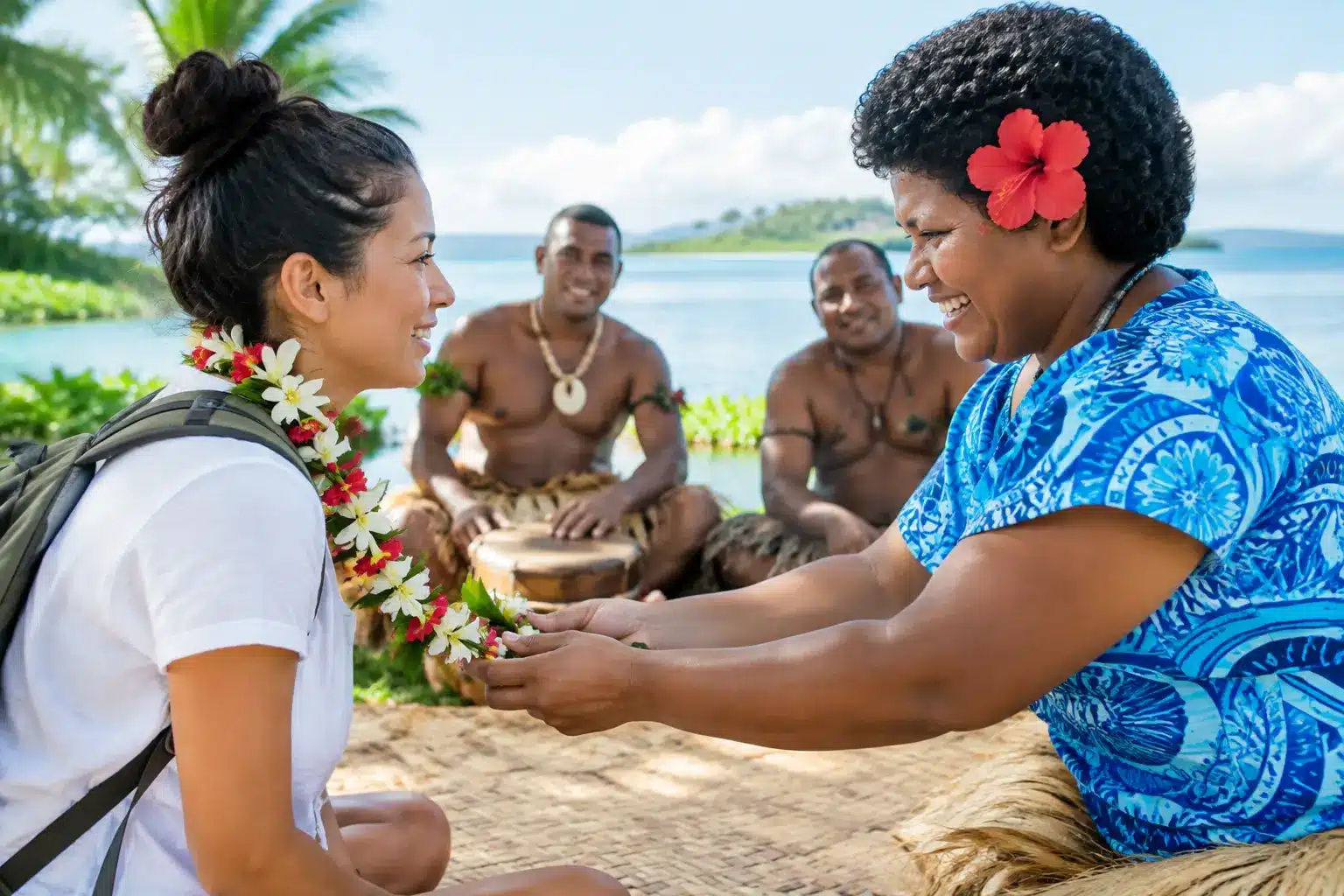
A village welcome in Fiji can feel wonderfully personal: smiles at the gate, children calling out “Bula”, and a shared bowl of kava before the stories begin. This Fiji cultural guide helps you enjoy those moments with the respect they deserve, whether you are joining a cultural tour from Nadi, staying on an outer island, or visiting a community on the Coral Coast.
Fiji is known for its easy warmth, but good manners still matter. A little preparation goes a long way, and local hosts generally appreciate visitors who are curious, considerate and willing to follow the lead of their guide.
Fiji is a proudly multicultural country. Indigenous iTaukei Fijians make up a large part of the population, while Indo-Fijian, Rotuman, Chinese, European and other communities all contribute to the country’s character. You will hear English widely in visitor areas, alongside iTaukei languages and Fiji Hindi. A friendly “Bula” is an excellent greeting, while “Vinaka” means thank you.
When travelling beyond a resort, remember that you are often entering someone’s home, village or place of worship, not simply an attraction. Cultural experiences are at their best when they are hosted on the community’s terms. Listen closely during the introduction, ask questions at appropriate times and avoid treating ceremonies as a photo opportunity first and a meaningful occasion second.
Customs can vary between islands, villages and families. Your local guide’s instructions always take priority over anything you have read beforehand. That is not about making visitors nervous – it is simply the easiest way to feel comfortable and show genuine respect.
A village visit is often a highlight of a Fiji holiday. You may meet the turaga ni koro, or village headman, visit a meeting house, watch traditional dancing, share a meal or join a kava ceremony. It is a chance to see community life beyond the resort, and it calls for modest, practical clothing.
For women, a dress, skirt, shorts or trousers that cover the knees is a safe choice, with shoulders covered. Men should also wear longer shorts or trousers and a neat shirt. A sulu, Fiji’s versatile wraparound cloth, is a great option and may be offered or recommended for some visits. Swimwear, very short shorts and singlets are best saved for the beach or pool.
Before entering a home or community building, look around and follow the host’s lead on footwear. In many settings, shoes are removed. Hats may also be removed as a sign of respect, particularly during formal welcomes. Keep public affection low-key, avoid sitting with your feet pointed directly towards people where possible, and do not touch anyone’s head, including a child’s, unless invited.
Photography is another area where a quick question makes all the difference. Ask before taking close-up portraits, photographing children, recording a ceremony or using a drone. Some moments, sites and people are not appropriate to photograph. If a host says no, accept it graciously and stay present in the experience.
Kava is central to many Fijian social and ceremonial gatherings. Made from the powdered root of the yaqona plant mixed with water, it has a mild earthy taste and a gentle numbing effect on the lips and tongue. It is not intended as a tourist gimmick. For many communities, sharing kava represents welcome, respect and connection.
At a formal village visit, your operator may arrange a sevusevu, the presentation of kava to the village chief or representative. This is a traditional protocol that asks permission to visit and acknowledges the community’s hospitality. It is usually handled by an experienced local guide, so you do not need to memorise the ceremony. Your role is to be attentive and follow the cues you are given.
If you are offered a bilo, or coconut-shell cup, accept it with both hands when practical. You may be guided to clap before drinking, say “Bula”, drink the serving, then clap again. The number and style of claps can vary, so wait for direction rather than worrying about getting every movement perfect.
You can politely decline kava if you are unwell, pregnant, taking medication, avoiding alcohol-like social settings or simply do not wish to participate. A respectful explanation is enough. If you do join in, take it easy at first. Kava can make some people feel relaxed or sleepy, and it is sensible not to drive afterwards.
Sunday is widely observed as a day for church, family and rest, especially in iTaukei communities. On smaller islands and in villages, shops may have limited hours and some activities may not operate. Rather than seeing this as an inconvenience, build your plans around it: enjoy a relaxed resort day, a beach walk, a leisurely lunch or a gentle island cruise where available.
If you are invited to a church service, dress conservatively and arrive on time. Services can be long, joyful and rich in singing. Visitors are usually welcomed warmly, but it is wise to sit where directed, keep your mobile silent and ask before taking photos. A small donation may be appropriate in some settings, though your host or guide can advise.
Daily interactions tend to be warm and unhurried. Say hello before launching into a question, be patient if plans run on “Fiji time”, and remember that friendliness is not a promise that every service will move at resort speed. Transport schedules, weather and island logistics can all shape the day. Reliable operators plan carefully, but flexibility is part of travelling well in the islands.
Food is one of the easiest ways to connect with Fiji. Try lovo-cooked meats and vegetables, kokoda made with fresh fish cured in citrus, cassava, taro and tropical fruit. If you are invited to share a meal, wait until your host indicates it is time to begin. Use your right hand where food is eaten by hand, and avoid wasting what is served if you can.
When buying handicrafts, look for locally made pieces and ask about the maker or material. Woven mats, carvings, printed fabrics and jewellery can carry cultural meaning, so a little conversation adds value beyond the purchase. Bargaining is not expected in many formal shops and markets, although prices and arrangements vary. Pay fairly, carry small notes for village stalls and avoid pressuring anyone for a discount.
Giving directly to children can be well intentioned but may create awkward expectations. If you would like to contribute to a community, ask your guide, accommodation provider or village host what is genuinely useful. School supplies, sports equipment or donations are best handled through an agreed local process rather than handed out at random.
A few simple items make respectful travel easier, particularly if your holiday includes island stays, inland tours or village visits:
The same clothing that helps with cultural etiquette is often more comfortable in Fiji’s humid weather. Light layers are ideal for air-conditioned transfers, boat rides and changing conditions during the wet season.
Not every activity labelled “cultural” offers the same depth. The best experiences are hosted by people with a real connection to the village, island or tradition being shared. Look for clear information about what the day includes, whether transfers are arranged, how long you will spend travelling, and what cultural protocols are expected of guests.
A well-run tour should not rush you through a village for a quick photo before moving on. It should give hosts room to welcome you properly, explain their customs in their own words and keep the group size manageable. This is particularly valuable for families and first-time Fiji visitors, who may want the reassurance of transport, timing and etiquette being handled by local experts.
Best Fiji Activities can help travellers match cultural experiences with the right region, from a Coral Coast village visit to a traditional island day trip, while keeping transport and holiday plans straightforward. Ask early if accessibility, dietary needs, young children or limited mobility will affect your day, as the right itinerary can make the experience far more enjoyable.
A respectful Fiji holiday is not about knowing every custom before you arrive. Come dressed appropriately, listen more than you speak, ask before photographing, and accept each welcome with genuine appreciation. Those small choices often lead to the conversations and connections you will remember long after the tan fades.