Your cart is currently empty!
You may check out all the available trips and book one that suits you.
Continue Browsing Trips
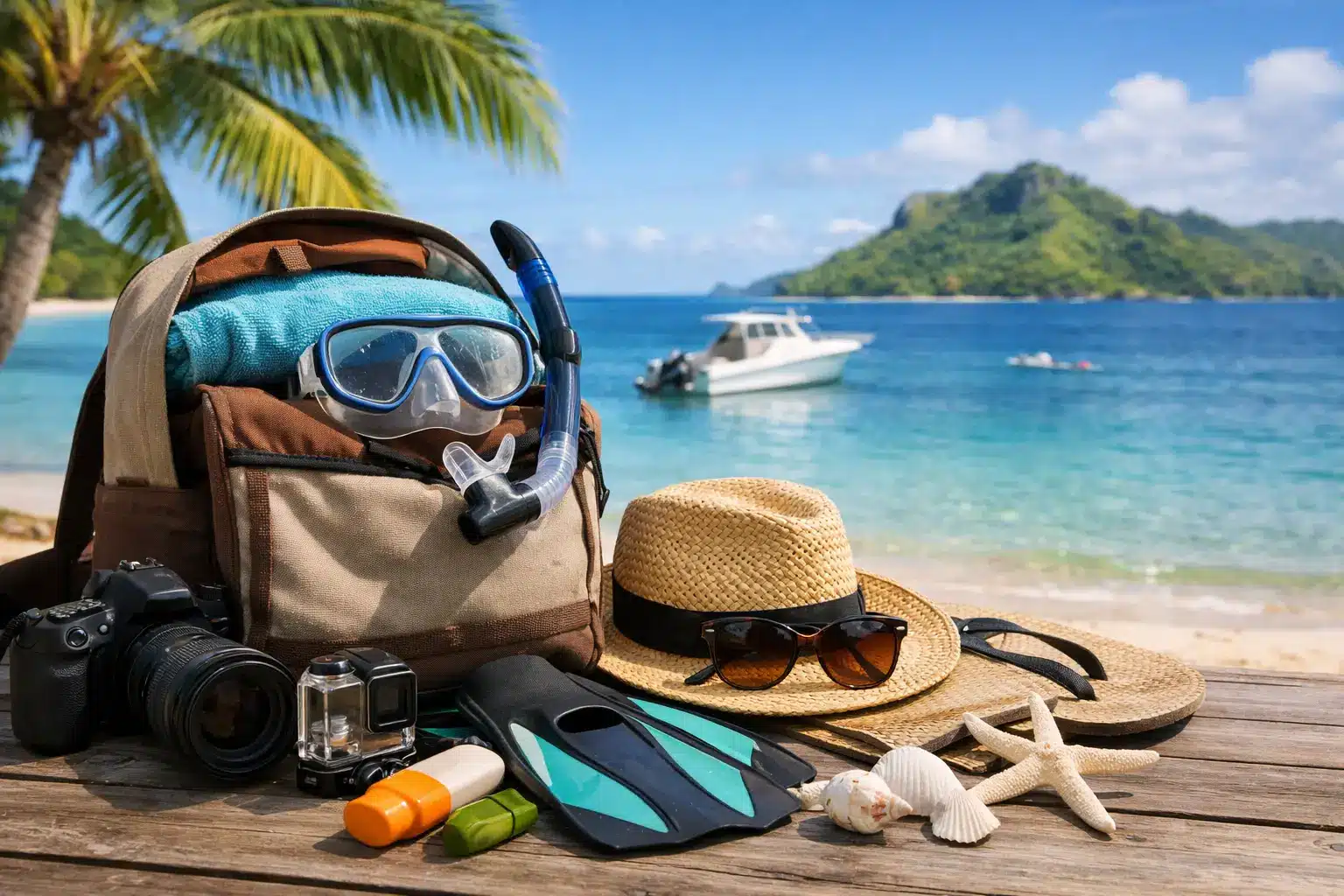
A Fiji day out can start with a resort pick-up and end with a swim beneath a rainforest waterfall, a snorkel above bright coral, or sunset on a tiny island beach. Knowing what to pack for excursions means you can enjoy every part of the experience rather than hunting for sunscreen, drying off in a wet T-shirt, or leaving your camera behind when the view is at its best.
The good news is that most Fiji excursions do not require specialist equipment. Pack light, choose gear that can handle water, heat and a little sand, and tailor the rest to the adventure you have booked. Your local guides will usually provide essential activity equipment, but a few personal items make a big difference to your comfort.
For most island day trips, cultural tours and sightseeing experiences, a small day bag is all you need. A lightweight backpack or waterproof dry bag works particularly well because it keeps valuables together during boat travel and gives you free hands when stepping on and off a vessel.
Your everyday excursion essentials should include:
Fiji’s sun can feel stronger than visitors expect, especially on a boat where the reflection from the water adds to your exposure. Apply sunscreen before departure, then reapply after swimming, snorkelling or spending a few hours on deck. A long-sleeved rash shirt is also a smart addition for travellers who burn easily, children, and anyone planning a full day on the water.
A sarong earns its place in nearly every day bag. It can be a beach cover-up, a quick towel, shade for your legs on a boat, or a respectful layer when visiting a village. It takes almost no room and is one of the most useful things you can bring to Fiji.
A Mamanuca or Yasawa island cruise is often the highlight of a Fiji holiday. Expect white-sand beaches, clear water and plenty of opportunities to swim, so prepare for things to get wet.
Wear your swimwear under light clothing before you leave your accommodation. This saves time when the first swim stop arrives and avoids trying to change in a compact boat bathroom. Pack dry clothes for the return journey, particularly if you are travelling during the cooler, breezier months from May to October.
Most quality snorkelling excursions supply masks, snorkels and fins. If you have a mask that fits you perfectly or prescription snorkelling gear, bringing your own can be worthwhile. Otherwise, leave bulky equipment at home and use the gear supplied by your operator.
For boat days, footwear needs a little thought. Thongs are easy for the beach but can slip on wet decks or uneven paths. Secure sandals or reef shoes are usually the better choice, especially for island landings, rocky shorelines and snorkelling spots where you may walk through shallow water. Avoid standing on coral – it is fragile, sharp in places, and home to marine life.
Keep your mobile, wallet and camera in a waterproof pouch rather than relying on a beach bag. Sea spray and sudden tropical showers are common, even on an otherwise brilliant day. If you are carrying a camera, bring a wrist strap and a small microfibre cloth for salt spray.
The ocean is central to Fiji’s beauty and to many local communities. Choose sunscreen that is labelled reef-safe where possible, and use only the amount you need before entering the water. Small decisions such as taking your rubbish back to the boat and avoiding contact with coral help protect the places you have come so far to see.
Waterfall walks, garden visits and river adventures call for clothing that is comfortable in warm, humid conditions. Lightweight shorts or activewear are ideal, paired with a breathable T-shirt or rash shirt. Cotton can feel heavy once wet, so quick-dry fabrics are more practical if swimming is part of the day.
Closed-in walking shoes are best for longer nature walks or tracks that may be muddy after rain. For easier waterfall stops, sturdy sandals with good grip may be enough. Check the excursion description before you go: some walks are gentle and suitable for most fitness levels, while others include uneven ground, river crossings or steeper sections.
Bring a change of clothes in a separate dry bag if you are visiting Fiji’s famous mud pools and hot springs. The mineral-rich mud is part of the fun, but it is not something you want spread through the rest of your bag. Dark-coloured swimwear is a practical option, and an older towel can be useful if you prefer not to use your hotel towel.
Insect repellent matters most around lush inland areas, mangroves and in the late afternoon. Apply it after sunscreen, and consider a light overshirt if you are prone to bites. There is no need to overpack for every possibility, but being prepared lets you relax and enjoy Fiji’s natural side.
A village visit, traditional feast or cultural performance is a memorable way to understand Fiji beyond its beaches. The atmosphere is warm and welcoming, but modest dress is appropriate. Cover your shoulders and knees where possible, particularly when entering a village or attending a church service.
A light shirt, knee-length shorts, a skirt, dress or loose trousers are sensible choices. Keep your sarong handy if you have arrived in beachwear. Removing hats and sunglasses when greeting people is courteous, and your guide will explain any local customs specific to the village you are visiting.
You do not need to bring gifts unless your tour operator has specifically advised it. Local guides understand the etiquette and will help you feel comfortable. The most valuable thing to bring is an open, respectful attitude and a willingness to listen.
Families can keep Fiji day-trip packing refreshingly simple. The priority is sun protection, water, snacks if these are not included, and dry clothes for the journey home. For younger children, add a familiar snack, spare swimmers, a hat they will actually keep on, and any medication they may need during the day.
If your child uses floatation aids, ask in advance what is supplied on the excursion. Many family-friendly operators provide life jackets and have safety procedures in place, but a favourite pair of goggles or a well-fitting snorkel mask can make a nervous first swim much more enjoyable.
A compact stroller is not always useful on boat trips, beaches or rainforest paths. A baby carrier may be easier for island transfers and short walks, though it depends on your child’s age and the activity. For a full-day cruise, choose shade, regular water breaks and a tour pace that suits your family rather than trying to fit in every possible stop.
Overpacking can make an excursion less enjoyable, particularly when boarding a boat or travelling in a shared vehicle. Large suitcases, expensive jewellery, bulky beach toys and multiple changes of outfits are rarely necessary. Leave passports, excess cash and valuables in your room safe unless you have a specific reason to carry them.
Drones are another item to check before bringing. Their use may be restricted near resorts, villages, airports, marine areas or on certain island properties. Always ask your operator first rather than assuming they can be flown during a tour.
It is also wise to travel light with alcohol. Some cruises may have their own rules around bringing drinks onboard, while village visits and cultural activities call for good judgement and respect. When food and refreshments are included, your booking information will generally make this clear.
The best packing list is the one that matches your actual excursion. Read the confirmation carefully for departure time, pick-up point, footwear advice, inclusions and whether lunch, towels, snorkelling equipment or water are provided. If your plans include a private tour, cruise shore experience or a combination of activities, ask about storage space and what is most useful for the day.
Weather can change quickly in the tropics, so a lightweight rain jacket or poncho is worth considering during the wetter months, generally November to April. A passing shower does not usually spoil a Fiji adventure, but dry gear and a positive attitude make it far easier to enjoy.
Best Fiji Activities can help match the packing advice to your chosen tour, from a relaxed island escape to a high-energy river adventure. Pack for the moments you want to remember: a swim in clear water, a warm local welcome, and the freedom to step off the boat ready for whatever Fiji has planned.