Your cart is currently empty!
You may check out all the available trips and book one that suits you.
Continue Browsing Trips
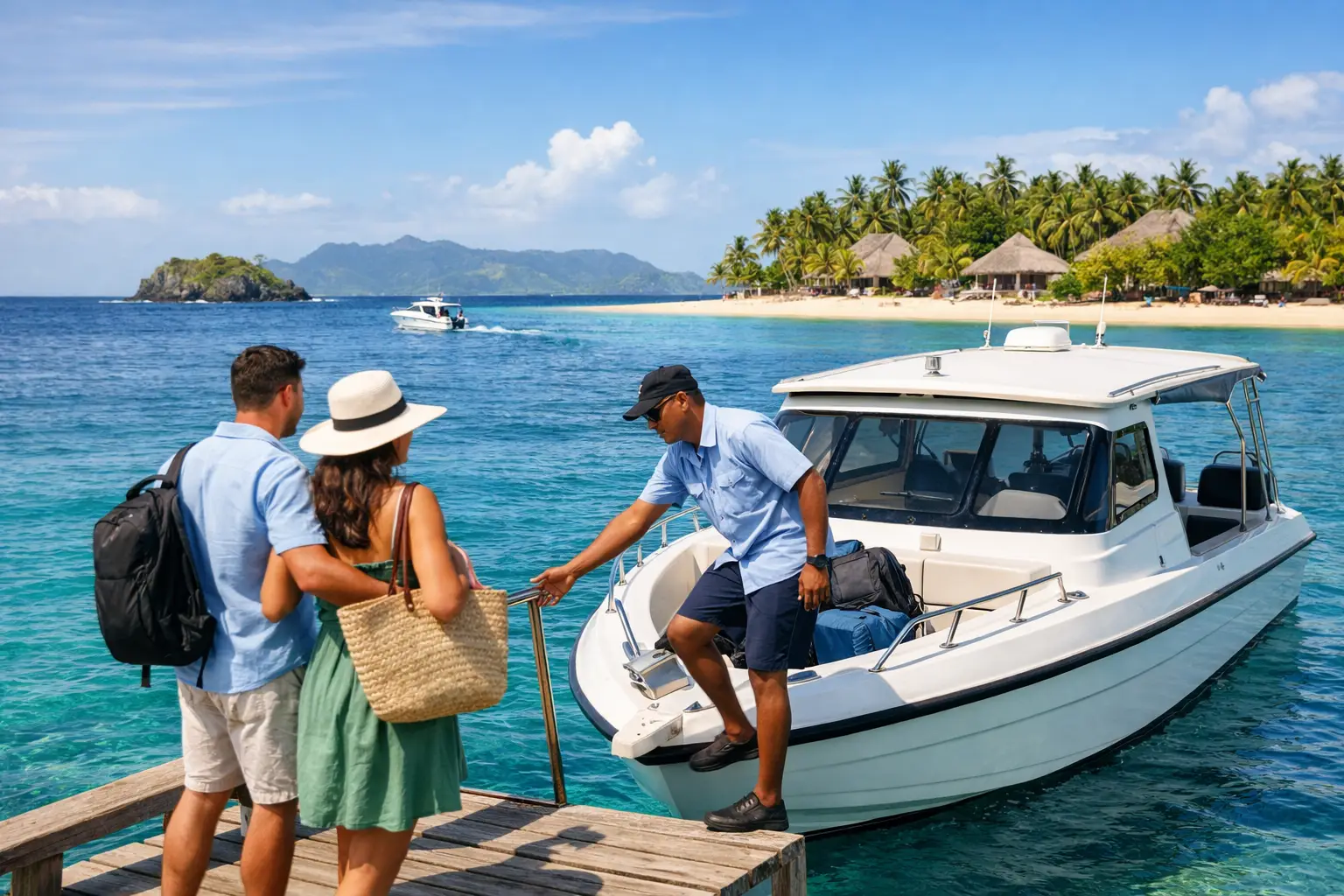
Your Fiji holiday can look brilliantly simple on a map: land in Nadi, hop on a boat, arrive at a palm-fringed island. In practice, knowing how to organise island transfers is what turns that plan into a relaxed first day rather than a race against the clock. Boat check-in times, road transfers, tide, luggage limits and the location of your resort all matter – particularly when you are heading to the Mamanuca or Yasawa Islands.
The good news is that Fiji’s island transfer network is well established. With the right timing and a little local guidance, getting from Nadi Airport or your mainland hotel to your island stay can be one of the most scenic parts of the trip.
Before booking anything, confirm exactly where you are staying. Fiji has more than 330 islands, and transfers vary widely between regions. The Mamanuca Islands are generally reached by scheduled catamaran, speedboat or seaplane from Denarau Marina. The Yasawa Islands sit farther north-west and are usually accessed by a full-day or part-day catamaran service, private boat charter, seaplane or helicopter.
A resort’s name alone is not always enough. Ask for the island name, preferred arrival point, transfer operator, check-in location and latest accepted boat connection. Some resorts have their own boat service; others meet guests from a larger scheduled vessel by tender. This final leg can affect both your timetable and your budget.
Your international arrival time is the next key detail. Most island boats depart from Port Denarau, not Nadi Airport, and the drive usually takes around 25 to 35 minutes in normal conditions. Allow extra time for baggage collection, customs, a possible currency stop and road traffic. For a morning departure after a long-haul flight, an overnight stay in Nadi or Denarau is often the more comfortable choice.
Scheduled boats are a great-value option for many travellers, especially for resorts in the Mamanucas and along the Yasawa chain. They operate to set timetables and commonly include resort drop-offs, although the order of stops can change according to bookings and weather.
Book the boat after you have confirmed your accommodation dates, not before. Check the departure time, required check-in time and the estimated arrival time at your resort. A boat may leave Denarau in the morning but reach a northern Yasawa resort many hours later. That is perfectly manageable when expected, but it can come as a surprise if you have planned a sunset dinner or a dive briefing on arrival day.
It also pays to check the return service early. Your resort may need you to leave before breakfast to connect with a boat, while an afternoon flight from Nadi can leave plenty of time for a final swim. For an early international departure, staying on the mainland the night before is usually the sensible option. It protects you from weather delays and removes the pressure of relying on a same-day sea connection.
When arranging a scheduled service, make sure your booking includes or clearly identifies:
These details are especially useful for families managing prams, travellers carrying dive gear, and groups with several bags.
There is no single best transfer for every Fiji itinerary. The right option depends on your budget, holiday pace, flight times and how much time you want to spend travelling.
A scheduled catamaran is the classic Fiji island transfer. It is social, scenic and usually the most cost-effective choice for travellers with flexible arrival times. You can settle into the open deck, watch the mainland fade away and enjoy a genuine introduction to the islands.
The trade-off is time. Resorts farther along the route can take several hours to reach, and conditions may feel lively during strong winds. If anyone in your party is prone to seasickness, pack suitable medication in your hand luggage and sit where crew recommend.
Private boats suit couples, families and small groups who want direct travel or need more control over the timetable. They can be ideal when a scheduled service does not align with your flight, or when you are travelling to a resort that is not on a regular route.
They are generally more expensive, particularly for one or two people, but the cost can make sense when shared across a group. Ask whether the quoted price is for the vessel or per passenger, whether luggage is included, and what happens if weather conditions make the journey unsuitable.
For spectacular views and quick access to remote islands, an air transfer is hard to beat. The flight over reef systems, sand cays and deep-blue water can be a highlight in its own right. It is particularly appealing for short stays, special occasions and resorts in the northern Yasawas where boat travel takes much longer.
The practical consideration is baggage. Light aircraft often have strict weight allowances, and soft-sided bags are usually easier to load than hard cases. Extra luggage may need to travel separately by boat, so pack swimmers, medication, valuables, sunscreen and a change of clothes in a small carry-on bag.
Fiji’s transport operators are experienced, safety-focused and accustomed to changing conditions. Even so, sea and air transfers remain weather dependent. The wetter months, generally from November to April, can bring heavier rain, tropical lows and rougher seas. The drier season is often more settled, although wind and swell are possible at any time of year.
Build breathing room into your itinerary rather than booking every hour of your first or final day. If your connection is delayed, a relaxed plan gives you options. Travel insurance that covers weather-related disruption is also a wise inclusion, particularly if you have prepaid accommodation, flights or special activities.
Tides can matter for smaller island jetties and beach landings. You may step from a tender into shallow water, so keep footwear handy and avoid packing essentials at the bottom of a large suitcase. Resort staff are very helpful with bags, but it is best to protect cameras, passports and electronics in waterproof pouches before boarding.
Island transfers are not like stepping from an airport lounge into a taxi. You may move between a coach, marina, boat and smaller tender before reaching your bure. Packing with that in mind makes the day far easier.
Keep your booking confirmation, passport, mobile, medication, sun protection, water bottle, hat and swimwear accessible. A light cover-up is handy for boat decks, where wind can feel cooler than expected. If you are travelling with young children, bring snacks and a familiar activity for longer boat routes.
For larger bags, check whether your resort or operator has a storage service for items you do not need on the islands. This can be useful if you are combining a few island nights with a mainland stay and do not want to move every bag across the water.
The most enjoyable Fiji holidays balance island time with the mainland’s outstanding experiences. You might arrive in Nadi, spend a night in Denarau, head to the Mamanucas, then return for a Coral Coast cultural tour, a Sigatoka Valley adventure or a day in Pacific Harbour. Planning the transfers as part of the whole trip avoids backtracking and wasted nights.
Try to group activities by region. If your flight lands late, stay close to Nadi or Denarau. If you want to explore the Coral Coast, schedule it after returning from the islands rather than attempting a long road journey on the same day as a boat transfer. Travellers continuing to the Yasawas should also consider whether a multi-island pass, resort package or tailored route offers better value than individual transfer bookings.
Best Fiji Activities can help bring accommodation, mainland transport, island connections and unforgettable Fiji tours into one clear plan. Having a local team check the timings is particularly valuable when you are travelling in school holidays, arriving on limited flight schedules or organising a group.
The day before departure, reconfirm the pickup time with your hotel, resort or transfer provider. Have your booking reference ready, check the weather forecast without panicking over a passing shower, and make sure your mobile is charged. Arrive at the marina with time to spare, as boarding procedures and bag handling can take longer during busy periods.
Once you are on the water, let the timetable go. The first sight of your island – bright reef, waving resort crew and that unmistakable Fiji welcome – is a much better moment to focus on than the logistics that got you there.