Your cart is currently empty!
You may check out all the available trips and book one that suits you.
Continue Browsing Trips
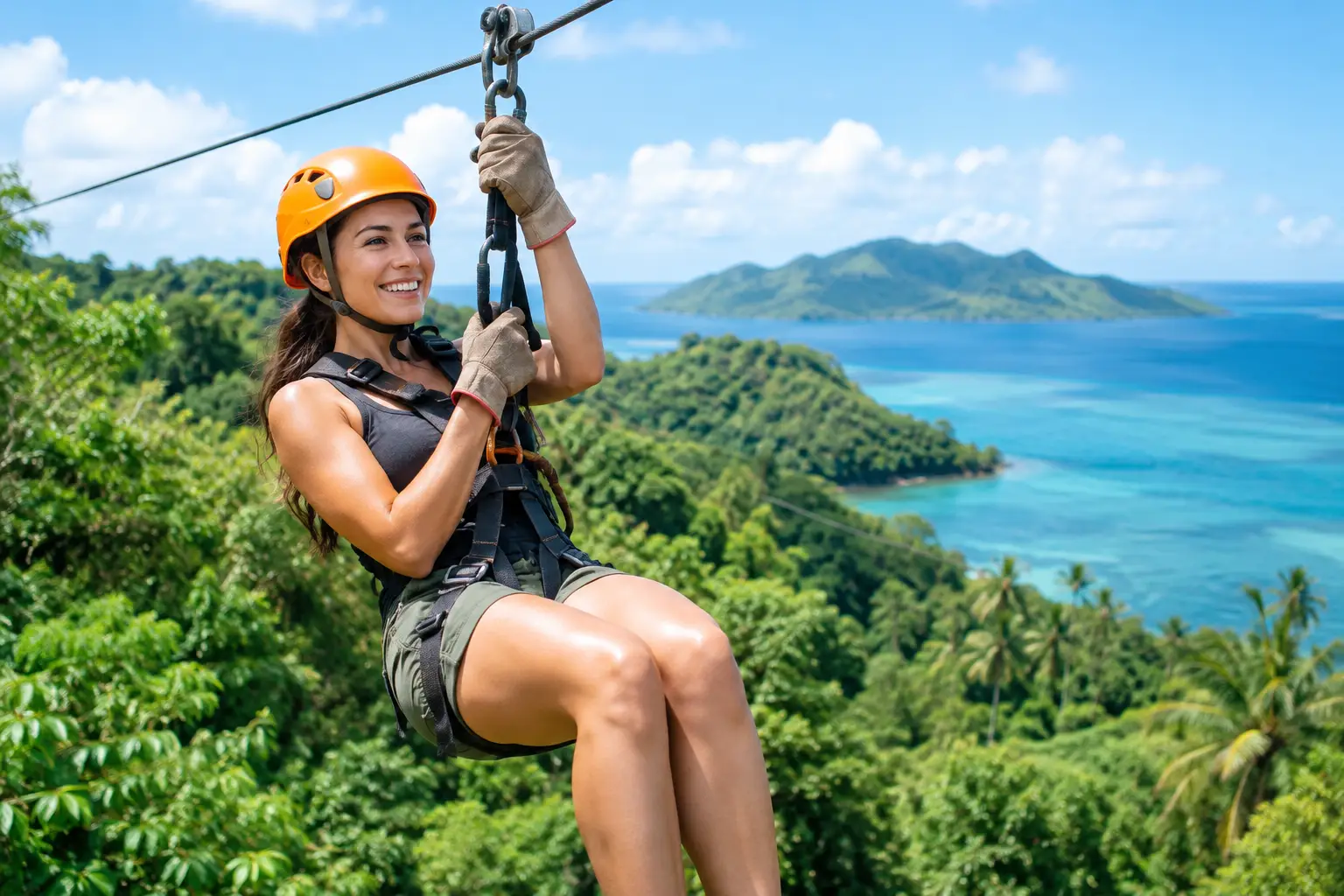
Fiji’s rainforest looks even more spectacular from a zipline platform, with thick tropical greenery below and mountain views opening up between the trees. If “what to wear ziplining Fiji” is on your pre-trip checklist, keep one goal in mind: choose clothing that lets you move freely, stays comfortable in humidity and works safely with a harness.
A ziplining adventure is active, not a fashion shoot. You may climb stairs, walk along uneven rainforest tracks and spend time in a secure harness before soaring through the canopy. The right outfit means you can focus on the thrill, the scenery and those brilliant holiday photos rather than adjusting straps or worrying about your footing.
The best outfit is lightweight activewear with closed-toe shoes. Think of what you would wear for a warm-weather bushwalk or an active day out, rather than what you would wear to the beach or a resort dinner.
A breathable T-shirt, singlet or lightweight long-sleeve top works well. Quick-dry fabrics are particularly useful in Fiji’s tropical conditions, especially if your tour includes a waterfall stop, a short walk through the forest, or a passing shower. Cotton is fine for a dry day, but it can feel heavy once damp, so moisture-wicking activewear is usually the more comfortable choice.
For your lower half, wear shorts that are long enough to sit comfortably under a harness, or choose lightweight leggings, active pants or quick-dry hiking shorts. Very short shorts can bunch up or rub where the harness sits, while loose skirts and dresses are not suitable. If you prefer extra coverage from the sun, insects or harness straps, thin leggings are an excellent option.
Your zipline provider will fit the safety gear over your clothes, so avoid anything bulky around the waist, hips or shoulders. A harness needs to sit snugly and securely. Clothing with large buckles, thick belts, hard decorations or oversized pockets can get in the way and make fitting less comfortable.
Supportive runners, trail shoes or closed-toe sports sandals with a secure heel strap are generally your best bet. You need grip for platforms, stairs and potentially muddy tracks, particularly after rain.
Thongs, slides, high heels and loose sandals are a no-go. They can slip off, offer little protection and are unsuitable for uneven ground. If you are travelling around Fiji with only beach footwear, bring a pair of runners specifically for activities such as ziplining, waterfall walks, quad biking and inland sightseeing.
Socks are optional but recommended if you are wearing runners. They help prevent rubbing, especially on a hot day when feet can swell slightly. Choose light sports socks rather than thick hiking socks unless the day is unusually cool.
Fiji is warm year-round, but tropical weather can change quickly. A bright morning can turn into a short rainforest shower and then back to sunshine before lunch. You do not need to overpack layers, but a little preparation makes a big difference.
In the drier months, roughly May to October, a T-shirt and shorts or leggings are often all you need. Mornings in the highlands can feel a touch cooler, so a very light overshirt may be welcome while travelling to the activity site. Once you start moving, most visitors are comfortable in a single breathable layer.
During the wetter, warmer months, roughly November to April, quick-dry clothing becomes even more valuable. Bring a compact rain jacket or poncho for the transfer and walking sections, but ask your guide whether it should be worn on the zipline itself. Loose rain gear can flap in the wind and may need to be stored before you are fitted with a harness.
Sun protection matters in every season. Even when the activity runs under forest cover, you may be exposed on elevated platforms, open sections of the course or during transport. Apply sunscreen before leaving your hotel, and consider a cap for before and after the course. Your guide may ask you to remove hats before zipping, so do not rely on one to stay secure in the air.
Leave dangling earrings, long necklaces and bulky watches at your accommodation. They can catch on clothing, feel uncomfortable under helmet straps or simply be something you have to keep track of while enjoying the day.
Secure long hair in a low ponytail or braid. A high bun can interfere with a helmet, while loose hair can whip across your face when you pick up speed. Sunglasses can be handy in transit, but only wear them on the course if they fit securely and your operator says they are suitable.
If you wear prescription glasses, use a retainer strap if possible. Mention them to your guide during the safety briefing so they can advise you on the best option for the specific course.
A few holiday staples are better saved for the pool, beach or evening cocktails. Avoid loose, flowing clothing that could snag or shift under the harness. This includes maxi dresses, sarongs, kaftans and wide-legged linen pants.
Denim is another less-than-ideal choice. Jeans can feel hot and restrictive in Fiji’s humidity, take a long time to dry and may be uncomfortable when sitting in a harness. Heavy cargo shorts with bulky pockets can also create pressure points.
Swimwear alone is not appropriate for a zipline course, even if you are heading to a pool or beach afterwards. Wear a proper top and shorts or leggings over bathers. You will be more comfortable, better protected and ready for the safety equipment.
Most zipline adventures provide essential safety equipment such as a helmet and harness, but it is wise to bring a few practical personal items. Keep your bag compact, as storage space may be limited and you will not want unnecessary valuables following you around.
Bring these essentials:
For photos, a zipped pocket is useful, but a secure strap or approved hands-free mount is often better. Do not hold your mobile while ziplining. Your guide will explain the operator’s photography policy, and some courses have staff photos available so everyone can keep both hands where they belong.
Every traveller has a different comfort level. Families with children may want to prioritise grippy footwear and spare clothes, while couples planning a full day of touring might choose an outfit that transitions easily from rainforest adventure to lunch or sightseeing. Seniors and first-time zipliners may appreciate longer shorts or leggings that prevent harness rubbing.
If you are unsure whether an item will work, test it before you leave your hotel. Can you squat, step up and raise your arms without it pulling, slipping or exposing more than you would like? Does your footwear stay firm when you walk briskly? If the answer is yes, it will likely be a good choice for the course.
Your local guides are there to help, too. They know the terrain, the day’s weather and how the harness should sit. Listen carefully during the safety briefing, speak up if something feels uncomfortable and follow any clothing or accessory instructions from the team. A well-fitted harness is part of what makes Fiji ziplining such a safe, unforgettable adventure.
When you book active Fiji experiences through Best Fiji Activities, planning the practical details before departure leaves more room for the fun part: flying through the rainforest and taking home a holiday story that goes well beyond the beach.