Your cart is currently empty!
You may check out all the available trips and book one that suits you.
Continue Browsing Trips
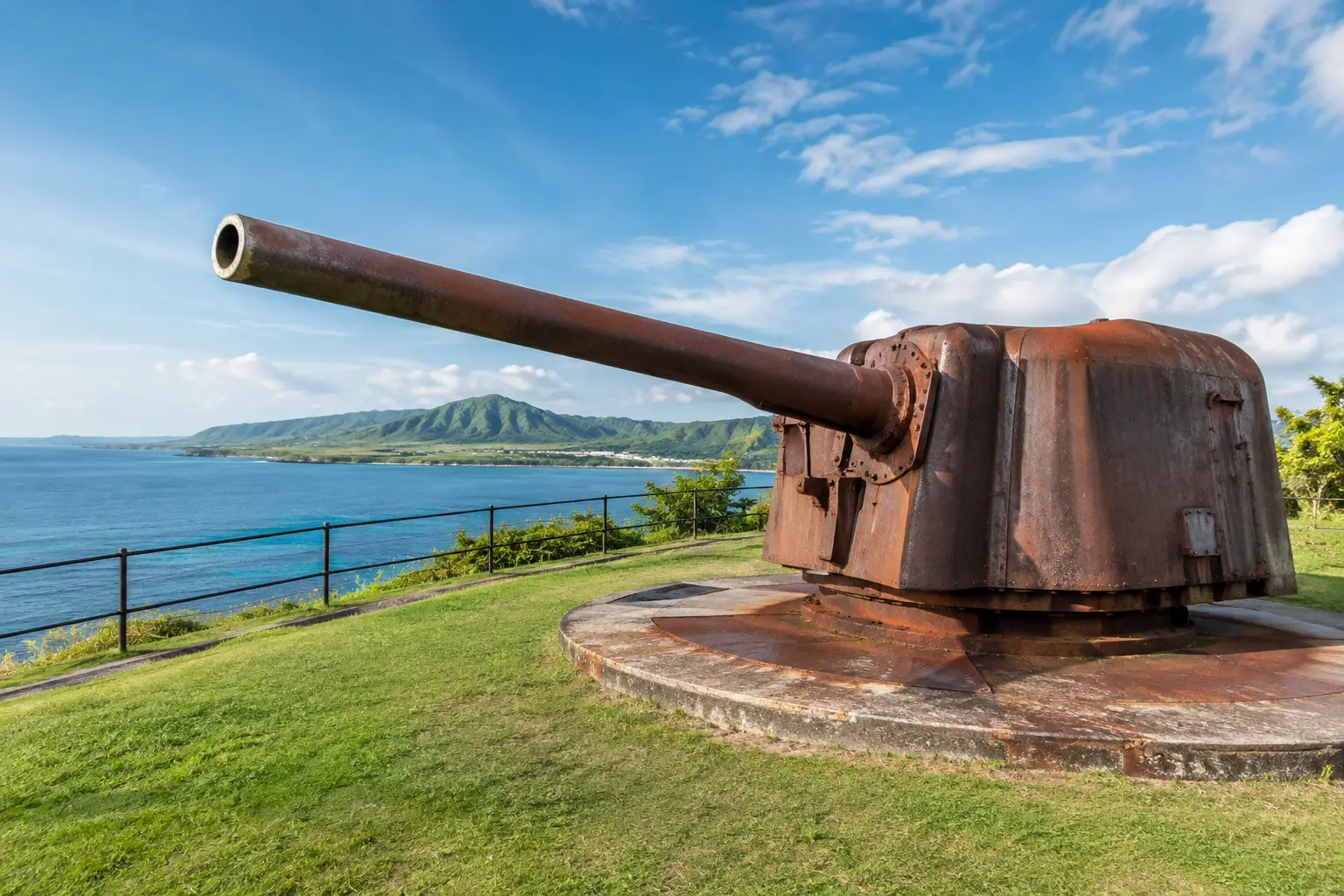
A pair of ageing coastal guns points across the brilliant blue of Momi Bay, but the view is only part of the reason to stop. Momi Battery Historical Park is one of Fiji’s most moving heritage sites: a place where tropical scenery meets the very real anxiety of the Pacific war. For travellers heading between Nadi and the Coral Coast, it offers a memorable change of pace from resorts, pools and beach time.
This is not a large museum that needs a full day. It is a compact, well-preserved historical stop where the story comes alive through the gun emplacements, underground rooms and dramatic clifftop position. Give it enough time, though, and Momi becomes far more than a photo opportunity.
Momi Battery was built during World War II, when Fiji was a British colony and the threat of Japanese expansion across the Pacific felt dangerously close. Its location on Viti Levu’s western coast was chosen to defend Momi Bay and watch the sea approaches. The site housed two six-inch naval guns, with soldiers stationed here to operate the battery and maintain a constant coastal watch.
The guns never fired in combat, which can make the site’s history easy to underestimate. Yet that is precisely what gives Momi its quiet power. The battery represents Fiji’s role in a conflict that reached deeply into the Pacific, affecting local communities, servicemen and families across the region. It is a reminder that the islands were not simply distant from the war. They were strategically significant.
Today, the restored site lets visitors walk through key parts of the former military installation. You can see the gun positions, the command area and sections of the underground structures that supported the battery’s operations. Interpretive displays help put the setting into context, although a local guide can add the human details that turn the visit into a richer experience.
The main drawcards are the two coastal guns, carefully restored and set against a spectacular ocean backdrop. Their scale is striking up close. Looking out from the emplacement, it is easy to understand why this headland was selected for defence: the view across the bay is broad, clear and commanding.
The underground command post is equally compelling. The narrow passages and rooms offer a more atmospheric contrast to the open coastline above. Visitors can get a sense of the conditions faced by the men based here, where heat, humidity and long periods of vigilance were part of daily life.
There are also landscaped paths, signs and viewpoints around the grounds. The site is relatively compact, so it suits travellers who enjoy history but do not want to commit to a major museum visit. Families with older children often find it particularly engaging because there are tangible structures to explore rather than history confined to display cases.
Bring a camera, but pause before moving on. The best photographs may be of the guns against the sea, yet the most memorable moment is often standing quietly at the lookout and imagining the coast as it was in the early 1940s.
Most visitors spend around 45 minutes to 90 minutes at the park. A shorter visit works well if you are travelling between Nadi and the Coral Coast, while history enthusiasts may prefer extra time to read the displays, walk the grounds and take in the views.
The experience depends on your travel style. If your holiday is built around resort relaxation, Momi is an easy half-day addition with little disruption to your plans. If you are keen on Fiji’s history and culture, combine it with a village visit, Sigatoka sightseeing or a Coral Coast day tour for a more rounded look at the island.
Momi Battery is on Viti Levu’s south-western side, between Nadi and Sigatoka, with the final approach leading away from the main Queens Road. It is accessible by private vehicle, driver-guide or an organised sightseeing itinerary. The turn-off and access road can be less straightforward than major resort routes, which is why many visitors prefer to include it as part of a private tour or transfer day.
From Nadi, it is generally a practical outing for travellers with a free morning or afternoon. From the Coral Coast, it can also fit neatly into a day travelling north towards Nadi. Exact journey times vary with your accommodation location, road conditions and traffic, so avoid planning it too tightly around airport check-in or a fixed restaurant booking.
Hiring a car gives you flexibility, particularly if you want to stop at lookouts or local shops along the way. On the other hand, a driver-guide removes the stress of navigation and lets everyone enjoy the scenery. For couples, families and small groups, private transport can be excellent value when shared, especially if you would like local commentary and door-to-door collection from your hotel.
Best Fiji Activities can help travellers organise dependable private transport or a tailored sightseeing day that includes Momi alongside other highlights suited to your interests and available time.
Momi is an outdoor heritage site, so sensible preparation makes a difference. Wear comfortable closed shoes or supportive sandals with good grip, as there are uneven areas, steps and paths around the old structures. A hat, sunscreen and water are essential, particularly around midday when the open clifftop areas can feel very warm.
The underground sections may feel cooler and darker than the grounds above. Take your time, watch your footing and supervise younger children closely. Visitors with limited mobility should keep in mind that historic military sites are not always fully accessible, with uneven terrain and stairs forming part of the experience. It is worth checking current access arrangements before travelling if this is a concern.
Opening hours, entry fees and on-site facilities can change, so confirm the latest details before you leave your resort. It is also wise to carry some cash for small purchases or admission where required, though payment arrangements may vary. Do not rely on mobile reception being perfect once you leave the main highway.
Respect the site as a place of remembrance. Stay on marked paths, do not climb on the historic guns or structures, and take any rubbish away with you. Fiji’s heritage places remain special because visitors and local communities care for them together.
Morning is often the most comfortable time for Momi Battery, especially during Fiji’s warmer and more humid months. The light can be lovely for photos, and you will have more energy for walking around the exposed grounds. Late afternoon can also be appealing for softer light and a calmer atmosphere, provided you leave enough time to return to your accommodation before dark.
Fiji’s dry season, typically from May to October, usually brings lower humidity and pleasant sightseeing conditions. That said, Momi is worth visiting year-round. During the wetter months, a brief shower can pass quickly, but paths may become slippery and views can be less clear. Pack a light rain jacket and maintain flexible expectations rather than cancelling at the first sign of cloud.
If you are visiting from Australia during school holidays, book private transport and popular Coral Coast activities ahead of time. Momi itself may feel peaceful, but the best drivers, guides and family-friendly day tours can be in demand.
Momi works best as part of a day with variety. History lovers can pair it with Sigatoka’s cultural and archaeological attractions. Travellers who want a scenic road day might combine it with a relaxed Coral Coast lunch, coastal lookouts and time at a beachside resort. Families may prefer a balanced plan with Momi in the morning and a pool, beach or gentle river activity afterwards.
There is a trade-off worth considering. Trying to squeeze Momi, Sigatoka, a waterfall, a village experience and a long lunch into one day can make Fiji feel rushed. Choose two or three experiences that suit your group, then leave room for the unplanned moments that make a holiday feel easy – a roadside fruit stall, a sweeping ocean view or a friendly chat with your driver.
Momi Battery Historical Park is proof that a Fiji itinerary can hold more than postcard beaches. Make time for its guns, tunnels and sea views, and you will leave with a deeper connection to the islands and the stories held within their coastline.