Your cart is currently empty!
You may check out all the available trips and book one that suits you.
Continue Browsing Trips
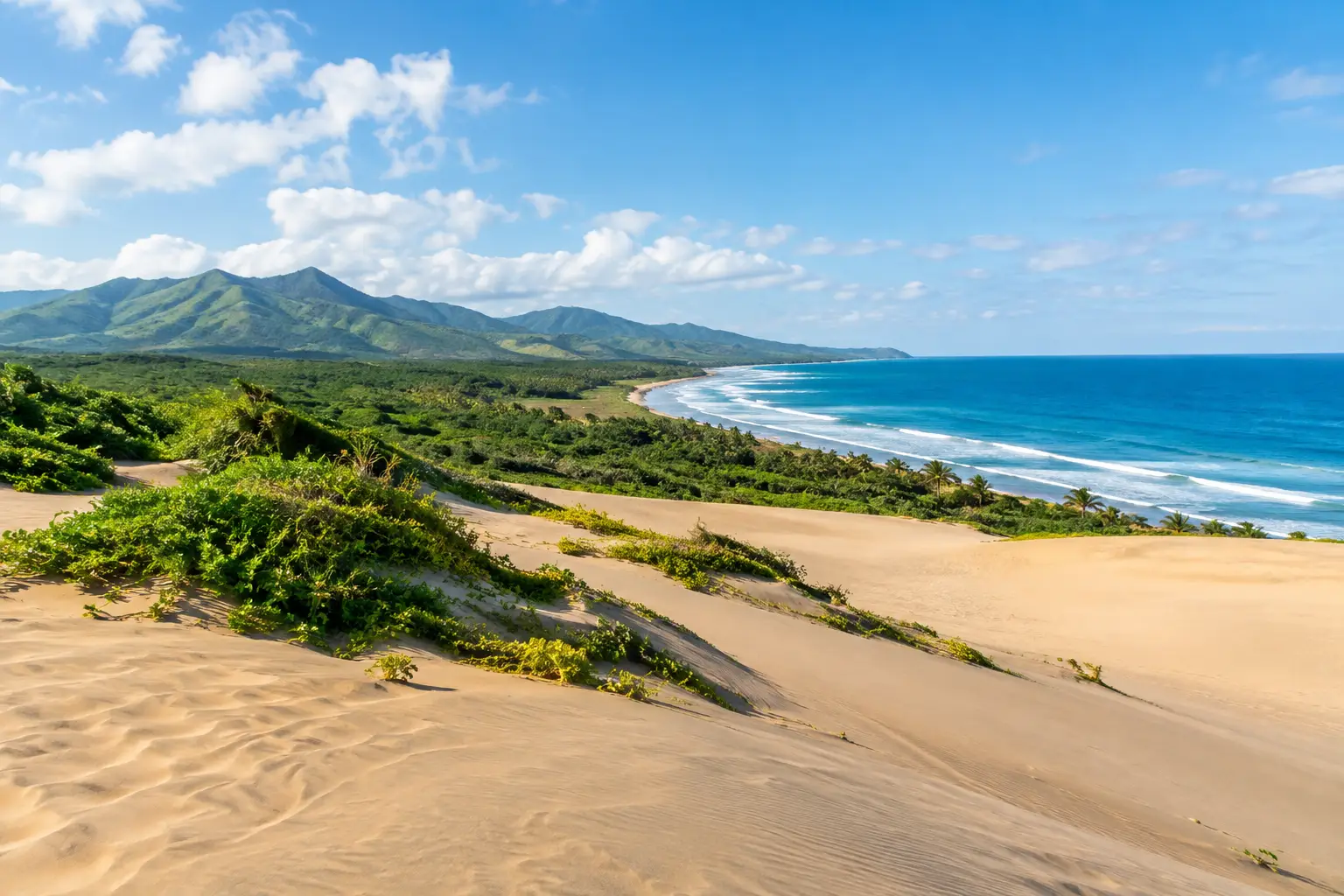
The first sight of wind-shaped sand rising above Fiji’s vivid green coast can feel wonderfully unexpected. Sigatoka Sand Dunes National Park Fiji is not a beach stop with a few pretty views. It is a protected landscape of walking tracks, native vegetation, ancient burial sites and big coastal horizons, just south of Sigatoka on Viti Levu’s Coral Coast.
For travellers who want a break from resort pools and island cruises, this is one of Fiji’s most rewarding land-based experiences. The walk is self-paced, the setting is uncrowded, and the story beneath your feet reaches back thousands of years. Give it a little planning, particularly around heat and transport, and the dunes can become a genuine highlight of your Fiji holiday.
Fiji is celebrated for its lagoons, reefs and palm-fringed islands, but the dunes show another side of the country. Coastal winds have built a shifting expanse of sand along the shoreline, with some dune faces rising sharply above the surrounding scrub and grassland. From higher points on the track, you can look across the coast and inland towards the Sigatoka Valley.
The national park is also an important archaeological landscape. Excavations have uncovered evidence of early settlement, including pottery and burial sites dating back more than 2,000 years. The dunes helped preserve these remains over centuries, making the park a place where natural scenery and Fijian heritage are closely connected.
That combination is what makes a visit so memorable. You are not simply walking through sand. You are moving through a nationally significant place that is still shaped by wind, weather and the sea.
Most visitors follow one of the marked circular walking routes from the park entrance. There is a shorter circuit that suits travellers after a quick but worthwhile outing, and a longer route for those who want more time on the dunes and broader views. Conditions, route access and park arrangements can change, so check locally before setting out.
The shorter walk is a good option for families with older children, seniors who are comfortable on uneven ground, or anyone fitting the park around a Coral Coast day trip. Expect sections of soft sand and a few climbs rather than a completely flat stroll. The longer route asks more of your legs, especially in warm weather, but rewards you with a stronger sense of the park’s scale and solitude.
This is not technical hiking, yet sand makes every incline feel harder than it looks. Trainers or closed walking shoes are generally the most practical choice. Thongs can work for a very short visit, but they are less comfortable once the track turns soft, steep or hot.
Allow around one to two hours for the walking itself, depending on the route, your pace and how often you stop for photos. Add time for the drive, entry arrangements and a relaxed look at the interpretation displays near the start.
If you are travelling from a Coral Coast resort, the dunes can fit easily into a half-day plan. From Nadi, it is better treated as part of a longer day out, perhaps combined with Sigatoka town, the valley or a cultural experience. Private transport makes this especially easy because you can travel at your own pace instead of working around limited local connections.
Early morning is usually the best time to walk. The light is soft, the sand is cooler and you are more likely to have peaceful views without the middle-of-the-day heat. Late afternoon can also be beautiful, although it is wise to leave enough daylight to complete the route comfortably.
Fiji’s dry season, broadly from May to October, often brings lower humidity and pleasant conditions for outdoor activities. It is a popular period, so arrange transport early if you are travelling during school holidays or peak winter months. The wetter months can still be excellent for a visit, with greener surroundings and fewer people, but tracks may feel more humid and rain can arrive quickly.
Whatever the season, bring water. There is little shade once you are out on the open dunes, and Fiji’s tropical sun is stronger than many visitors expect. A hat, sunscreen and light clothing that covers your shoulders will make the walk far more enjoyable.
Sigatoka Sand Dunes National Park sits close to the Coral Coast, south-west of Sigatoka town on Viti Levu. It is easy to reach by private car or arranged driver, and the route is a scenic one, passing villages, sugar-cane country and coastal landscapes.
For travellers staying near Sigatoka, Kula WILD Adventure Park, Korotogo or the wider Coral Coast, the park is a straightforward addition to your itinerary. Guests based in Nadi or Denarau can visit too, but the return drive is longer, so it makes sense to combine the dunes with other sights rather than rush there and back.
Public buses operate along the main road and can suit confident independent travellers with flexible schedules. However, they are not the easiest choice if you are travelling with young children, carrying beach gear, or trying to fit several stops into one day. A private transfer or tailored sightseeing itinerary offers more comfort, air-conditioning and the freedom to spend as long as you like at each location.
Best Fiji Activities can assist travellers who prefer dependable transport and locally informed day planning, particularly when combining the dunes with Coral Coast attractions. It is a simple way to avoid the stress of negotiating timings, directions and return travel on holiday.
Keep your day bag light, but do not skip the basics. The dunes are exposed, so a refillable water bottle, sun protection and comfortable shoes matter more here than they might on a resort excursion. Bring your camera or mobile as well, but secure it properly if the wind picks up and sand starts blowing across the track.
A small snack can be useful if you are continuing to other sights afterwards. Pack insect repellent in the wetter months, and carry a light rain layer if the forecast looks unsettled. There is no need for heavy hiking equipment, but this is a natural area rather than a manicured attraction, so prepare for uneven ground and changing conditions.
Most importantly, take only photographs and leave the landscape as you found it. Stay on signed tracks, do not climb on sensitive archaeological areas, and carry all rubbish out with you. Respectful visitors help protect this remarkable site for local communities and future travellers.
The park works best for travellers who enjoy variety. A morning dune walk can be paired with a relaxed Coral Coast lunch, a visit to Sigatoka town or an afternoon exploring the fertile Sigatoka Valley. If your itinerary leans heavily towards water activities, it also provides a refreshing change of pace without sacrificing spectacular scenery.
Families should consider the shorter route and travel in the cooler part of the day. Couples often enjoy the longer walk followed by a scenic coastal lunch. Active travellers can make the dunes one stop in a fuller private day tour, while cruise guests should only include it if their shore time allows a comfortable buffer for return transport.
The key trade-off is simple: this is not an all-day attraction, but it deserves more than a rushed photo stop. Slow down, climb one of the higher ridges, feel the wind off the Pacific and take in a part of Fiji that many visitors miss. The dunes offer a quieter, deeper kind of holiday memory – one that stays with you long after the sand has left your shoes.