Your cart is currently empty!
You may check out all the available trips and book one that suits you.
Continue Browsing Trips
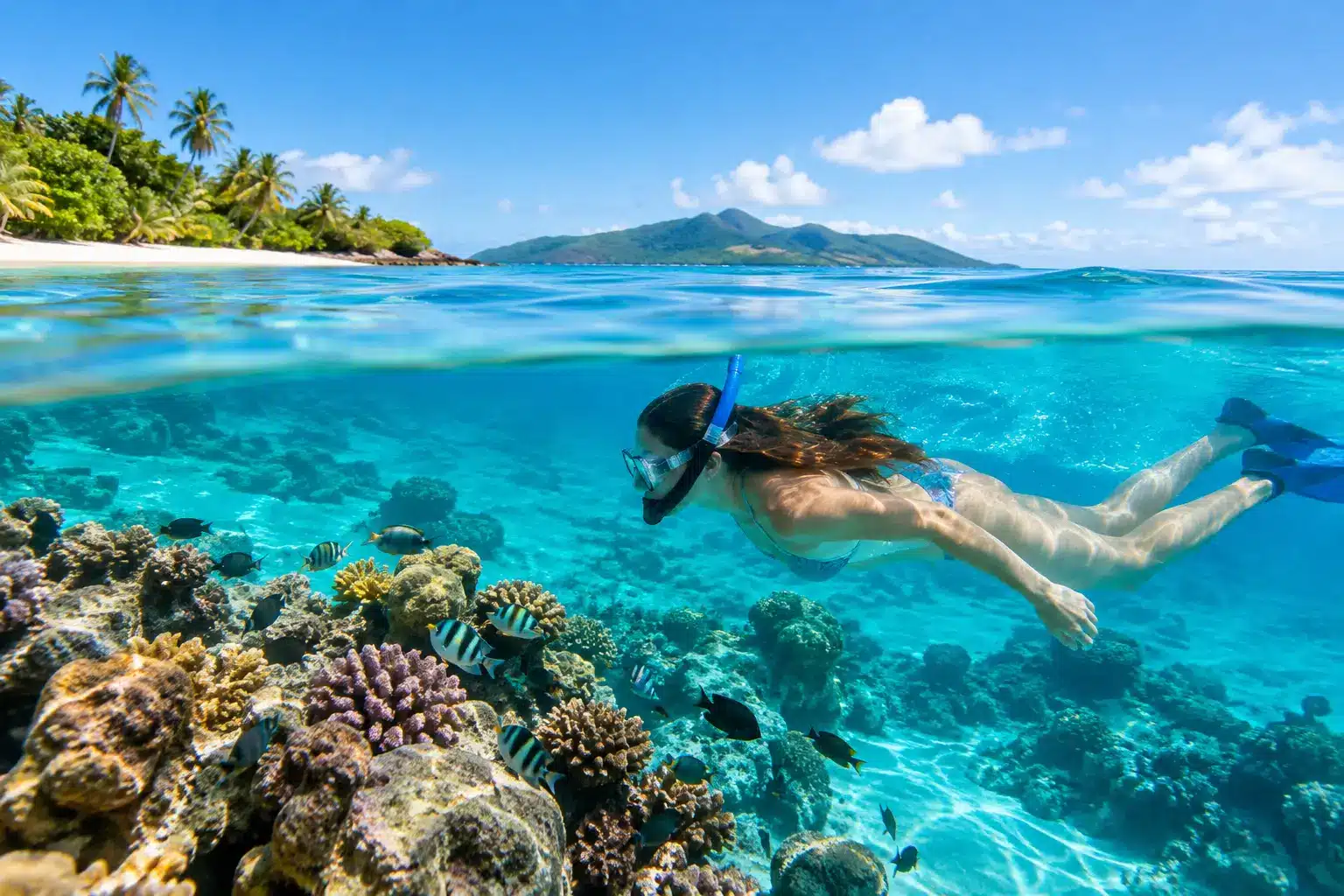
The best Fiji snorkelling beaches are not always the busiest stretches of sand. Often, the standout experience begins where a quiet lagoon meets a healthy reef, with clear water, gentle conditions and colourful fish close enough for confident swimmers and first-timers alike. Fiji has extraordinary underwater scenery, but choosing the right beach or island makes all the difference to how easy, safe and memorable your snorkelling day feels.
For visitors staying around Nadi, the Coral Coast, Pacific Harbour or the islands, the key is matching the destination to your confidence level, available time and the conditions on the day. Some reefs are steps from shore; others are best reached on a guided day trip by boat. Both can be brilliant, but they offer very different holiday experiences.
Fiji’s reefs sit in warm South Pacific water and support an impressive variety of marine life. In the right spot, you might see parrotfish grazing on coral, schools of blue-green chromis hovering above bommies, butterflyfish weaving through coral gardens and the occasional reef shark cruising well below. Visibility can be excellent, particularly around offshore islands where the water is less affected by river runoff.
The real advantage for holidaymakers is variety. You can snorkel from a family-friendly beach with shallow, protected water, paddle out from an island resort to a reef edge, or join a boat tour to reach a reef that is simply too far offshore to access safely on your own.
Not every sandy beach has exceptional coral directly in front of it. Some beautiful beaches have seagrass, sandy bottoms or strong tidal movement rather than a thriving reef. This is why local advice matters. A good operator or accommodation team can point you towards the best conditions that day instead of sending you out with a mask and vague directions.
For many travellers, the Mamanuca Islands are the most practical choice. These sunny islands are a popular day-trip escape from the Nadi and Denarau area, with white-sand beaches, bright lagoons and reefs that are often reached by a short boat ride or swim from shore.
The Mamanucas suit couples, families and small groups who want an island day without committing to an overnight stay. Conditions are usually most comfortable on the sheltered side of an island, and a guided island tour is particularly useful if you are not familiar with tides, boat traffic or safe snorkelling entry points.
Expect a relaxed mix of beach time, swimming, lunch and reef snorkelling. It is a great option for first-time visitors who want the classic Fiji postcard scene alongside a real chance to see colourful fish.
The Yasawa Islands are further north and feel more remote, which is part of their appeal. The long chain of volcanic islands includes spectacular bays, reef-fringed beaches and clear lagoons that reward travellers who have more time in their itinerary.
Some resorts and villages have excellent shore snorkelling, while other locations require a boat transfer to reach the healthiest coral. Staying overnight is often the best way to experience the Yasawas properly, as it gives you time to snorkel in calmer morning conditions and enjoy the slower island pace.
The trade-off is travel time. A Yasawa experience is less convenient for a quick day out from Nadi than the Mamanucas, but it can be one of the most rewarding choices for travellers who want a quieter beach setting and several days around the water.
The Coral Coast is ideal for travellers staying between Nadi and Suva who want reef experiences without changing islands. Several beachfront resorts and local tour areas sit near lagoons and reef systems, making this a convenient base for families, seniors and couples who prefer a relaxed schedule.
Shore snorkelling conditions vary considerably along the coast. Low tide can expose coral flats and make swimming awkward, while incoming or high tide may provide easier access to deeper water. The best approach is to ask locally about the day’s tide, currents and reef condition before setting out.
If the reef directly offshore is not suitable, a guided boat excursion can take you to a better location. This is often the smarter choice for less confident swimmers, as guides can select sheltered water and keep the group together.
Pacific Harbour is widely known for diving, but it also offers rewarding snorkelling opportunities on suitable reef trips. It is a strong choice for travellers who enjoy nature, water activities and a more adventurous holiday programme.
Conditions here can be more changeable than in a protected lagoon, so it is not the place to simply wander into the water without checking first. Choose an organised experience with experienced local crew, particularly if you are travelling with children or are new to open-water snorkelling.
Shore snorkelling is wonderfully simple. You can take your time, return to the shade whenever you like and enjoy the beach as much as the reef. It works best where coral is close, access is sandy or clearly marked, and the lagoon is protected from swell.
A boat tour usually delivers better reef variety and can be far more comfortable when local conditions are uneven. Boats can reach outer reefs, sand cays and island sites with clearer water and healthier coral cover. You also have guides who know where to enter, what marine life is commonly seen, and when the current is likely to pick up.
For a short Fiji stay, a well-organised island snorkelling tour is often the best-value option. It removes the guesswork around transport, timing and equipment while giving you more time in the water. Best Fiji Activities can help travellers combine island day trips, transfers and local planning support, which is especially handy when your holiday time is limited.
A glowing social media photo cannot tell you whether the tide is low, the wind has changed or the lagoon is choppy. In Fiji, daily conditions matter as much as the destination itself.
Morning is often the best time to snorkel, before stronger afternoon breezes ripple the surface. Calm water makes it easier to spot coral formations and marine life, while also helping nervous snorkellers feel more comfortable. Visibility may be reduced after heavy rain, particularly near mainland rivers, whereas offshore islands frequently remain clearer.
Fiji can be enjoyed year-round, though the drier months from around May to October generally bring cooler, less humid weather and are popular with visitors. The warmer months can offer wonderfully warm water, but rain, humidity and tropical weather patterns are more likely. There is no single perfect month for every beach, so build a little flexibility into your plans.
Fiji’s reefs are living ecosystems, not underwater playground equipment. The simplest rule is to look closely without touching. Coral can be damaged by a hand, fin or foot, and some species can sting or cut you.
Wear a rash shirt for sun protection and consider reef shoes where entries are rocky, but avoid standing on coral even if it looks solid. Keep a relaxed distance from turtles, fish and reef sharks, and never feed marine life. If you are not a strong swimmer, use a flotation device and choose a guided site with calm water rather than pushing yourself into an exposed reef area.
It is also worth checking what is included before you book. Quality snorkelling trips commonly provide mask, snorkel, fins, flotation support and safety briefings, though the exact inclusions differ. If you wear prescription glasses or are travelling with young children, ask in advance about equipment sizing and alternative options.
Pack swimwear, a towel, sun-safe clothing, drinking water and a dry bag for your valuables. Apply sunscreen well before entering the water and use a reef-conscious product where possible. Bring your own mask only if you know it fits well – a poor seal can make an otherwise beautiful snorkel frustrating.
Most importantly, tell your guide or host how confident you are in the water. Fiji’s best guides do not treat every guest the same. They can recommend a shallower area, provide a noodle or life jacket, or steer experienced snorkellers towards a more interesting reef section.
Yes. Many Fiji lagoons are suitable for beginners, particularly on guided island tours and at sheltered beaches. Choose calm conditions, use flotation support if needed and start in shallow water where you can stand comfortably.
They can be excellent, provided you select a protected lagoon and supervise children closely. A family-friendly day tour is often easier than independent shore snorkelling because equipment, safety guidance and suitable locations are organised for you.
Sometimes, but not everywhere. Several island beaches have coral close to shore, while mainland beaches may require a short boat ride for the best reef. Ask locally rather than assuming the beach outside your accommodation is the right place to enter.
A memorable Fiji snorkelling day should feel easy: warm water, a well-fitting mask, a reef chosen for the conditions and enough time to float quietly while the underwater world carries on around you.